


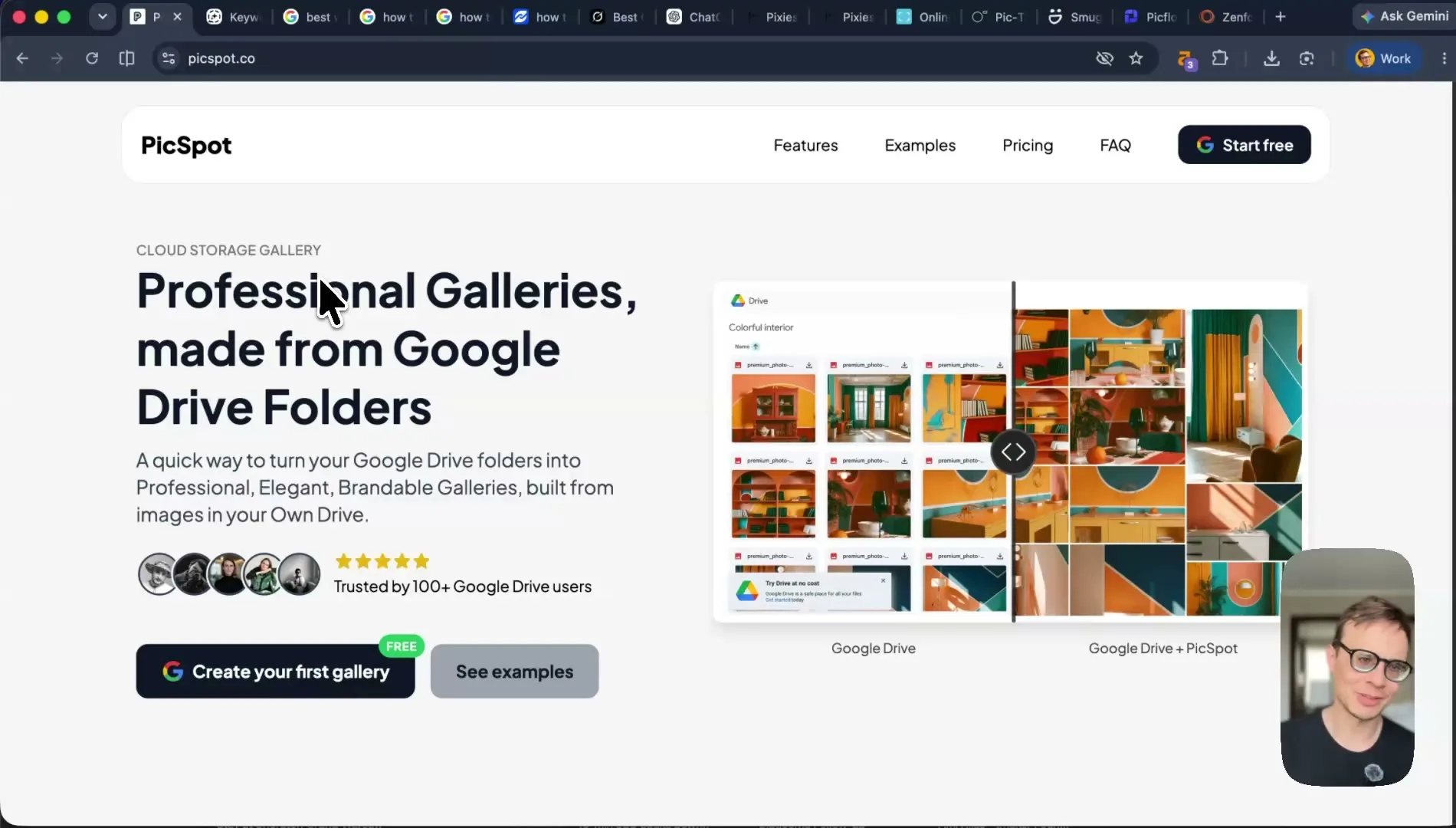
PicSpot is a gallery layer on Google Drive. Photographers keep files in their own storage and send clients a branded gallery instead of a Drive folder. The pitch is simple. Organic search is not doing the work yet.
Domain rating is low and branded traffic is close to zero. Competitors already own this category because they host client sites, collect natural backlinks, and show up in AI answers about professional photo delivery. PicSpot does not need to become a website builder or a print store. It does need unique titles, public galleries that look like real sites, and third-party pages that AI can cite.
Why we start with competitors
On a new domain you usually look at current traffic first. PicSpot has almost none, so the faster path is: copy the competitor pattern that actually compounds, then pick keywords that match the product.
Pixieset: brand, product pages, then client sites
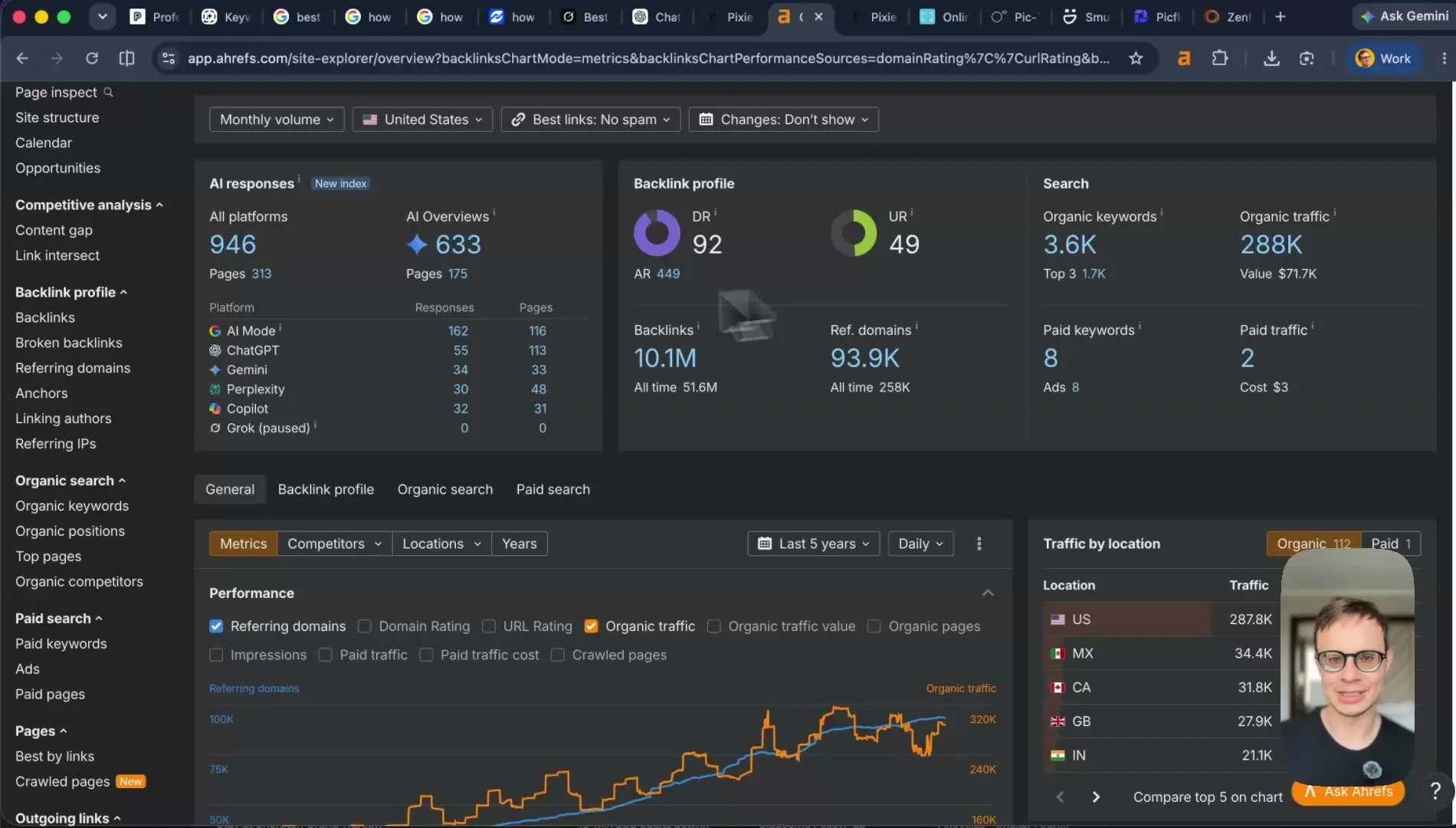
Pixieset is the ceiling. Ahrefs (US, roast day): DR 92, 288K organic visits, 10.1M backlinks from 93.9K referring domains, 946 AI responses / 633 AI Overviews. Almost all of that organic is the brand name. The rest is photography contracts, scheduling software, and website templates.
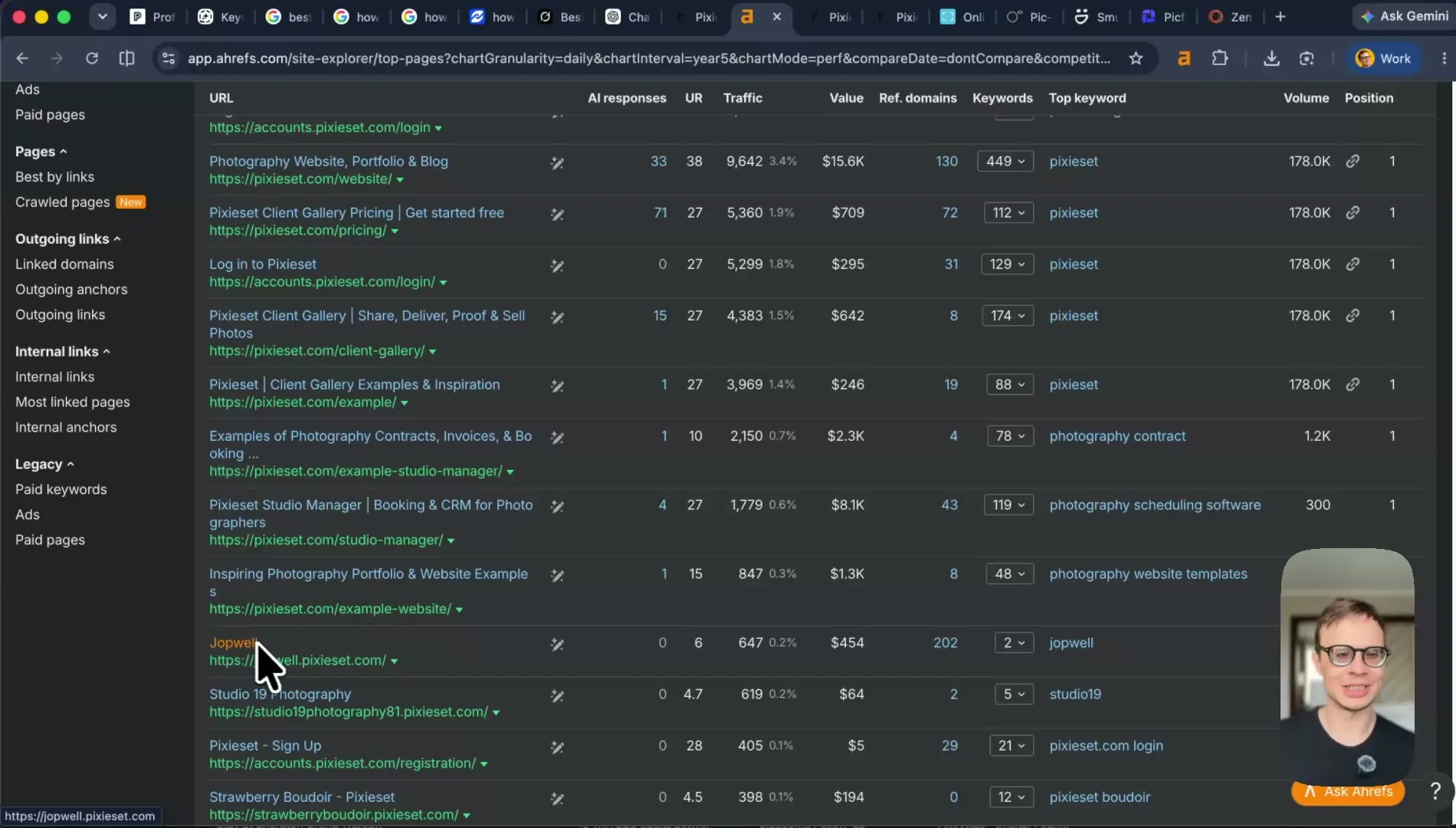
Top pages tell you the playbook:
- Homepage and
/website,/pricing,/client-gallery— branded, high traffic /example-studio-managerranks for photography contract/studio-managerranks for photography scheduling software/example-websiteranks for photography website templates- Then photographer subdomains (
jopwell.pixieset.com,studio19photography81.pixieset.com)
Those client sites are not a side effect. They are the backlink engine.
PicSpot already has the gallery. Make it rankable.
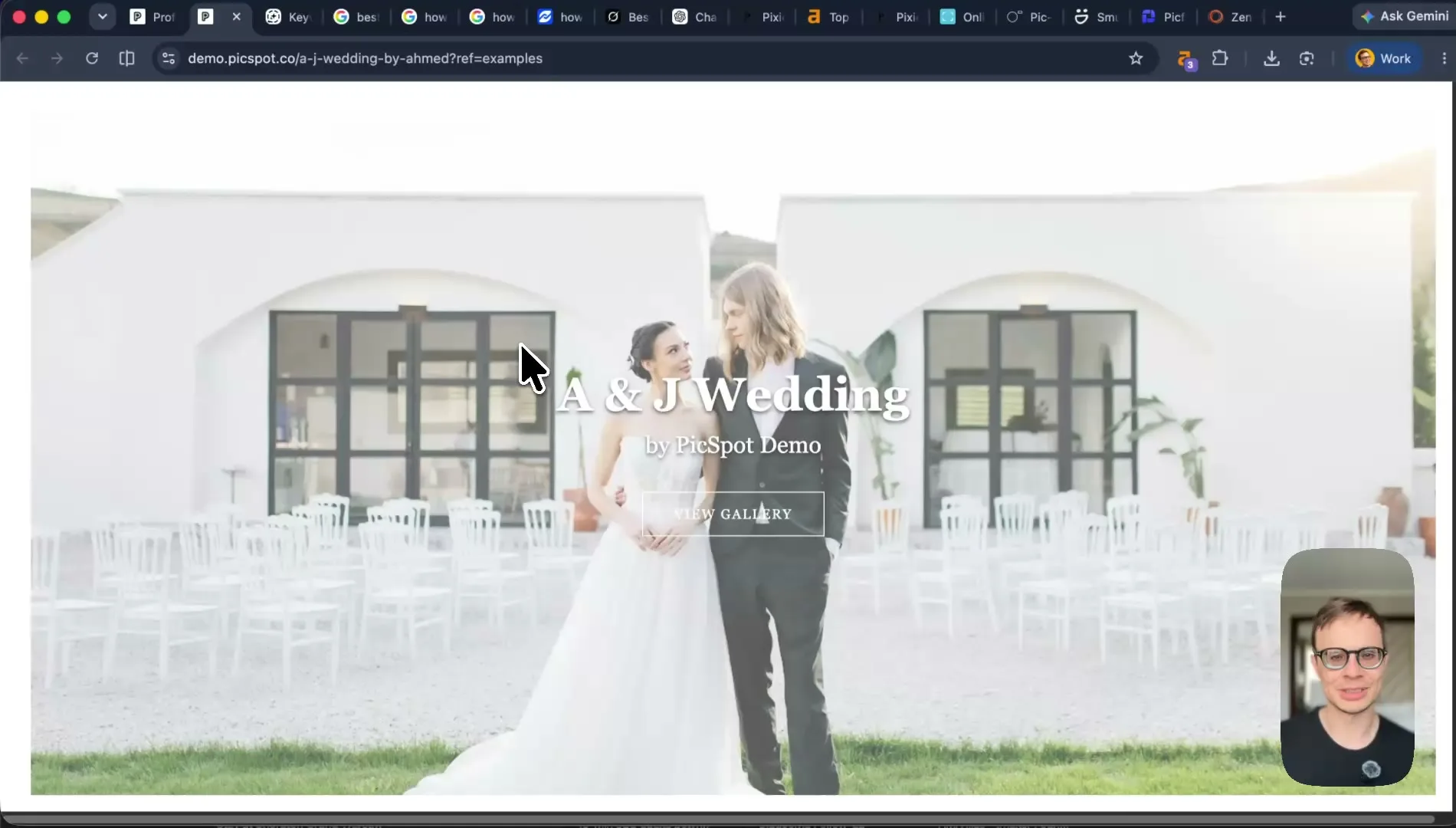
The wedding demo on demo.picspot.co is the product. Clients share that link, or treat it as a mini portfolio. The next horizontal move Pixieset made — full photographer websites, digital delivery, proofing, portfolio — is optional. The SEO move is: every public gallery and example needs its own title, description, and H1.
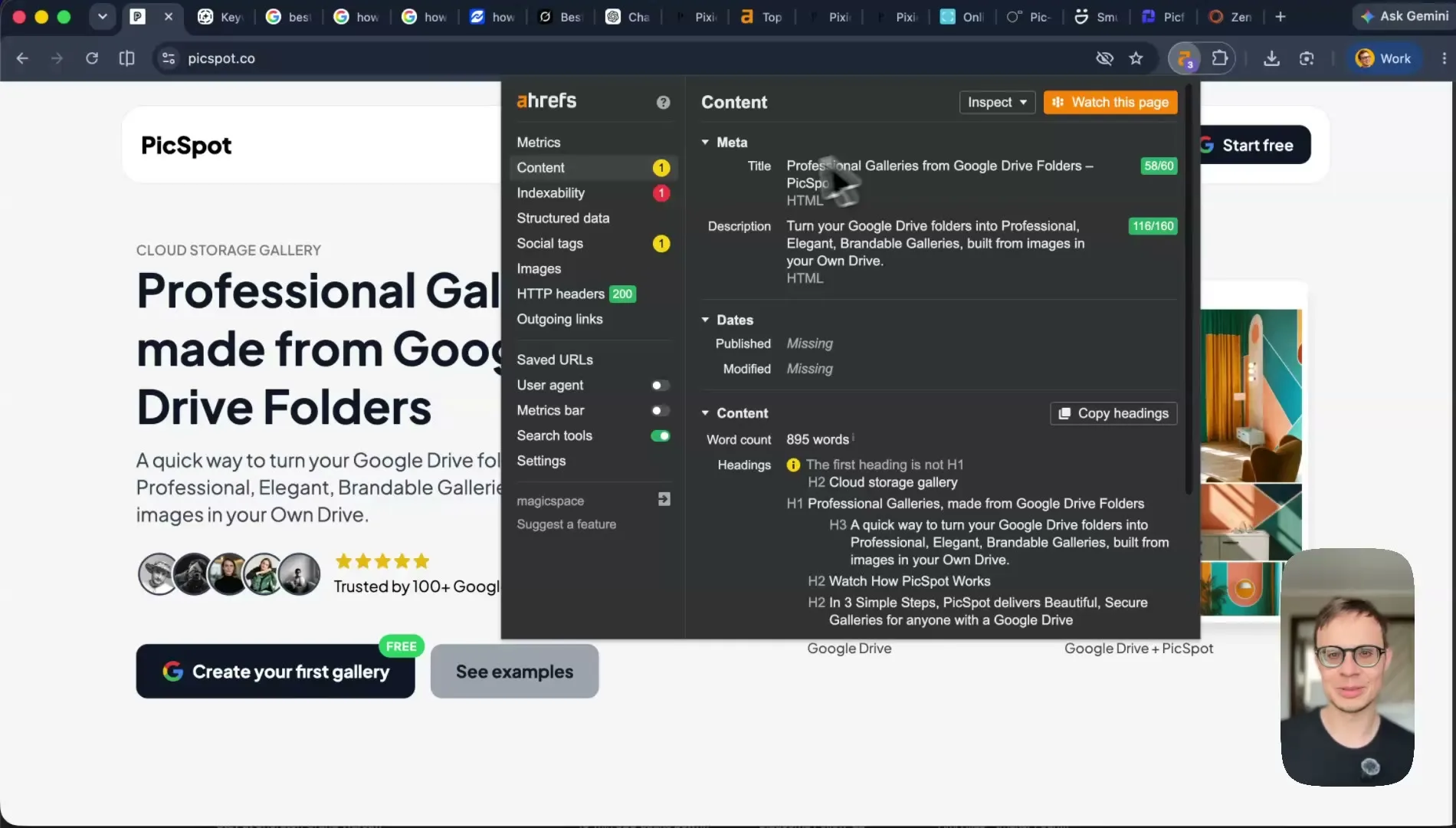
The homepage title is Professional Galleries from Google Drive Folders – PicSpot. Example pages reuse the same framing. Ahrefs already flags heading order (first heading is not H1). Run a crawl in Ahrefs Webmaster Tools, or ask an agent to fix duplicates. Pricing, examples, and FAQ each need a unique title people actually type.
Pixieset’s example hub does this:
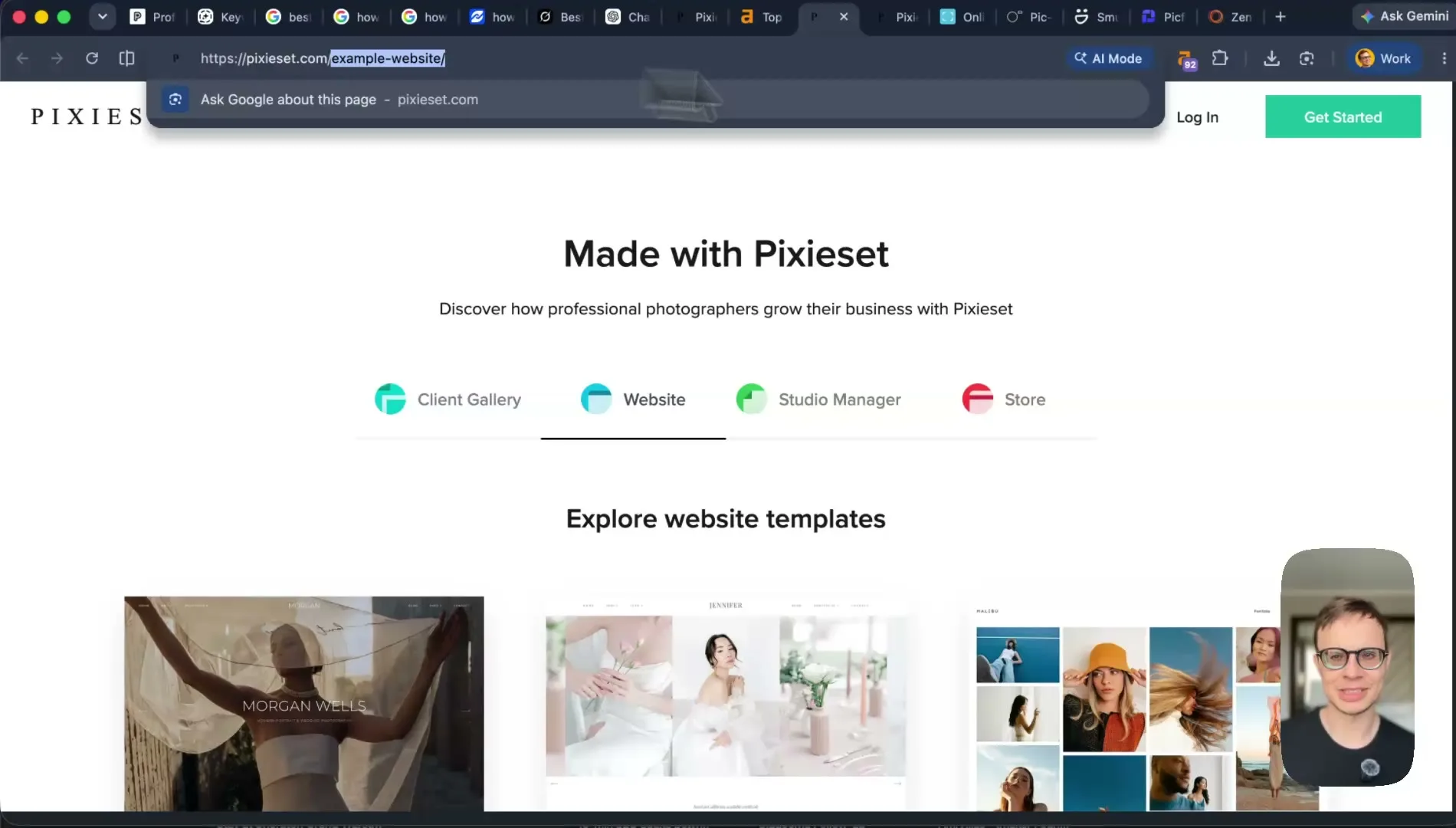
/example-website is titled like inspiring photography portfolio website examples. Someone Googling for inspiration clicks through, sees a real template, then starts. PicSpot’s examples page should steal that SERP title pattern, not the homepage H1.
Same audience, later products: contracts, invoices, quotes, questionnaires, scheduling. Only build those pages if the product exists. The title work on galleries, examples, and pricing is enough for now.
The backlink loop: public sites + a loud free plan
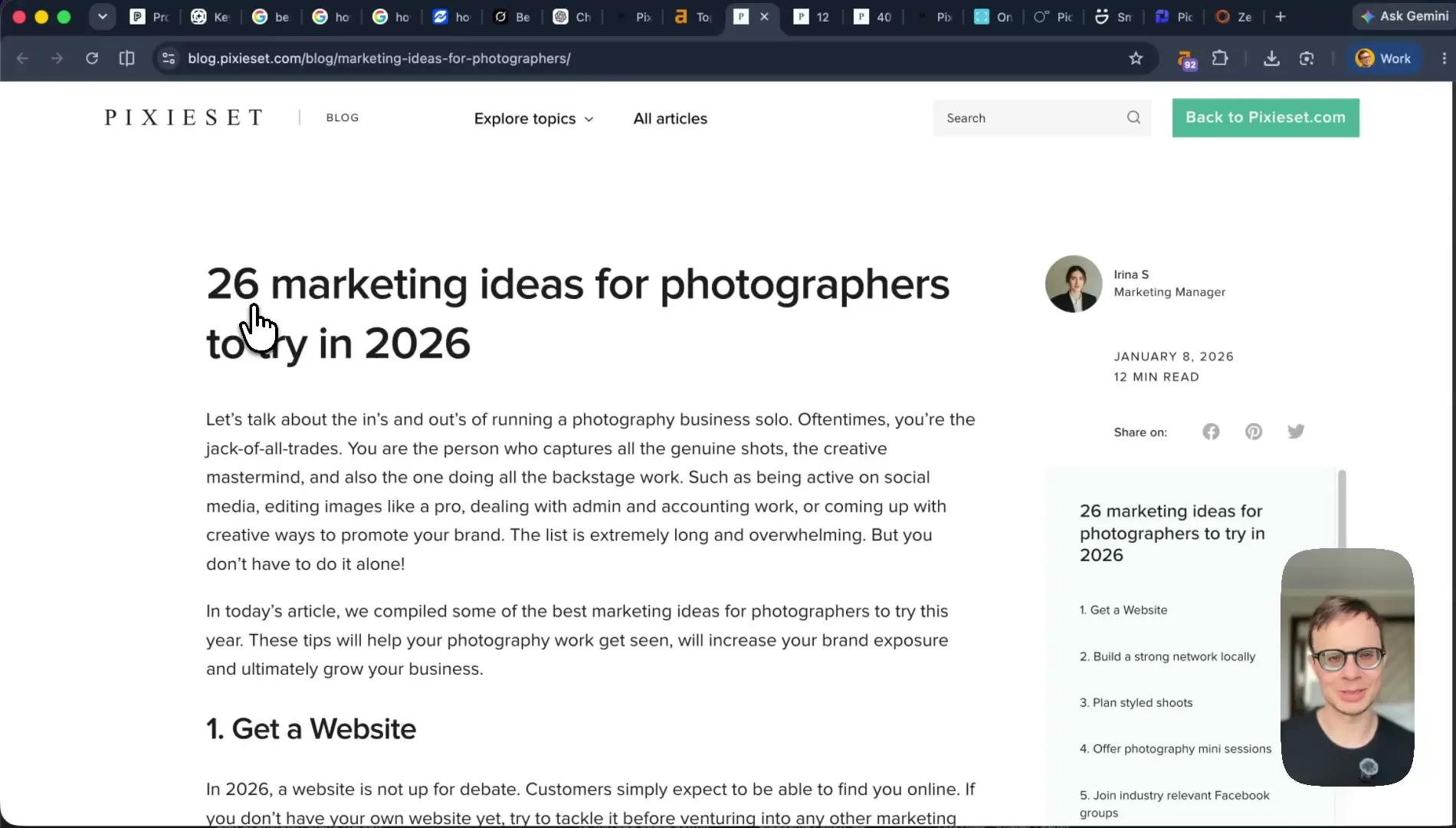
Pixieset writes for the same photographer: marketing ideas, what to put in a contract. That is audience content, not converter tools. ShootProof’s blog is the same idea (photo sizes, wedding party notes, beginner software).
The links that actually move DR come from hosted sites:
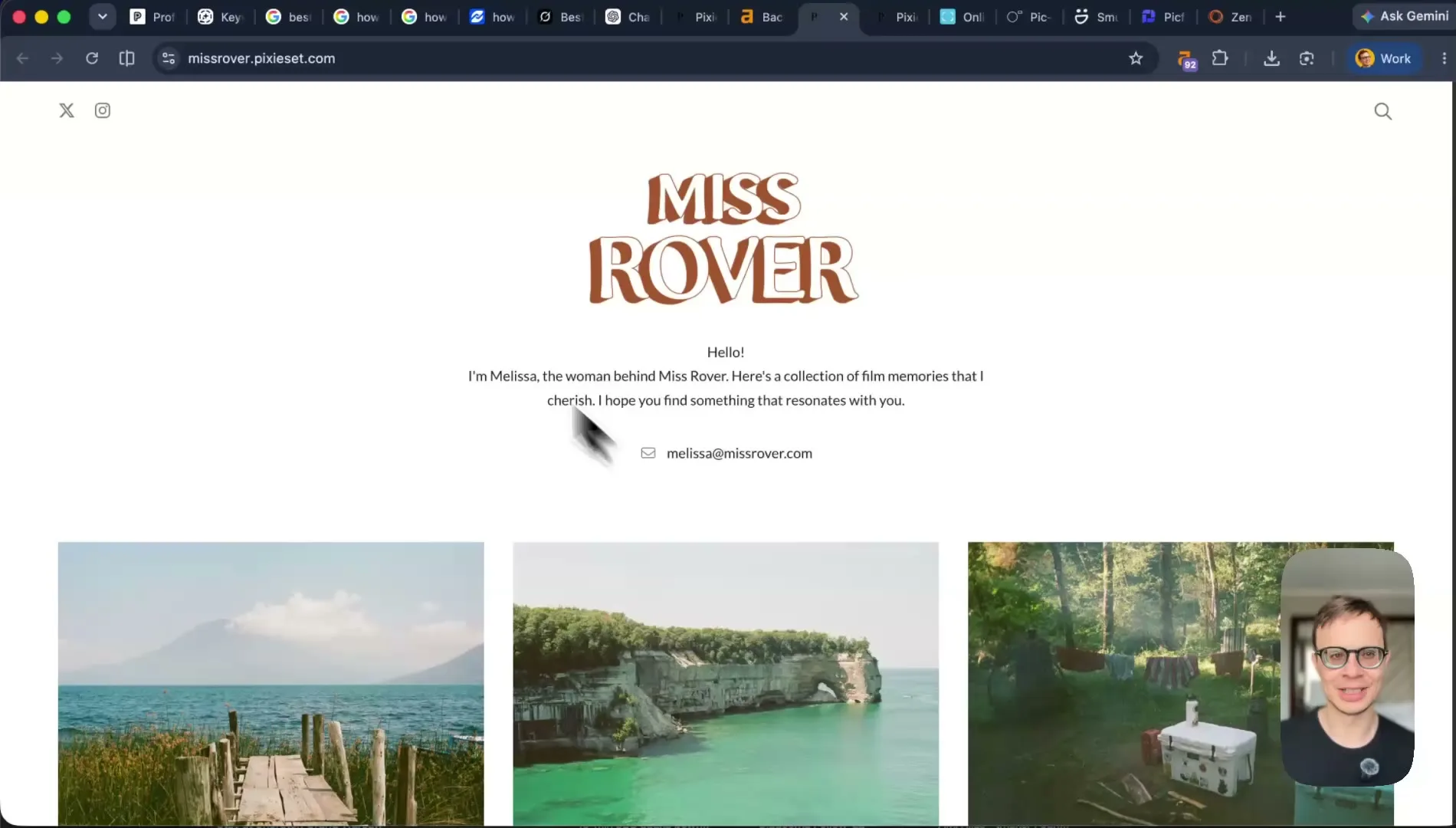
missrover.pixieset.com is a real photographer site. She links it from missrover.com and elsewhere. Pixieset inherits those links. Repeat that thousands of times and you get DR 90.
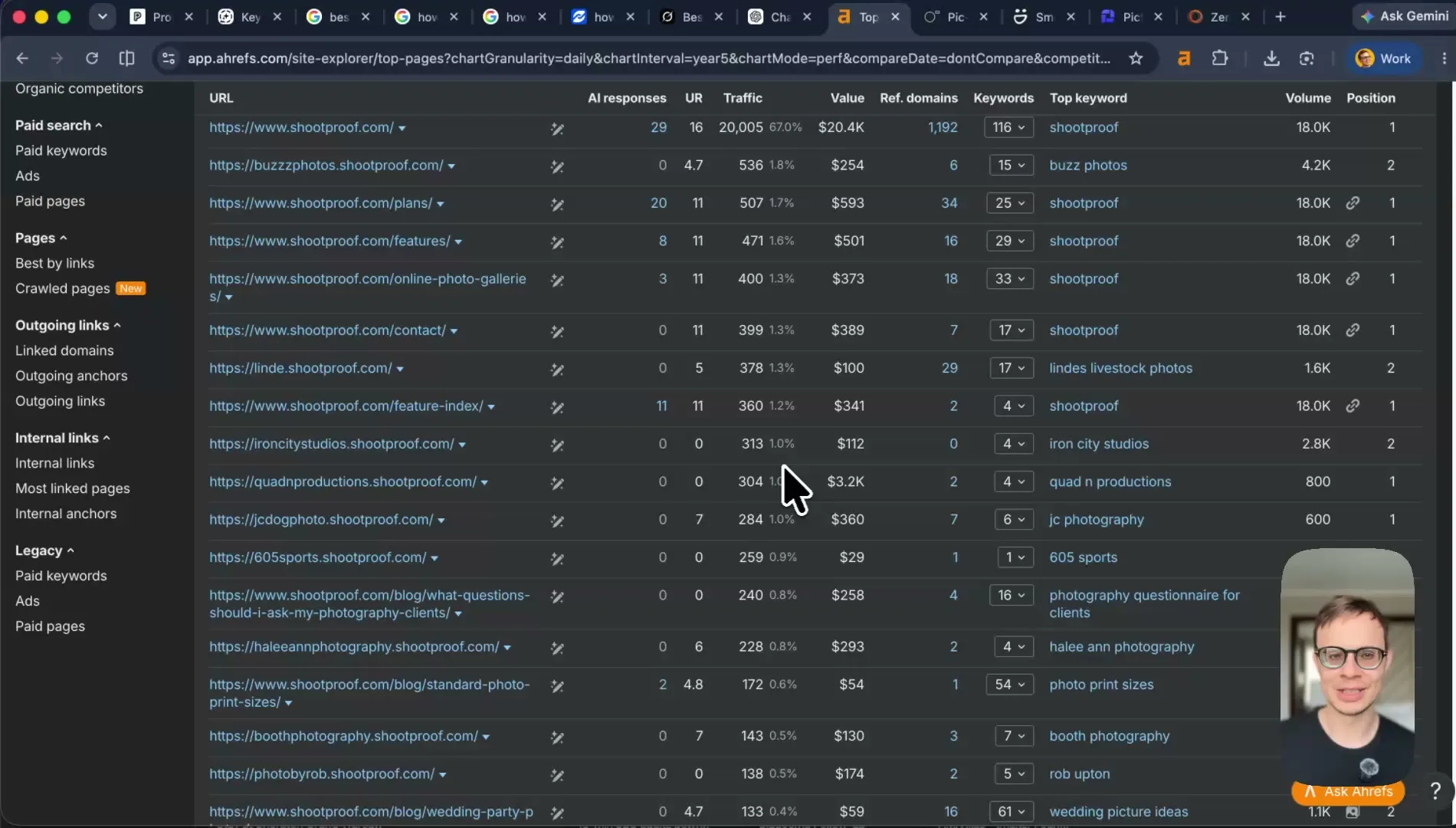
ShootProof (~DR 86): homepage takes 67% of organic (~20K). After that it is client hosts — buzzzphotos.shootproof.com, linde.shootproof.com, ironcitystudios.shootproof.com. Same pattern.
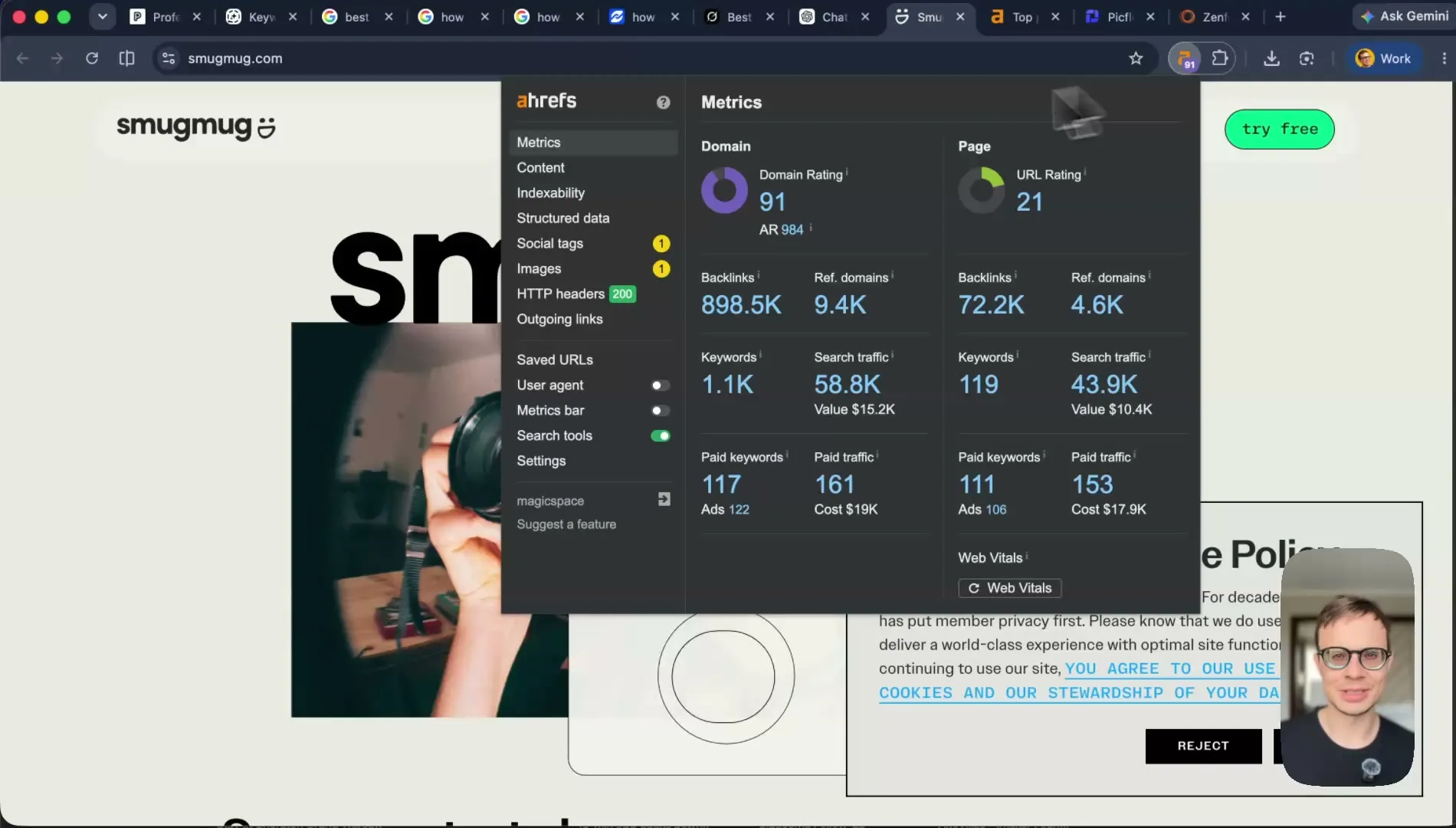
SmugMug is a top-1,000 site globally on SEO metrics: DR 91, 898K backlinks, 58.8K search traffic. Brand search first.
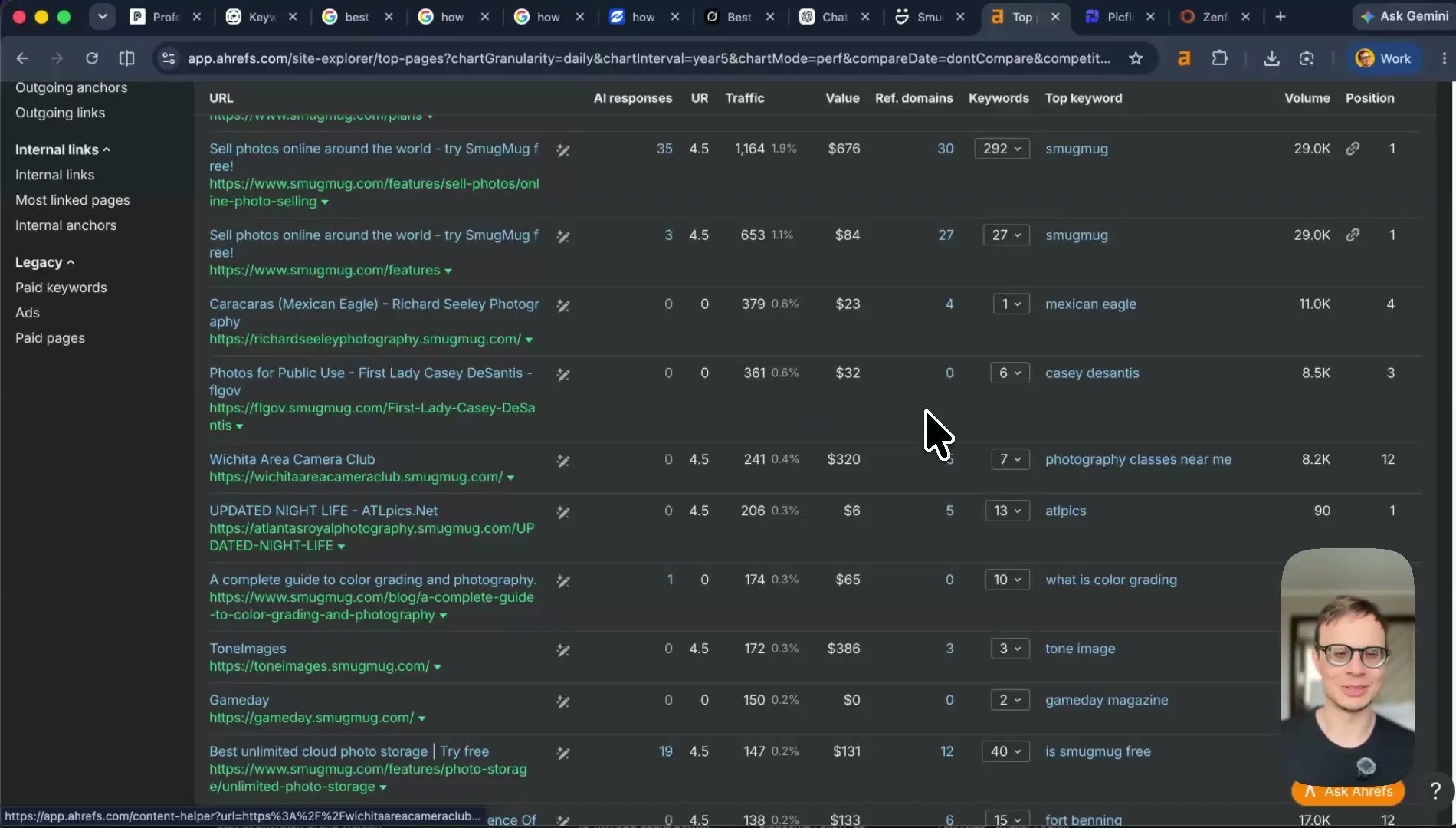
Then client URLs (wichitaareacameraclub.smugmug.com, richardseeleyphotography.smugmug.com) rank for local and niche queries. Pic-Time (~DR 87, ~42K traffic) is the same: branded search plus client galleries on subdomains.
What to copy: host public profiles and galleries on a subdomain (or custom domain) with a small PicSpot credit on the free plan. Get as many public pages indexed as possible. Pro can remove branding later.
What not to copy: Pic-Flow’s converter farm.
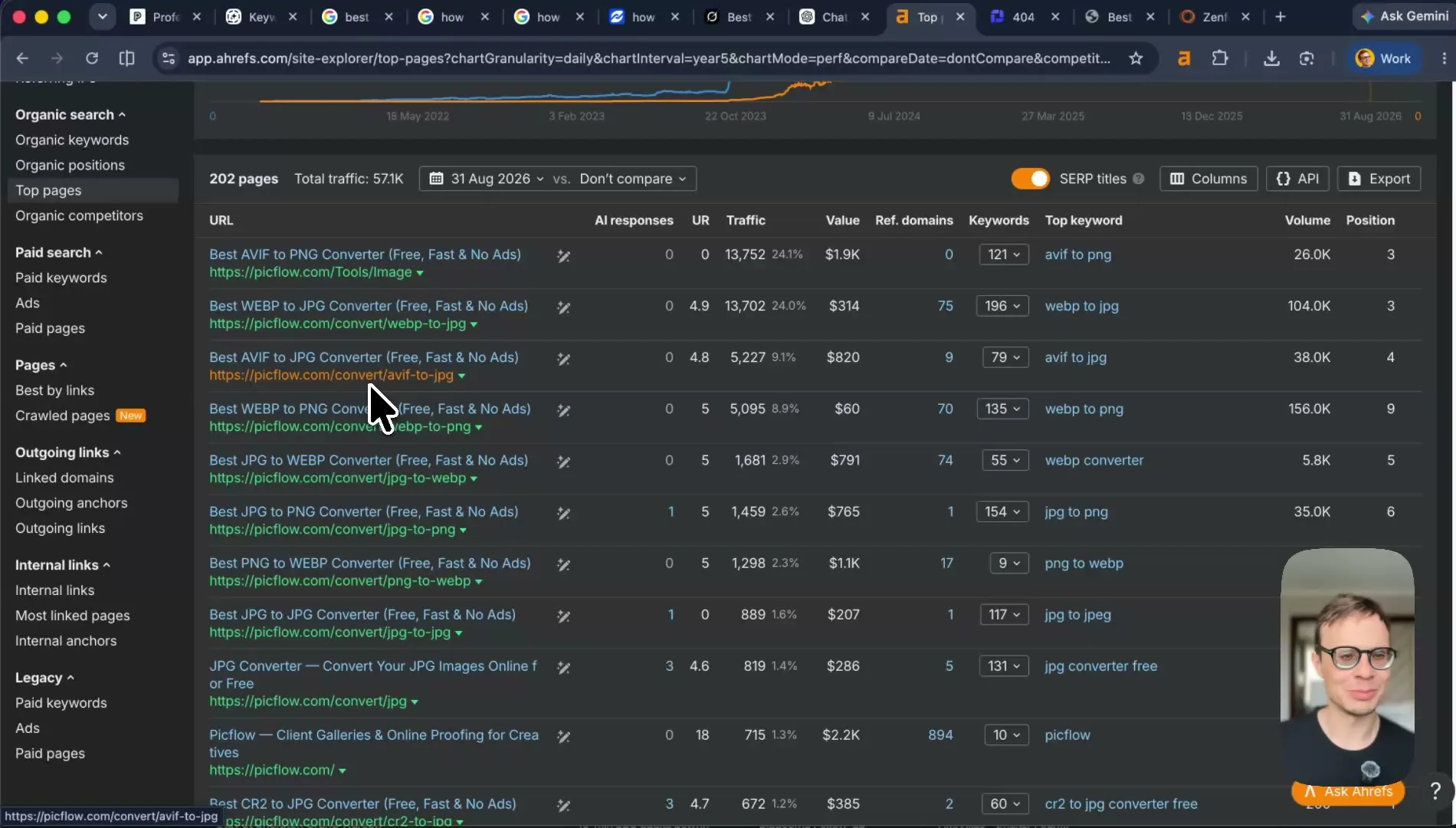
Pic-Flow’s top URLs are “Best AVIF to PNG Converter” and “Best WEBP to JPG Converter.” Hundreds of thousands of visits. Someone converting a file will not buy a client gallery. Skip it.
Keywords that match the product
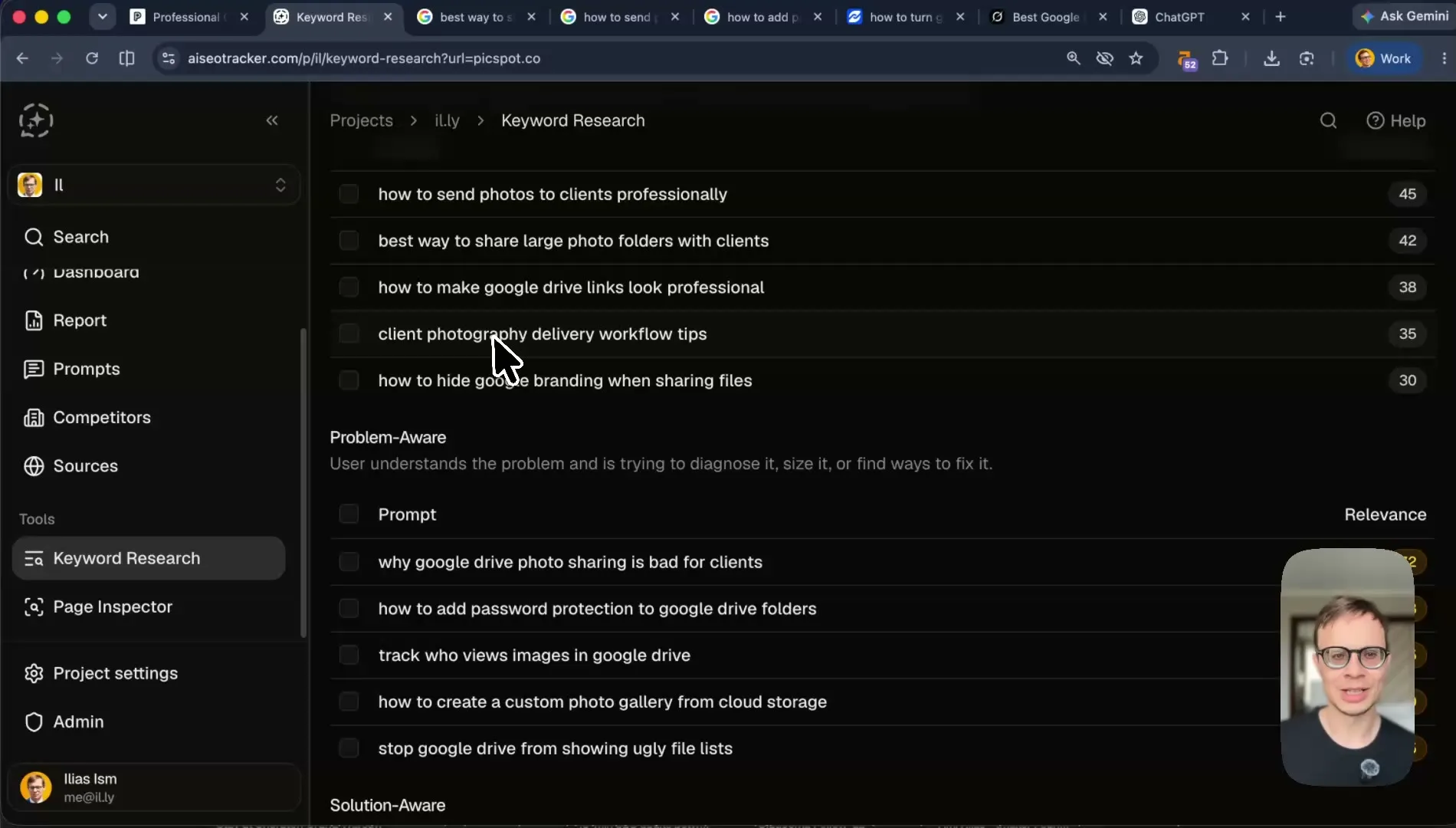
AI SEO Tracker groups the jobs people type before they know PicSpot exists:
Unaware / problem:
- how to send photos to clients professionally
- best way to share large photo folders with clients
- how to make Google Drive links look professional
- client photography delivery workflow tips
- how to hide Google branding when sharing files
- why Google Drive photo sharing is bad for clients
- how to add password protection to Google Drive folders
Google already answers the first one:
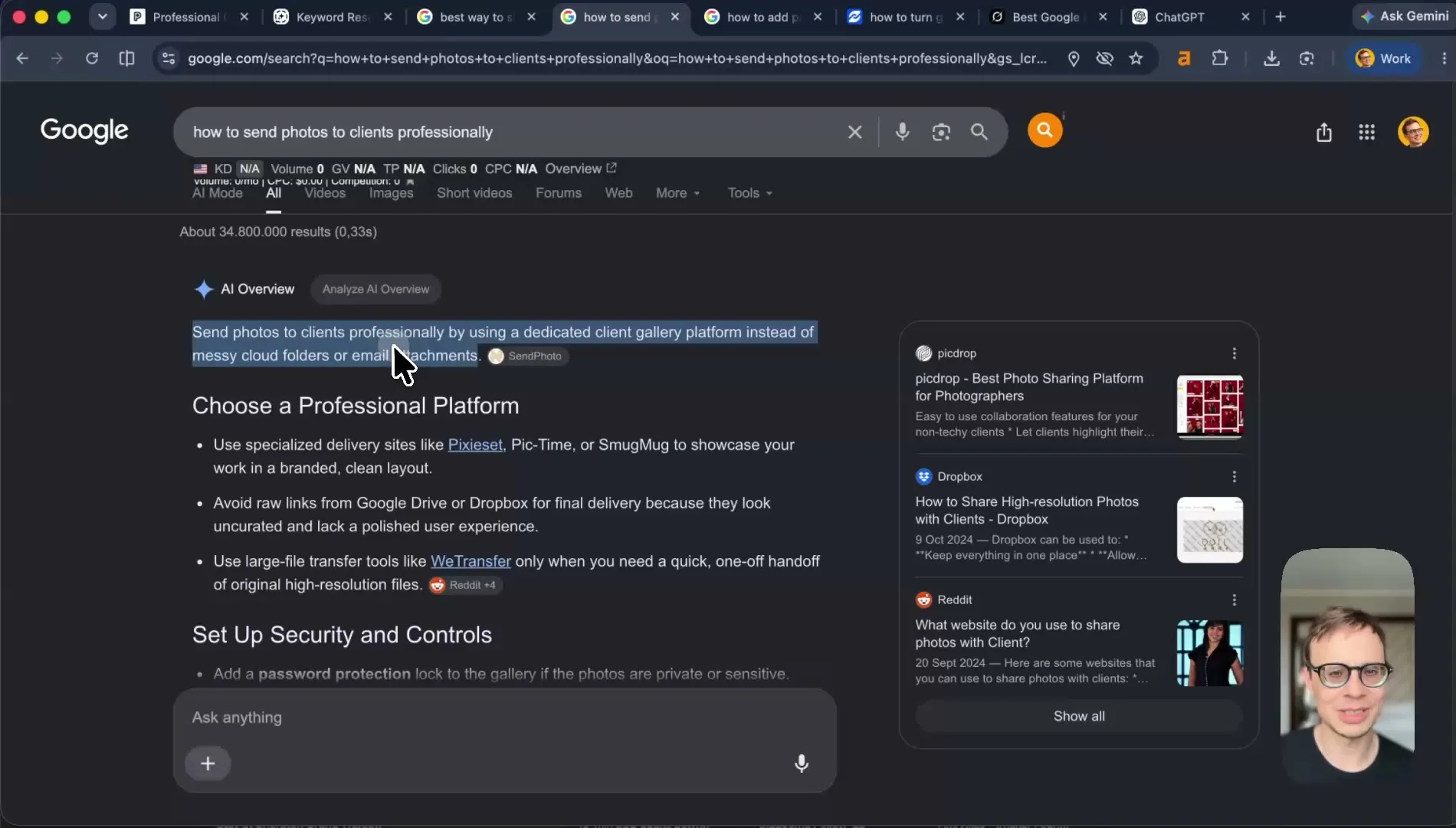
“Send photos to clients professionally by using a dedicated client gallery platform instead of messy cloud folders or email attachments.” The overview names Pixieset, Pic-Time, SmugMug. It tells people to avoid raw Drive links. That is PicSpot’s exact job — and PicSpot is missing.
Pixieset earned the cite with a matching listicle:
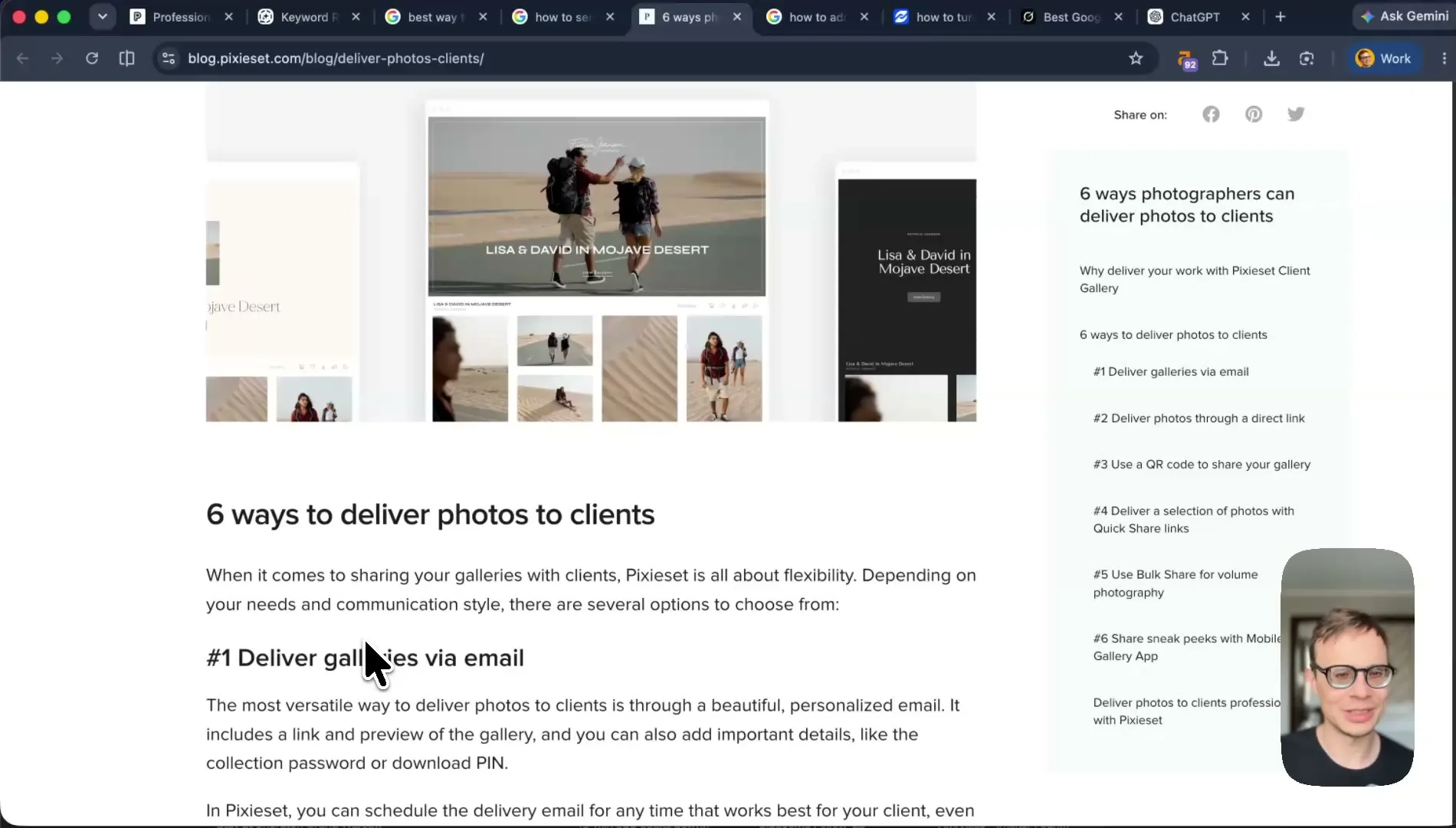
6 ways photographers can deliver photos to clients talks email, direct link, QR code — then the product. AI Overviews read that page. Write the PicSpot version: Drive folder vs gallery, password-protected delivery, how to share large folders without WeTransfer.
Reddit is already in the sidebar:
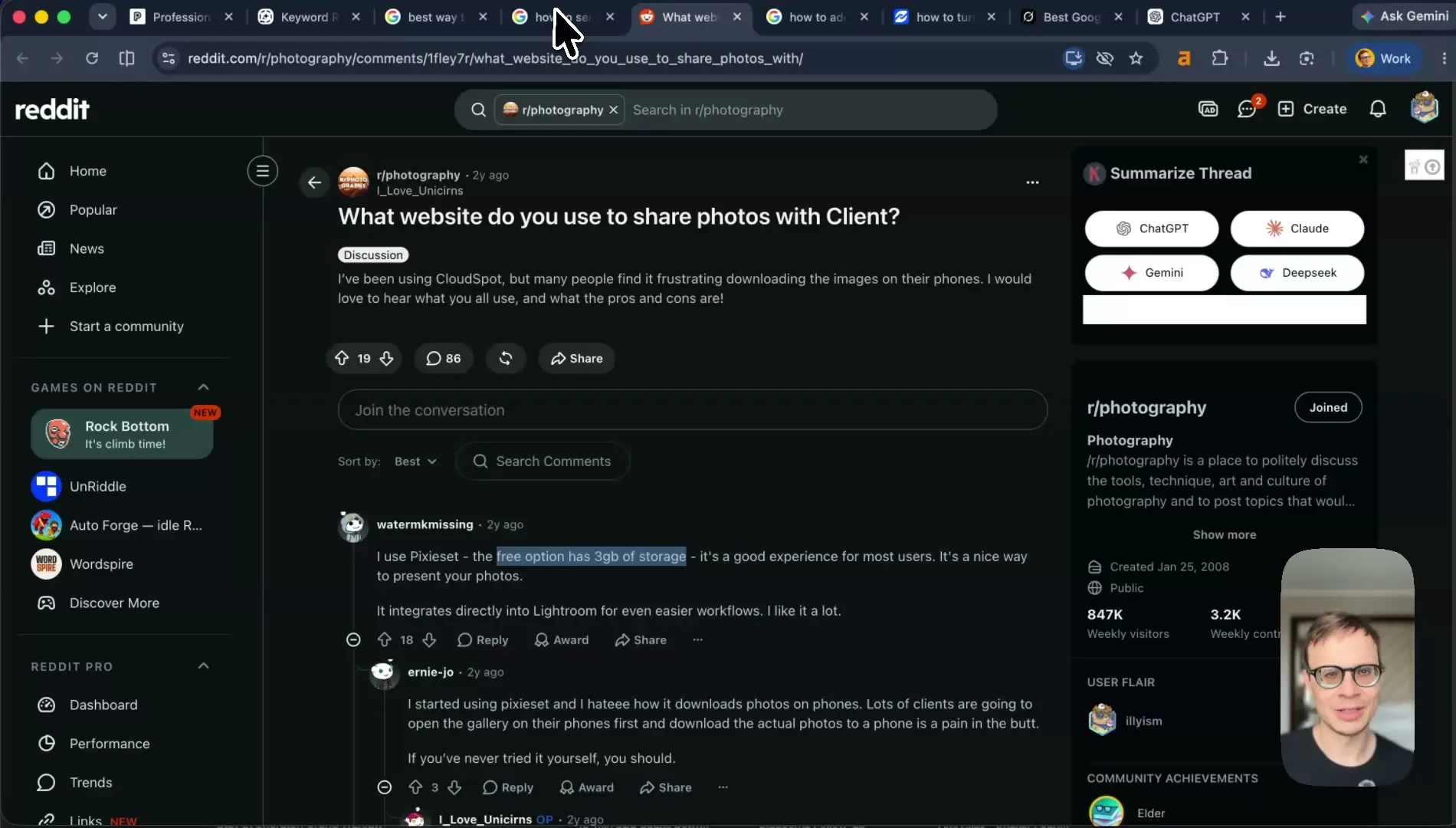
On “What website do you use to share photos with Client?” the top comment is Pixieset’s free 3GB plan. Do not automate comments. Open the threads the tracker lists under Sources, answer honestly, mention the free gallery on Drive. Same for YouTube reviews Pic-Time is buying and Facebook groups.
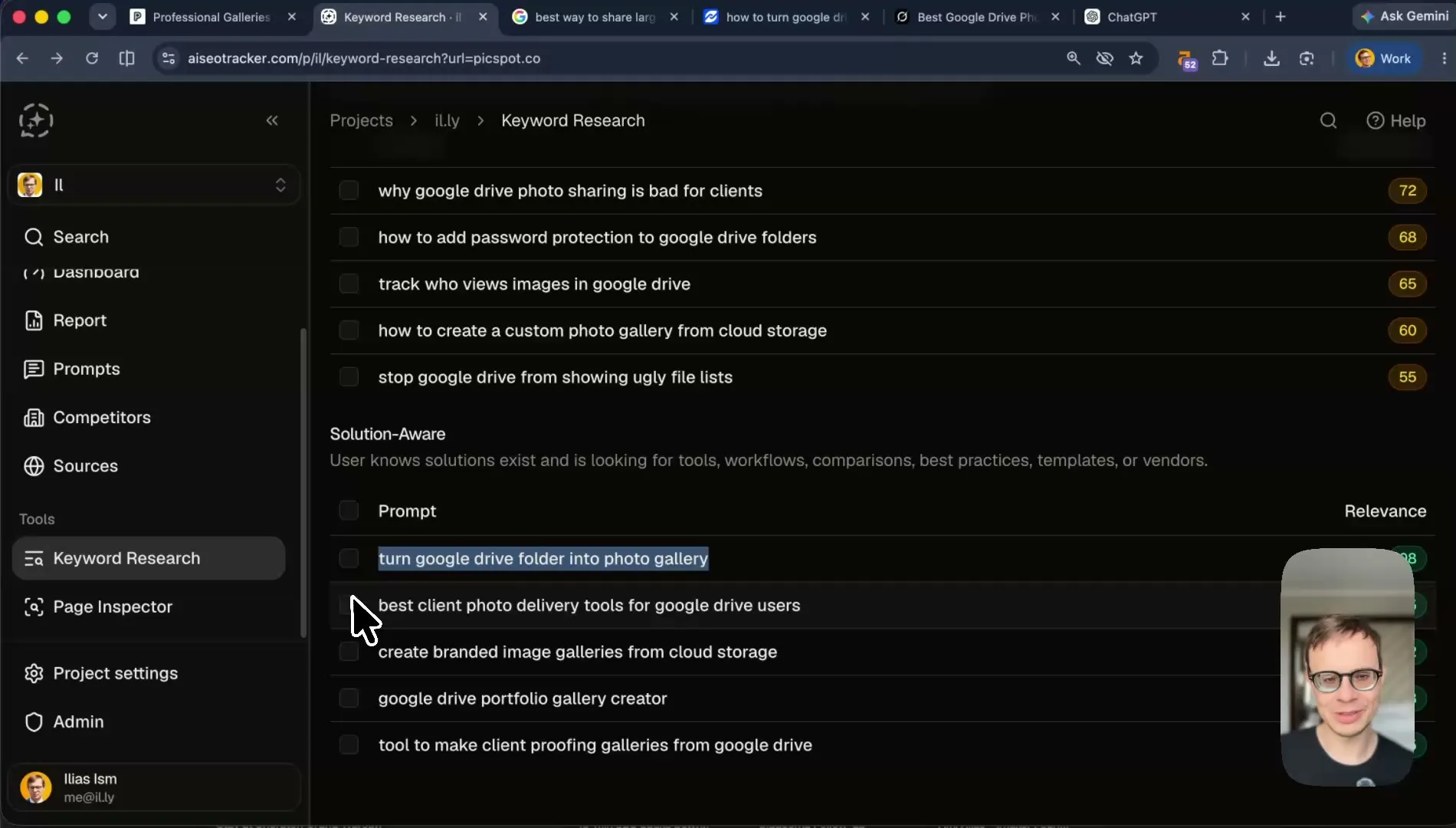
Bottom of funnel — this is where PicSpot should win:
- turn Google Drive folder into photo gallery
- best client photo delivery tools for Google Drive users
- create branded image galleries from cloud storage
- Google Drive portfolio gallery creator
- tool to make client proofing galleries from Google Drive
Those pages and posts are the product, not a stretch.
AI search needs third-party proof
Grok (smart search) does several queries, opens pricing, then hunts for a review that is not the vendor site. PicSpot already shows up in a Drive-wrapper comparison:
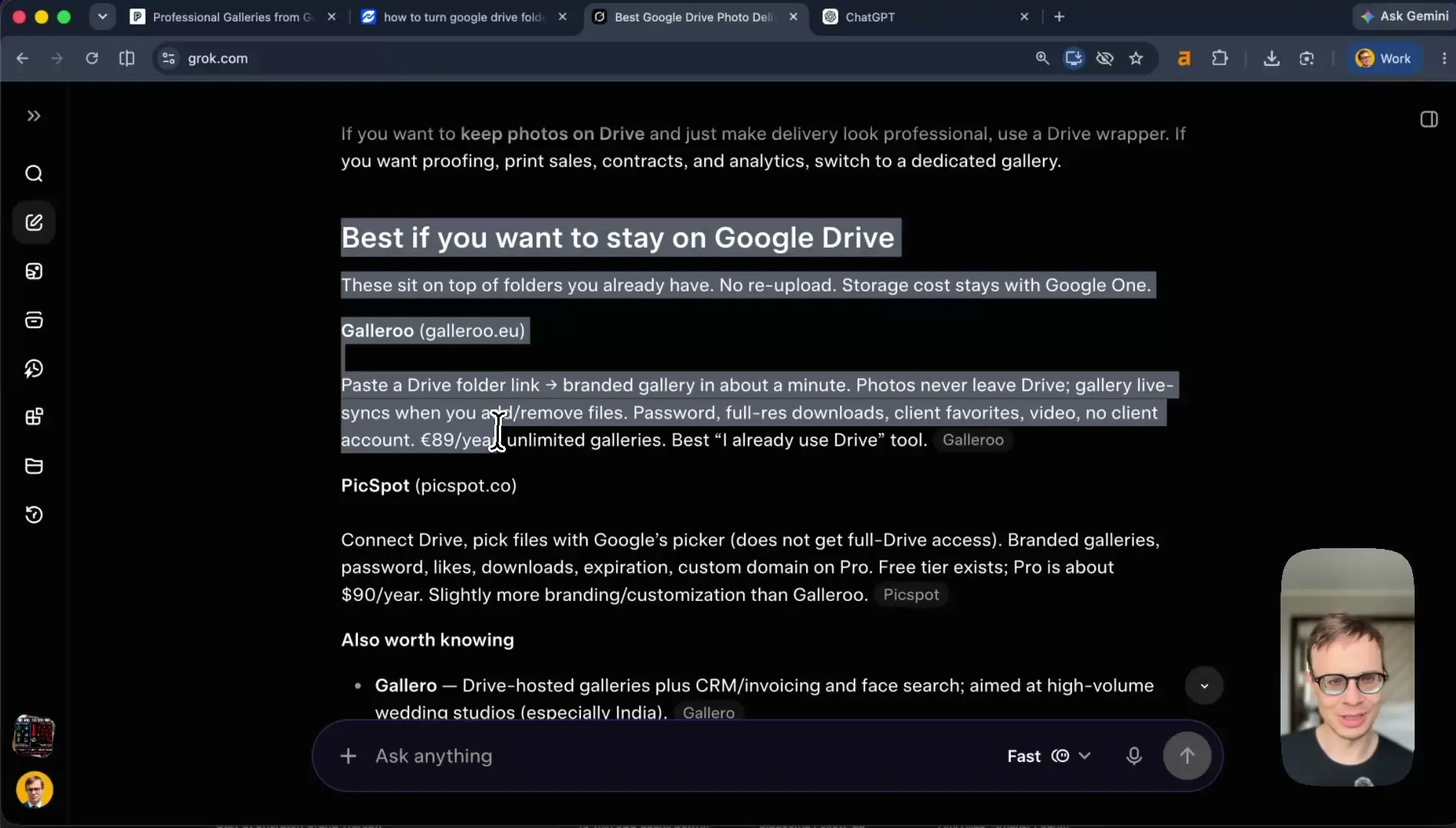
That is the right bucket. It still listed PicSpotr on GetApp when looking for proof:
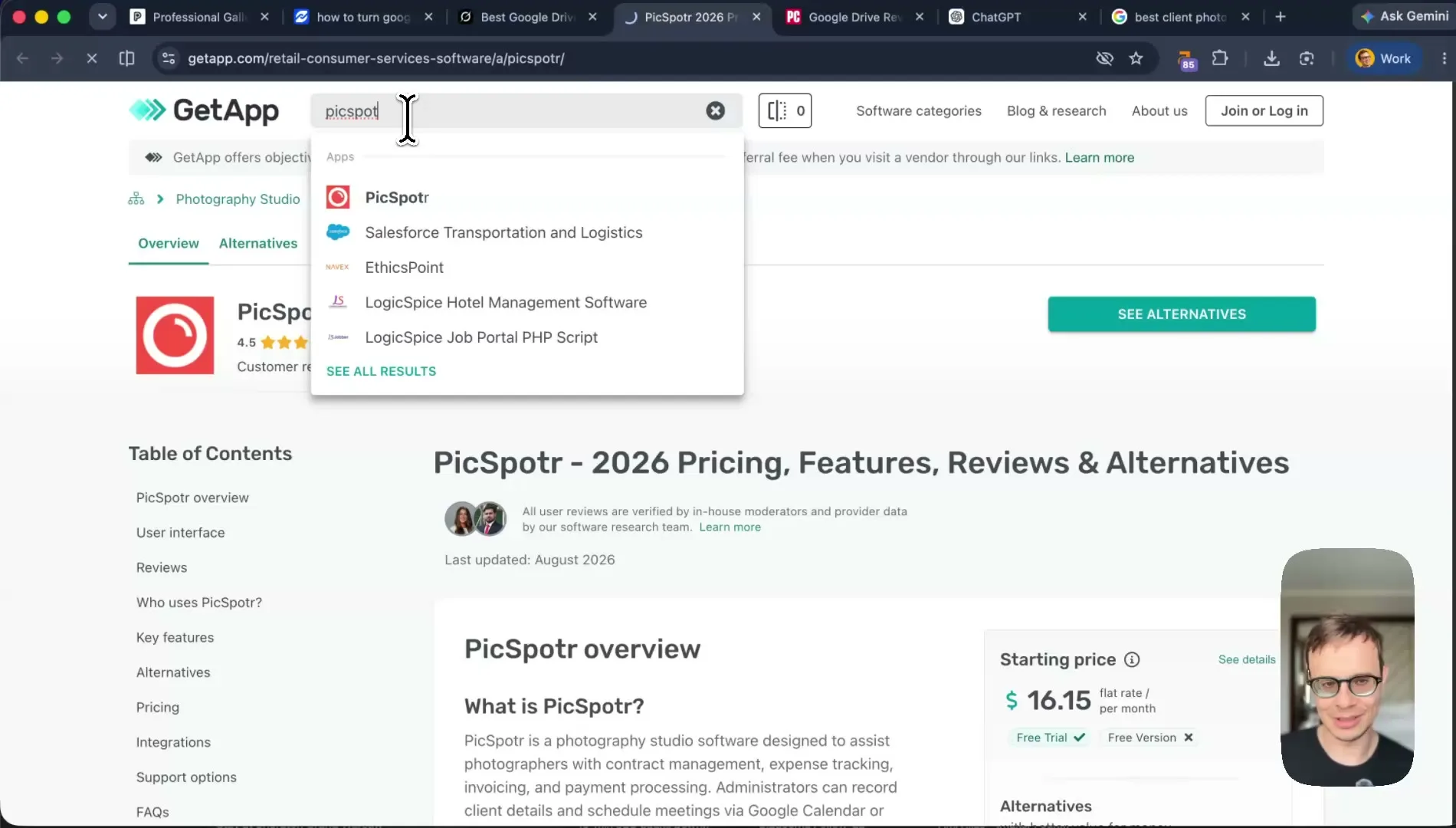
PicSpot is not on GetApp. The model grabbed a lookalike photography CRM. List the real product on GetApp, Capterra, and similar directories with accurate pricing. AI wants a third-party source.
ChatGPT Instant skipped deep search and recommended Pic-Time, Pixieset, ShootProof, CloudSpot, and Drive:
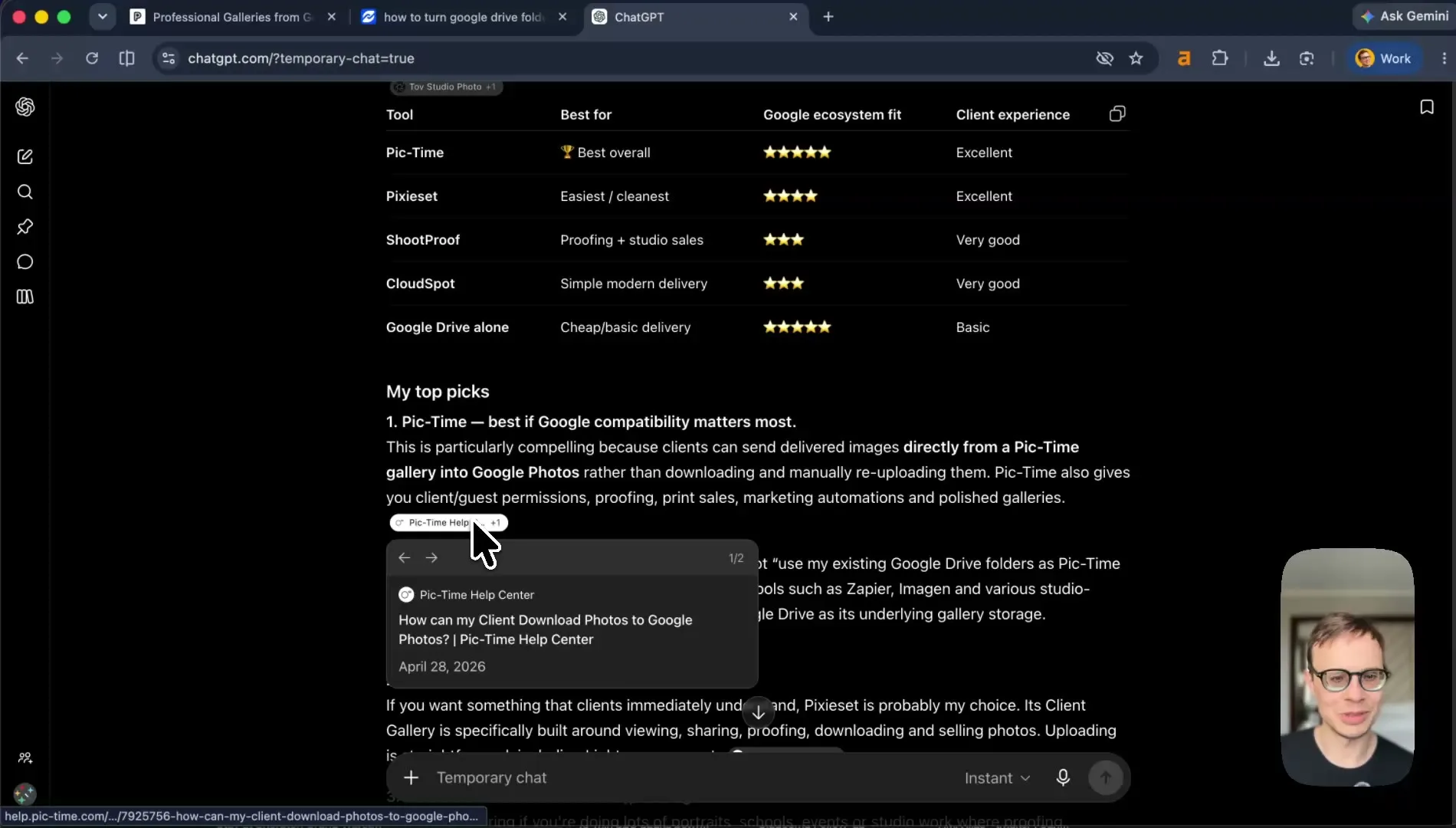
Instant models recycle whoever has help docs, listicles, and reviews. Grok went further because it actually opened the site. Close the gap with sources, not more homepage copy.
The outreach list is one Google search:
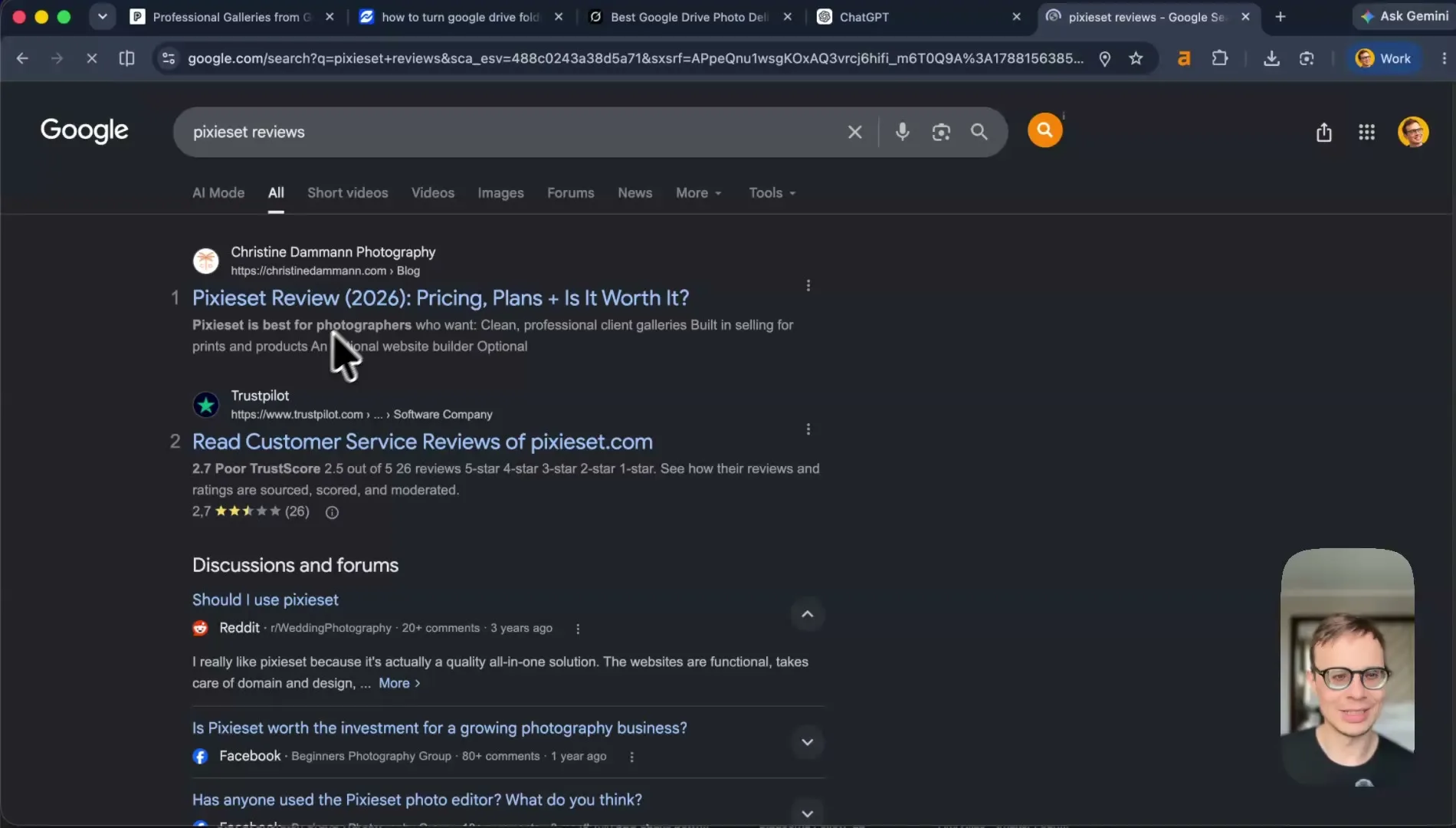
Search [competitor] reviews. Email the photographer blogs, offer a free Pro account, ask for a similar write-up. Trustpilot, Reddit, and Facebook threads are the same SERP. Scan those queries weekly in AI SEO Tracker (or by hand).
What to ship first
- Unique title, meta description, and H1 on homepage, examples, pricing, and FAQ. Fix heading order.
- Public customer galleries on subdomains (or custom domains), crawlable, with a PicSpot credit on the free plan.
- Three useful posts that match AI Overviews: professional client delivery, Drive folder → gallery, sharing large folders / password-protected Drive.
- GetApp / Capterra listings with real pricing. Outreach to sites already reviewing Pixieset and Pic-Time.
- Manual comments on the Reddit / YouTube / Facebook threads the tracker already lists. Instagram and TikTok for brand search — competitors’ organic volume is mostly people typing the product name.
The category is won by hosted client sites and citable reviews. Not JPEG converters.