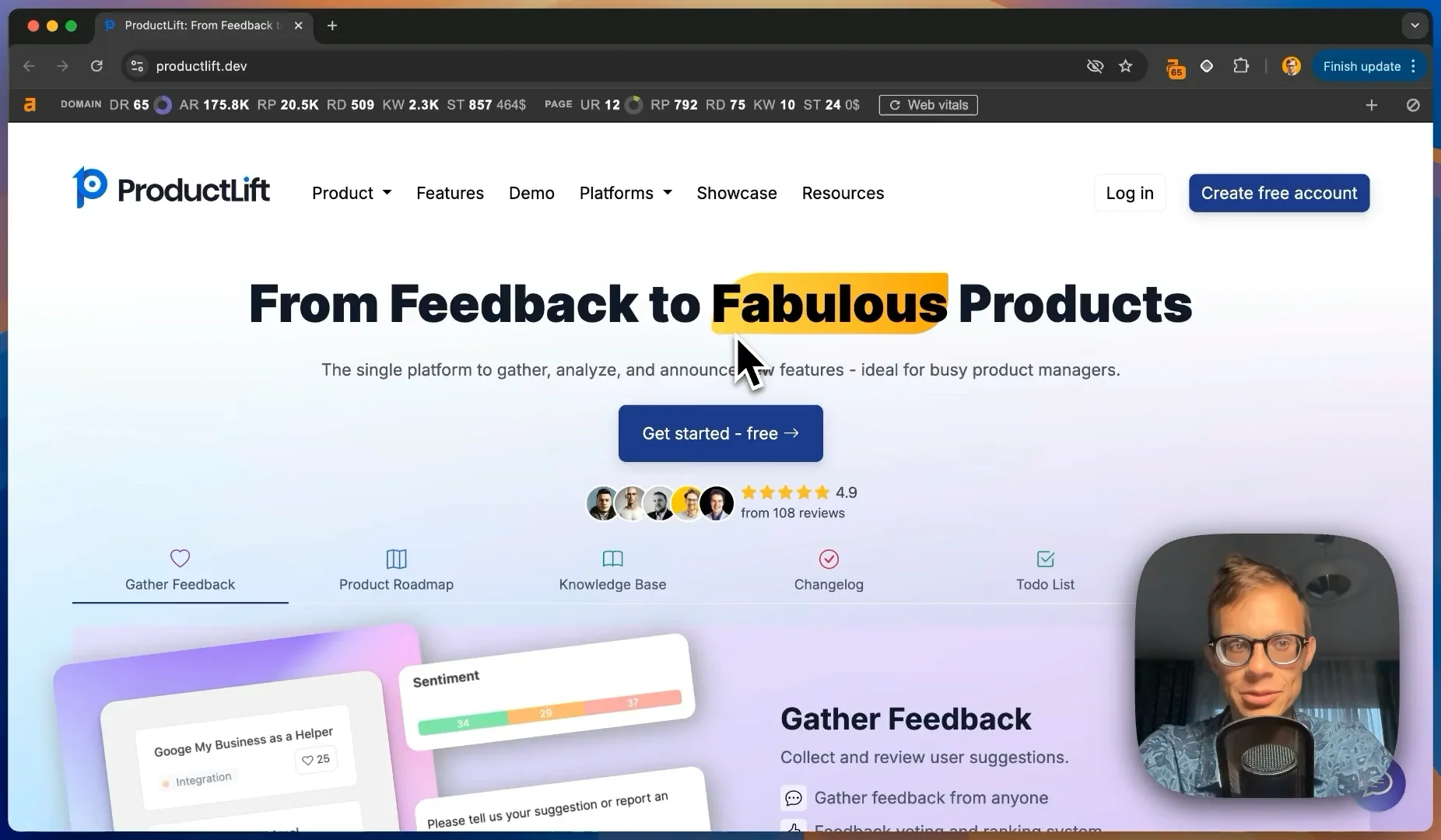
Public SEO Roast

ProductLift SEO Audit

Target featured snippets, and refresh content for 2000+ word articles. Potential to 5x organic traffic and dominate product management niche.

productlift.dev360 transcript segments
Roast my site next
0:00 / 0:00

Full Video Transcript

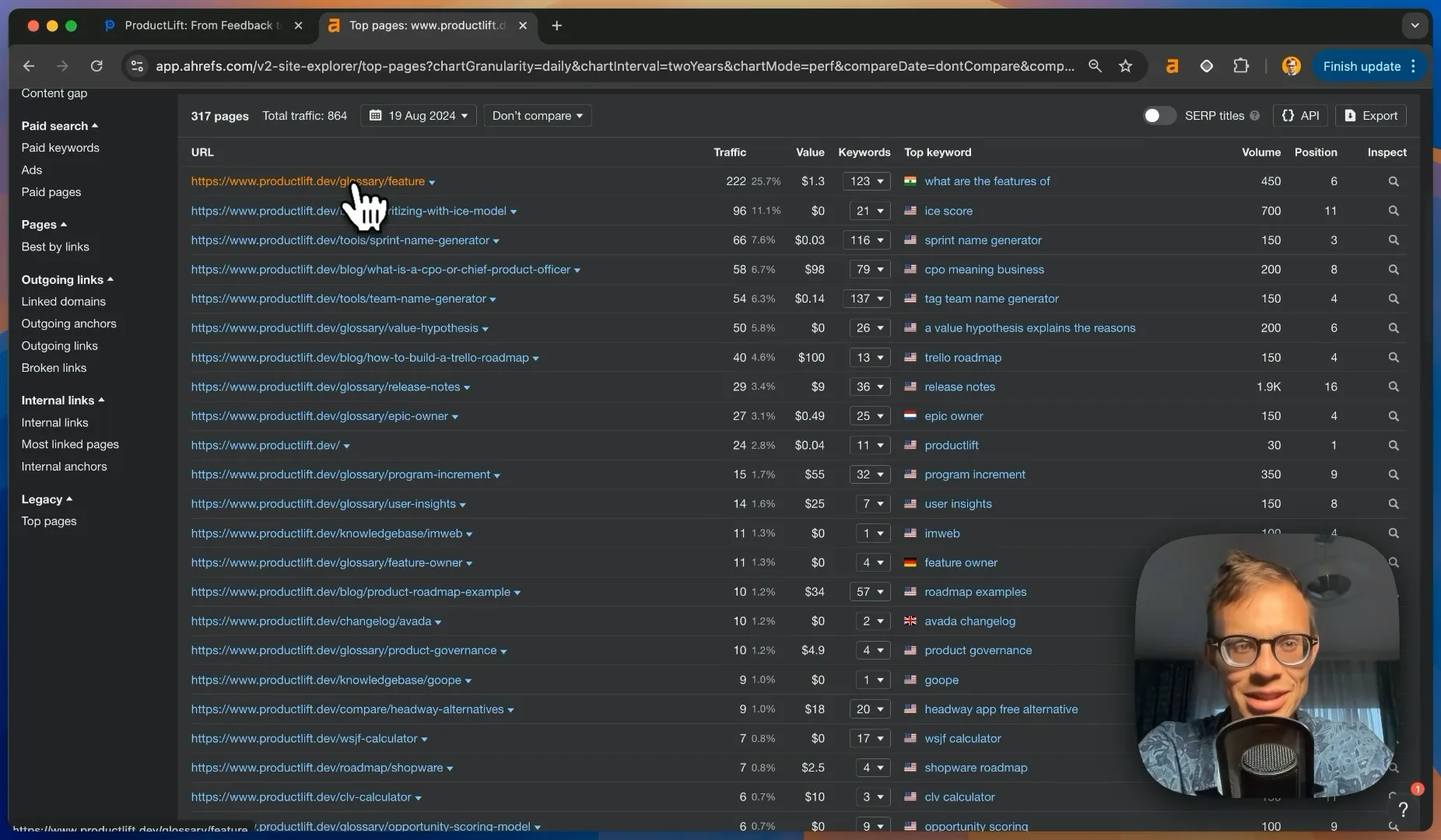
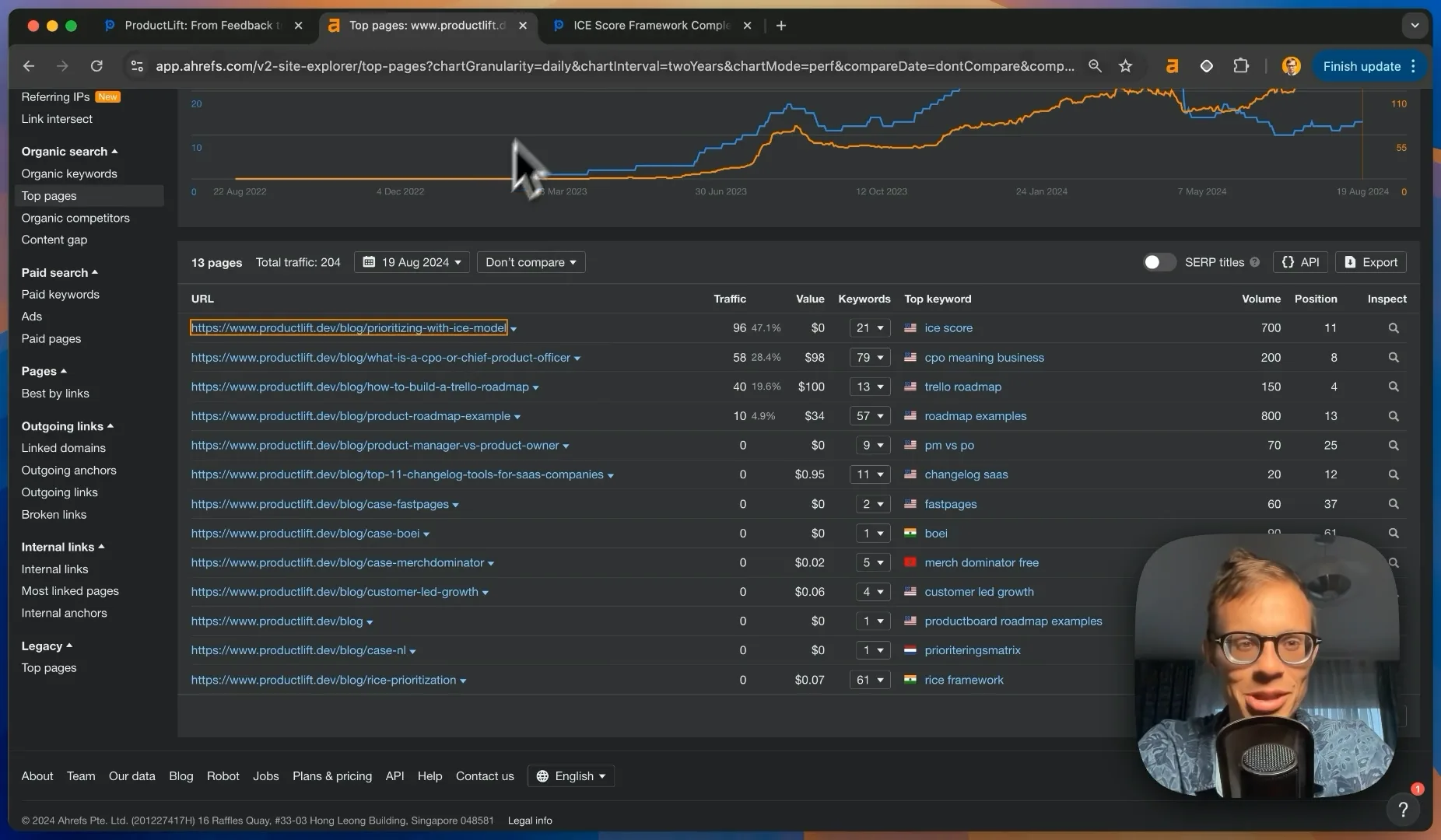
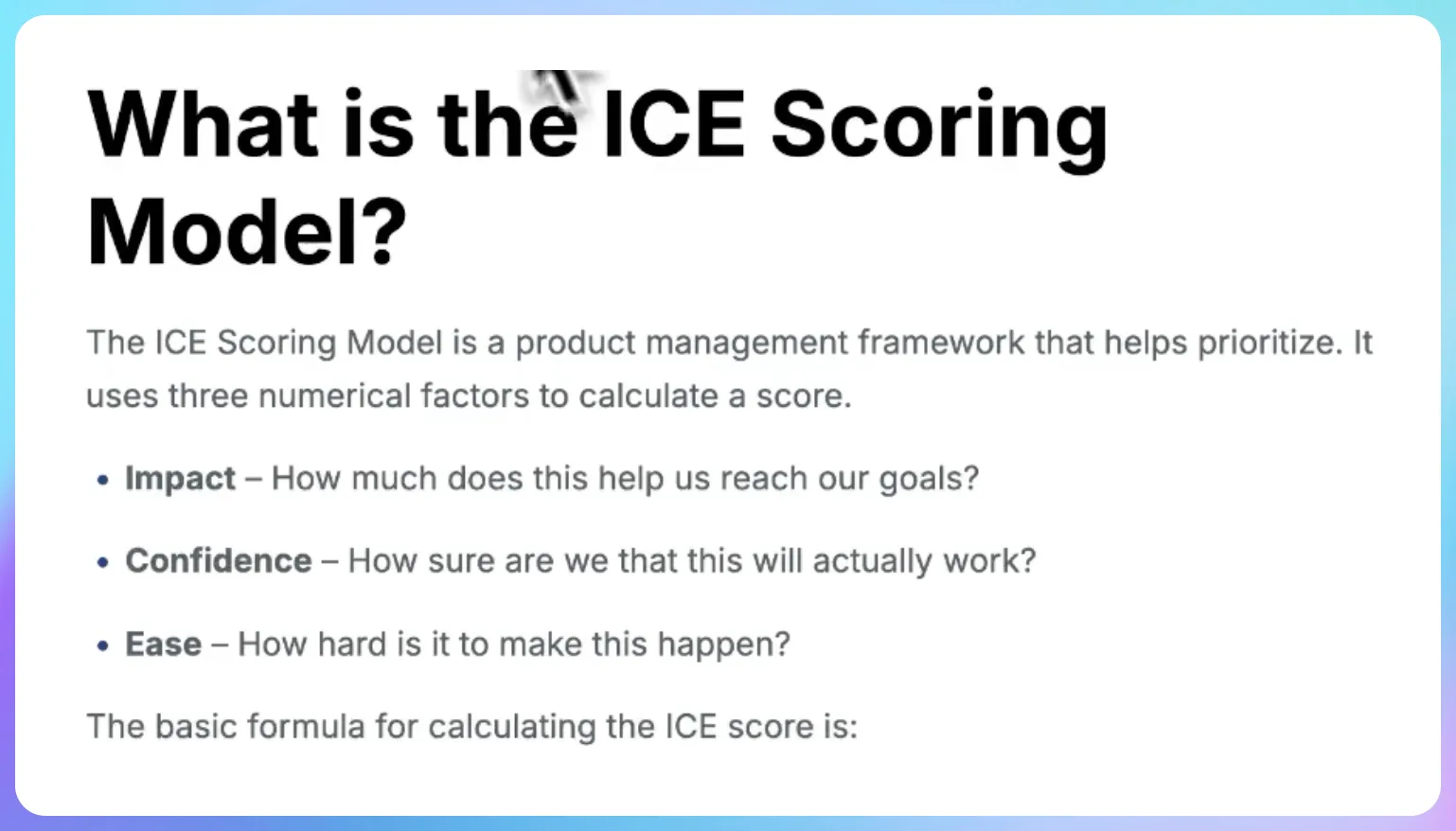
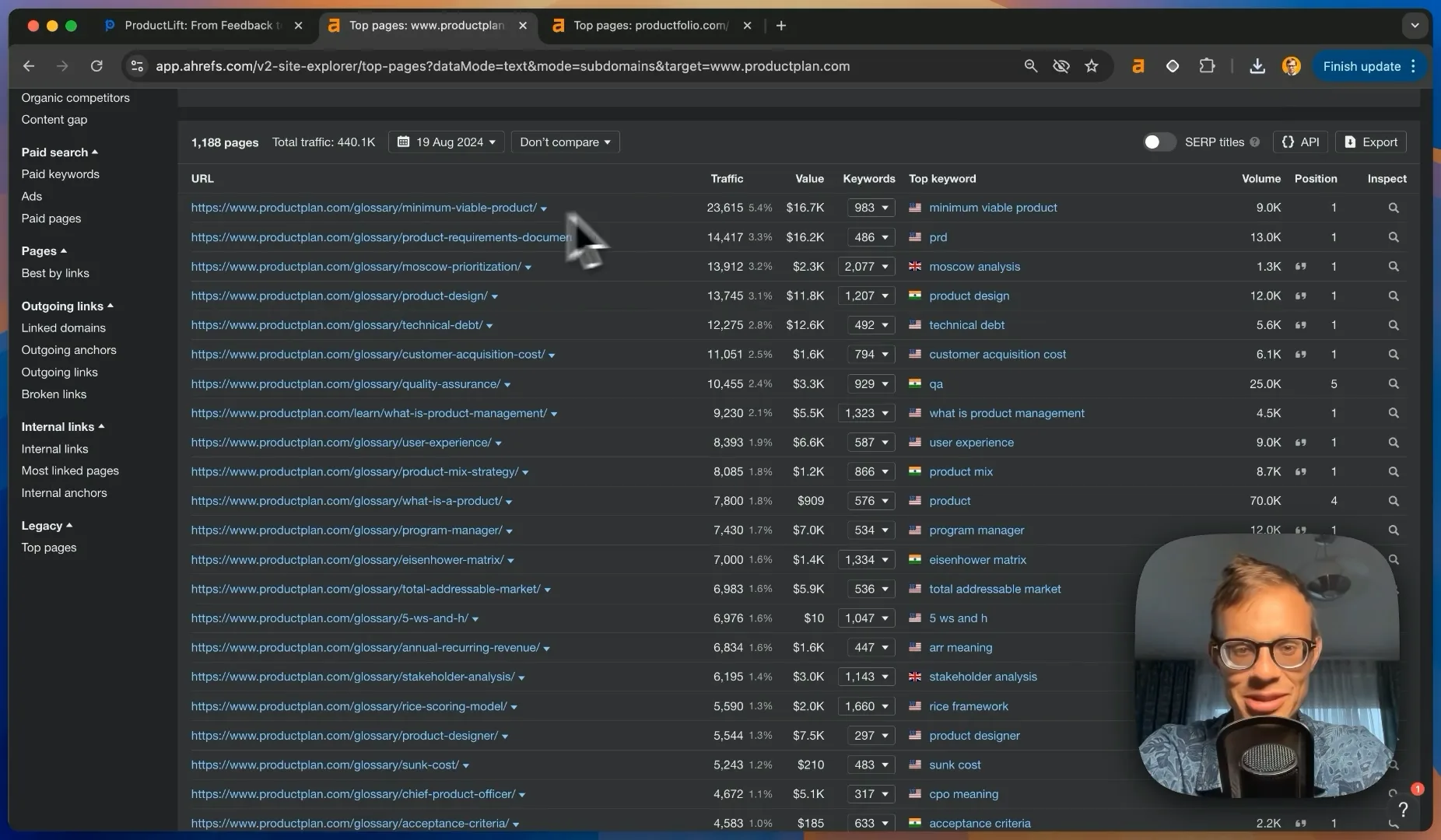
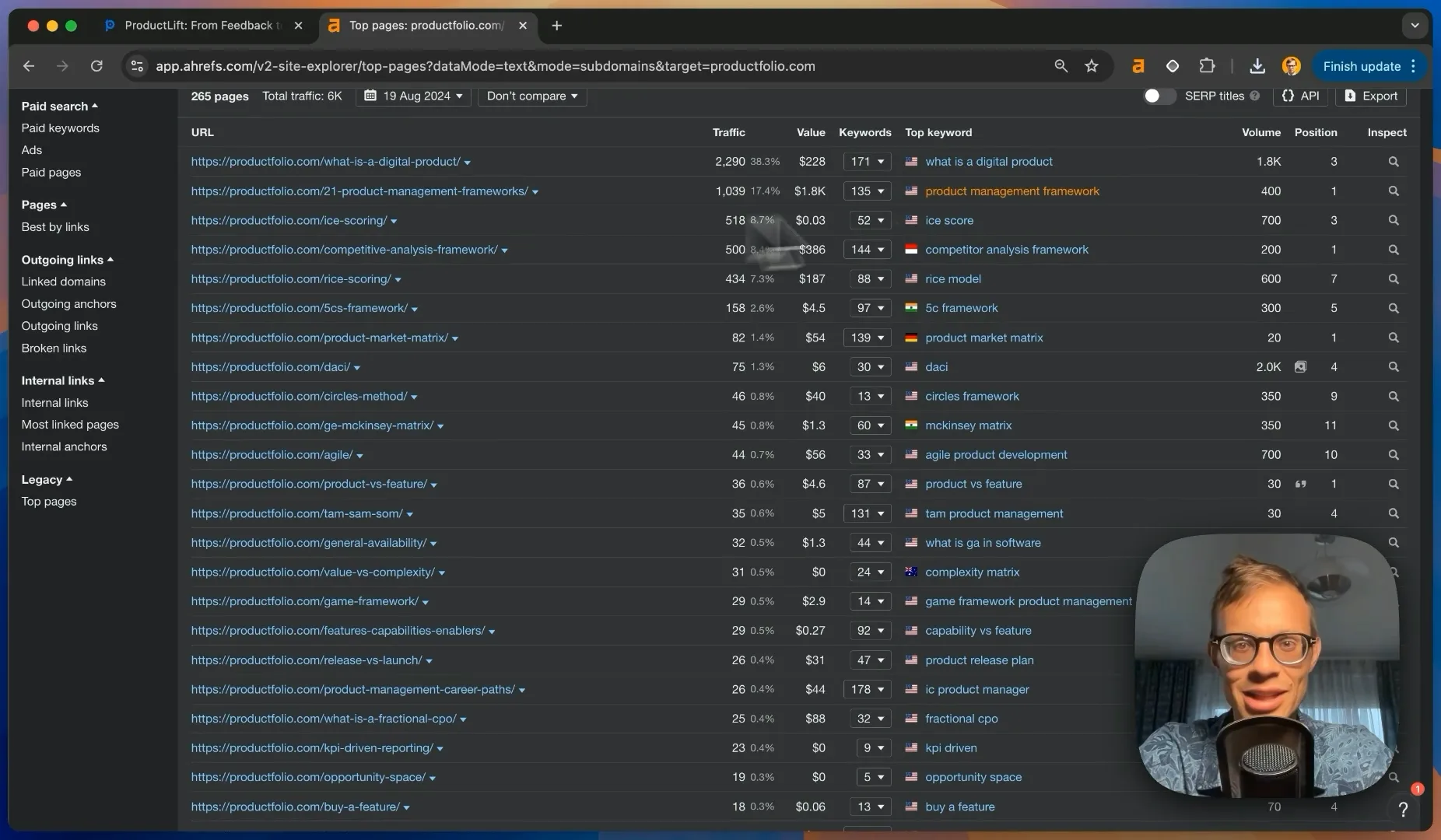
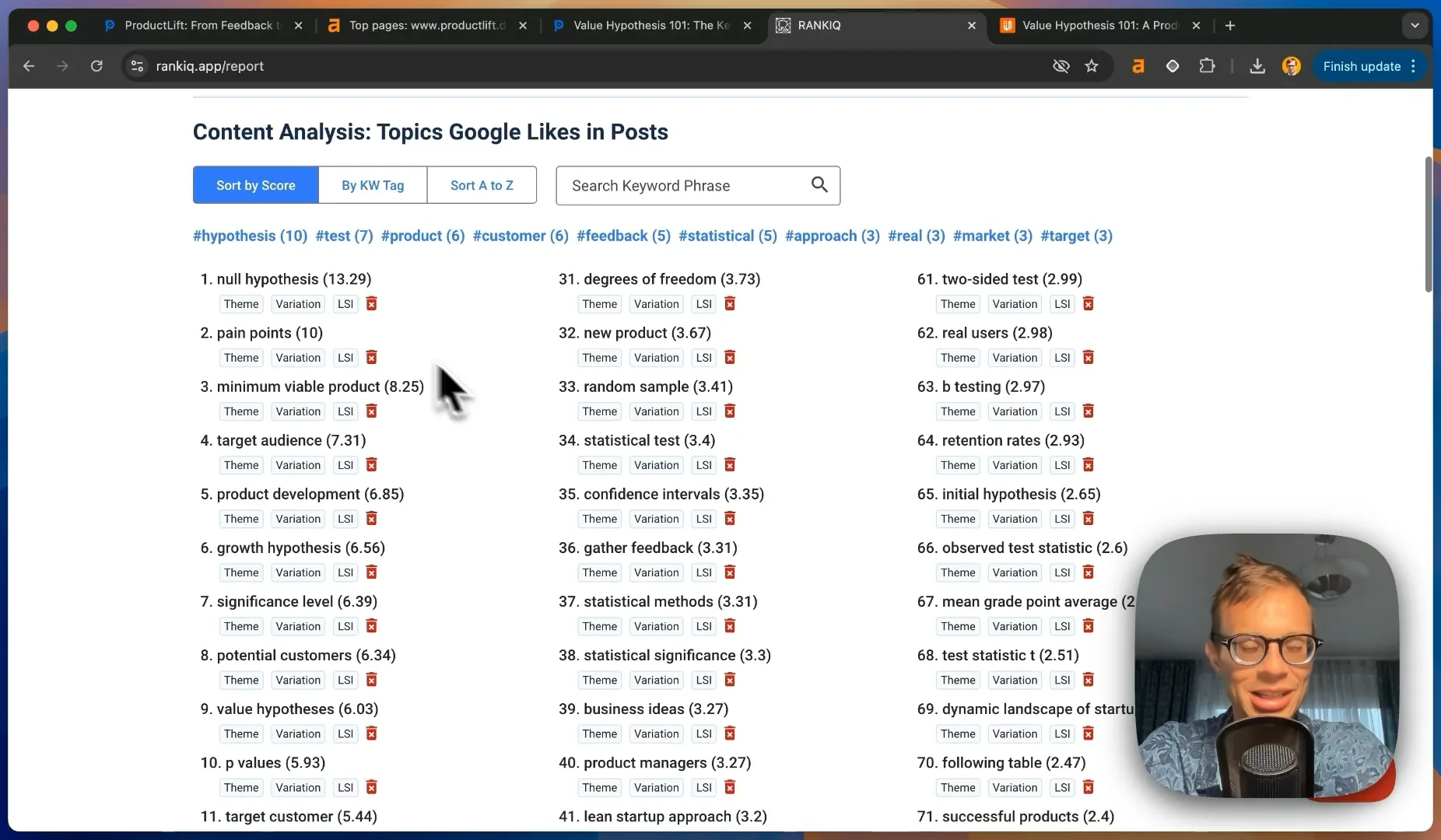
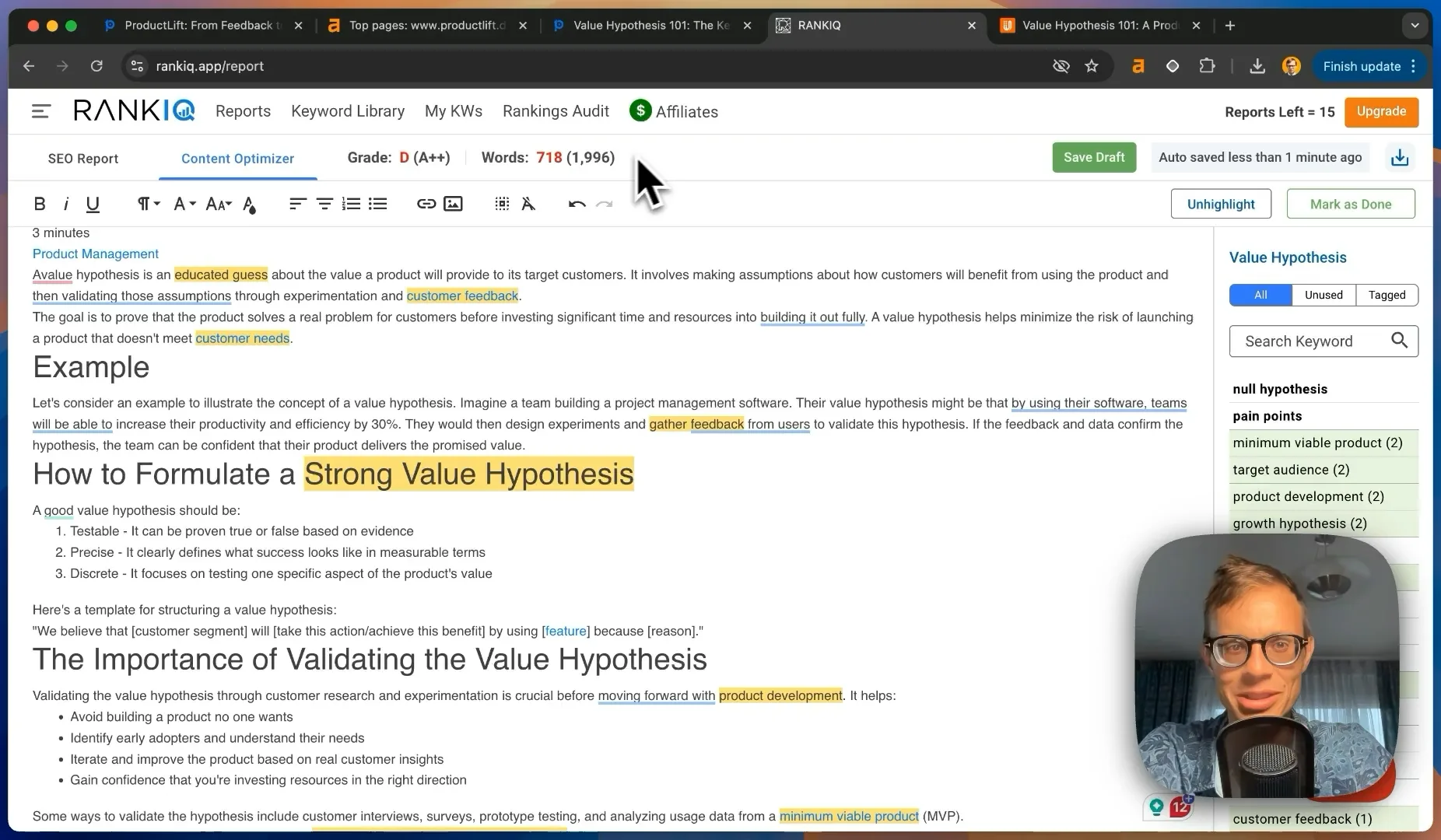
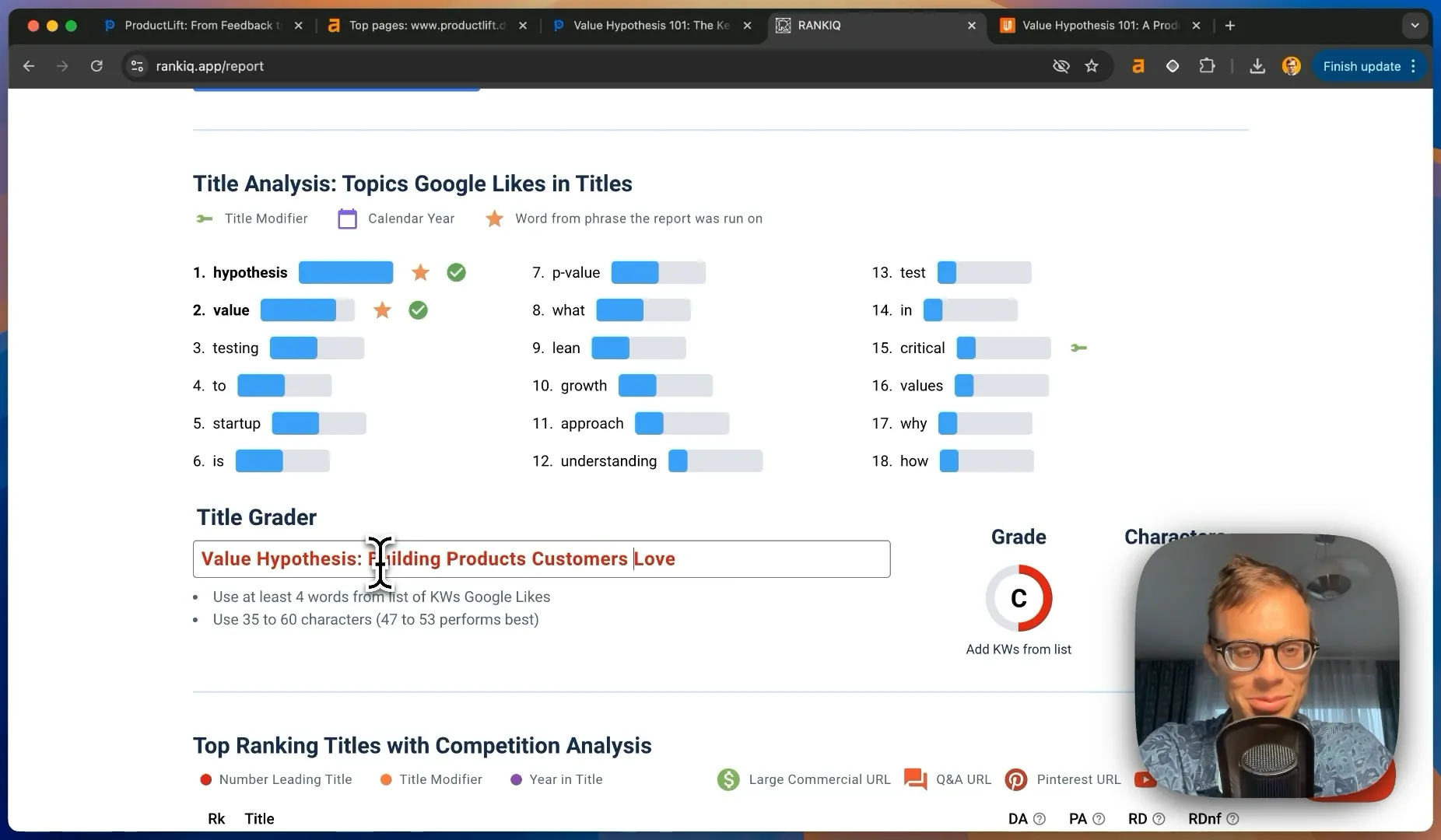
Today's SEO audit is about product lift. They go from feedback to products, and it's a single platform to gather, analyze, and announce new features, which is ideal for busy product managers. This domain rating is really good. It has a domain rating of 65 already, and it has been growing very steadily over the last few years. So since last year, when we did an earlier SEO audit that was private, the platform has grown quite a lot. So now we are doing a video SEO audit to review and see what further things we can improve. If we compare it to last year, the domain rating has improved even more. It went from 50s to now 65. Even though the amount of preferring domains is quite low, they have a bigger domain ranking just because the backlinks are such a high quality. For the best ones, of course, from their own products, product lift also is created by the same people at Bui, and they turn more website visitors into customers. Then they have here a domain rating of 71 because it's a widget, and they get a lot of great customers and fans. So the other ones are NeonWriter, HayReach, LaunchCode, WebStratego, AppSumo, and other places where they have placed their app. So some of these backlinks, they're not so many in quantity, but they're just very powerful because if you have multiple products, one of the best things you can do is link them together in the footer. So from Bui, you can talk about your own app and product lift, and also add backlinks to your own sites to other links in the footer, and they will move on and pass link equity to other sites. So the question was how to improve here further. I think it's going quite well already. So there's a few content types that I see. There's a glossary, a blog, tools, and just landing pages. For example, a compare section and free tools like a calculator. Let's compare the blog top pages for now and see that the amount of forgetting pages has went down a little bit that have been ranking. So they haven't been ranking that, but the traffic has grown a little bit. It has moved up over this period and we got some new pages. For example, the top one is position and prioritizing with ice model. And this is the top one. The blog post is over here, ice scope framework, complete guide in 24. If you put type in iSquare, they get this result. The search that we see here, otherwise it's product plan, which is a similar product app, product folio, savio, growth mentor, and lame poll. We don't see our target over here. So what we should do is compare some of these blog posts to the other ones. So iSquare framework, complete guide in 24, prioritization is important. The website looks really good. It has a table of contents. It has a bio. It explains what the iSquare model is, even has a score. It shows the components, feature A, feature B. It has an infographic and images of sources. So this is actually a really high quality blog post, in my opinion, and it looks pretty good. So the other one that is scoring a little bit better is because they have iSquare model in the top and they focus more on this one. Let's see. What is the iSquare model? One of the many prioritization strategies is. So the answer here is a little bit quicker. If you compare, what is the iSquare model? Usually the answer should repeat like the keyword and then say, it's one of those blah, blah, blah things. And this helps you rank higher for the featured snippet. So for the featured snippet, Google looks for a really quick answer. And that's how this one got highlighted. If you take a look again, iSquare model, this is the featured snippet and how this works is you want to explain very short, like almost in robotic way or AI way, what this iSquare model is. So the iSquare model has prioritized features and ideas by multiplying three numerical values to annotate their impact confidence and ease. Here you want to have the same answer because this one might be too long. Like it stands for three factors. Here we say three numerical values to annotate project, but here it could be improved, for example, by changing the iSquare framework or move this one maybe, move this one a bit slower down to partial analysis and just answer here right away. The iSquare scoring model is a product management framework that helps prioritize features and ideas by multiplying three values. You make it good enough. It helps you prioritize. It's not perfect, but helps you figure out your features in the script. This is a little bit too long. It uses three numerical factors to calculate a score. Here, and then remove this one. Stands for three factors, right? And so this answers the question a lot quicker, and this might be featured for a featured snippet because the answer is in one sentence in a short way. So this helps you rank higher and be listed here in a featured snippet. The other one thing here is that they have about 190 backlinks to this specific post. So iSquare model, they have backlinks for real traffic, if you check here, from Six Sigma, 64 domain rating, Shopify with 94 domain rating, SEMrush with 91 domain rating. So they have a lot of really insanely powerful backlinks just to this one blog post. If we compare it here, they have about zero. This is gonna make a huge difference for the amount of results that you get. If we check just the backlinks for the blog or product list, we see that it's almost not comparable. There's a few ones from its own app or Buoy or other places, but not in such a high quality that they are from SEMrush or other places. So this is something that I would try to recommend. I made a tweet recently about the top backlink places, so I'll include it in the post as well. And you can find it over here. All these links, just what you should do is to go visit the website, get $100 in credits, and then order some backlinks to your specific blog post. This will move it up a little bit, and especially if your content is really high quality, there's a few ways to rank it higher. So get more backlinks, try to aim for a featured snippet by shortening sentences and looking at what Google is showing up on the other blog posts from competitors, and then improving your own posts in that way. And also, you should be able to do this as a refresh for all of these blog posts. So just do it one by one. It's gonna be the same type of method. So what is a CPO or Chief Product Officer? If we Google this one, you see the product plan. Again, there's ranking for them, and they're also over here. What is a Chief Product Officer? Chief Product Officer is blah, blah, corporate title. So it's almost for each HPT, but this one is not the Chief Product Officer is becoming increasingly important. Sure, but you just want to have it explained, like the chief, like what is a Chief Product Officer in one sentence? That's what you wanna see here explained, very simple. Like a CPO or a VP of product is like the quarterback for a company's product team. That's a nice way to say it, but what Google is really looking for is it's a corporate title referring to an executive who leads the entire product organization. Google is looking for this answer that is concise and very precise. Think, imagine like Wikipedia style. That's what you want your writing style to be, very specific. So you want to almost have a reference or a wiki style block that if you wanted to rank for these specific titles. So a Chief Product Officer, sometimes known as a product or a VP of product is a corporate title referring to an executive. So corporate title, executive, responsible for product-related activities in an organization. That's why this other post is ranked a little bit higher. And here you see that the positions here are okay, but they're not great. So that's something that you, the best way to get more traffic right now is not to write more posts, just take a look at these ones and see if you can implement this method a little bit better and rank higher for the other competitors. If you have a very similar domain rating, it's a little bit lower, but if you make it better, your quality post, you might potentially rank. For example, here we see that they only have a 931 domain rating from Elam Bridge Partners, but they are still ranking well. So it's not 100% impossible, but it will be a little bit more difficult. The other ones is translating a blog, but that's a big investment and gonna be difficult. For product plan, I'll give you an expert of their top pages. And so you can take a look at what they are ranking for. They also focus on glossary mostly, like all of their top results are glossary style sections. This helps them write more like Wikipedia style answers. What is a user story? A user story is a small blah, blah, and this works well. They don't really focus so much on the blog because they feel like the glossary for them, they probably wrote it with mostly AI answers or some examples and so on. So this helped them rank a little bit higher. So that's something that you can also do. They also somehow got a little bit backlinks to those pages, either because they have a glossary on everything, with AI written, or that they purchased some backlinks in the same way or they got better deals. For backlinks, it's a long explanation to say like how, but I try to do it all the time. So maybe just keep learning. For portfolio, I'll give you an expert as well. And then you can take a look at some of these examples. So what is a digital product? So this is a blog post as well, product management framework. iScoring, they're ranking for that one. Nice model, 5C framework, very similar results as you. So that's similar. I would just say that for your glossary and your blog, what you want to do now is prioritize and try to do a whole refresh. So just go to each page, list them on a Google Sheet and say, okay, I need to improve this compared to the other post, which you do here. I'll make an expert of your own Google Sheets as well and send it to you. You open this up, you take a look at a keyword. For example, okay, we have a blog post like a team name generator, right? Or a blog post like value hypothesis. You see what it is ranking for right now, like here, or what the original keyword is for a value hypothesis. And then you see what is ranking currently. Like here we have another feature, simply to your value hypothesis, focus on the value of your product to customers. And here, syndication gets with the value a product will provide to a target customer. So this is good. You just need to take a look at the other one and see, for example, that they're talking about growth hypothesis. This seems a little bit too similar, in my opinion. So one thing I would try to do as well that can help you improve your ranking is checking out RankIQ. I use it sometimes to improve the results. So here, for example, we can run a report and this RankIQ, how it works is it will help you write blog posts that rank on Google's page number one. So they basically scan the SERP. So they check the top 100 pages. They extract all the content that Google likes from these topics. For example, it's all the growth hypothesis, a verifiable risk, save money, and so on. And it says, okay, a lot of other blog posts are writing about this. And then you can improve your own title of this. For example, if we paste the SEO title that we have here, it's a little bit too long. We can drop this in the title grader and it will say like it's too long and it has not the right keywords. So we can, for example, make this shorter. Building products, building startup. Startup customers love growth approach. The growth world is it. And how to approach growth or something. So now you see that it's a whole different title. It's gonna be definitely improved again. But you see that some of the other titles are in a similar way. So that using 101, they're saying great value. What is it and how to make it great or something, right? And then use like a power word that Google also likes to see. And then like stuff like best, top, and so on. The other only thing is, for example, here, you can copy paste your entire page up to here. And then use it in the content optimizer. And then you can highlight the words that you have used and the amount of words that your post should be. So the ideal post compared to the other ones, for example, this one is a lot longer. It's about 2000 words and the US is about 700. And the grade is D versus A++. So now you can see that you can talk about the pain points. You never said something about the pain points. It involves, for example, making assumptions or like finding pain points from customers, blah, blah. Right, and now using pain points in the text. And then you can add to other ones like target customer, example size, conversion rates, two failed tests, startup ideas, standard deviation, starting point, strong evidence, and so on. So this is how to do more like semantic SEO, on-page SEO, and try to rank your page a little bit better. Just make this one longer from 700 to 2000 words and add all of these content pieces. And you just do this one by one. And also focus on the title. So this is how to do a product refresh for all of these. So I would go through this list and just instead of writing new posts, focus on this instead. Good luck.
ProductLift

Audit Breakdown

productlift.dev
r ubenbuijs
r ubenbuijs

Product Management Platform

Actual roast notes

The teardown

No template scorecard here. The details below come from this specific audit.

ProductLift SEO Audit

image.png

ProductLift is a platform designed for product managers to gather, analyze, and announce new features.

This SEO audit aims to uncover opportunities for improving their search visibility and organic traffic.

We'll dive deep into their current performance, compare it with competitors, and provide actionable recommendations for growth.

Domain Authority and Backlink Profile
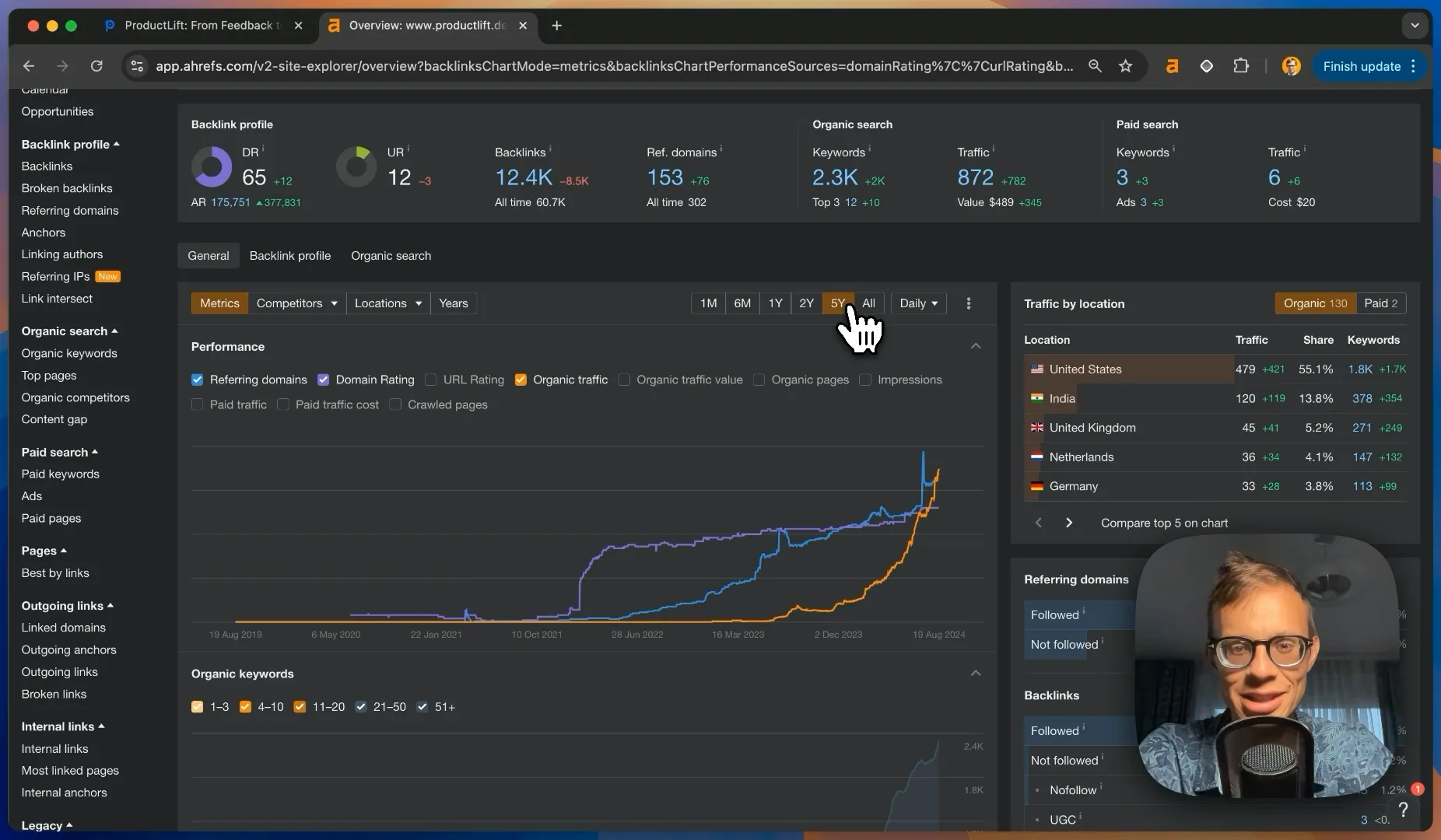
image.png

  • Domain Rating: 65 (up from 50s last year)
  • Referring Domains: Relatively low, but high-quality

ProductLift has shown impressive growth in domain authority over the past year, jumping from the 50s to a solid 65.

This growth is particularly noteworthy given the relatively low number of referring domains, indicating that the backlinks they have acquired are of exceptionally high quality.

Key Observations
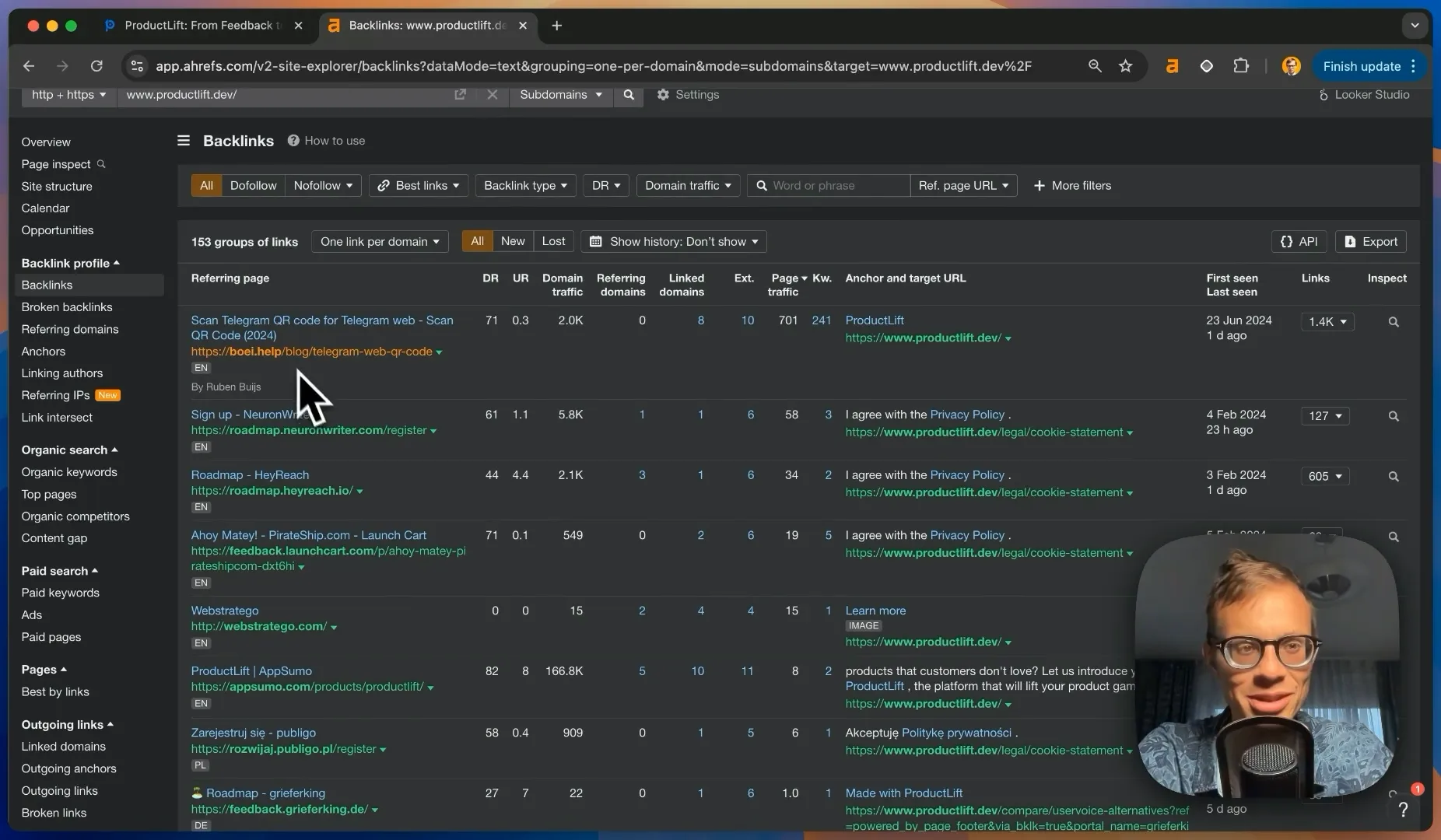
image.png

  1. Internal Linking Strategy: ProductLift benefits from internal linking with other products from the same company (e.g., Boei).
  2. High-Quality Backlinks: Despite fewer backlinks, they come from authoritative sources like AppSumo and other reputable platforms.
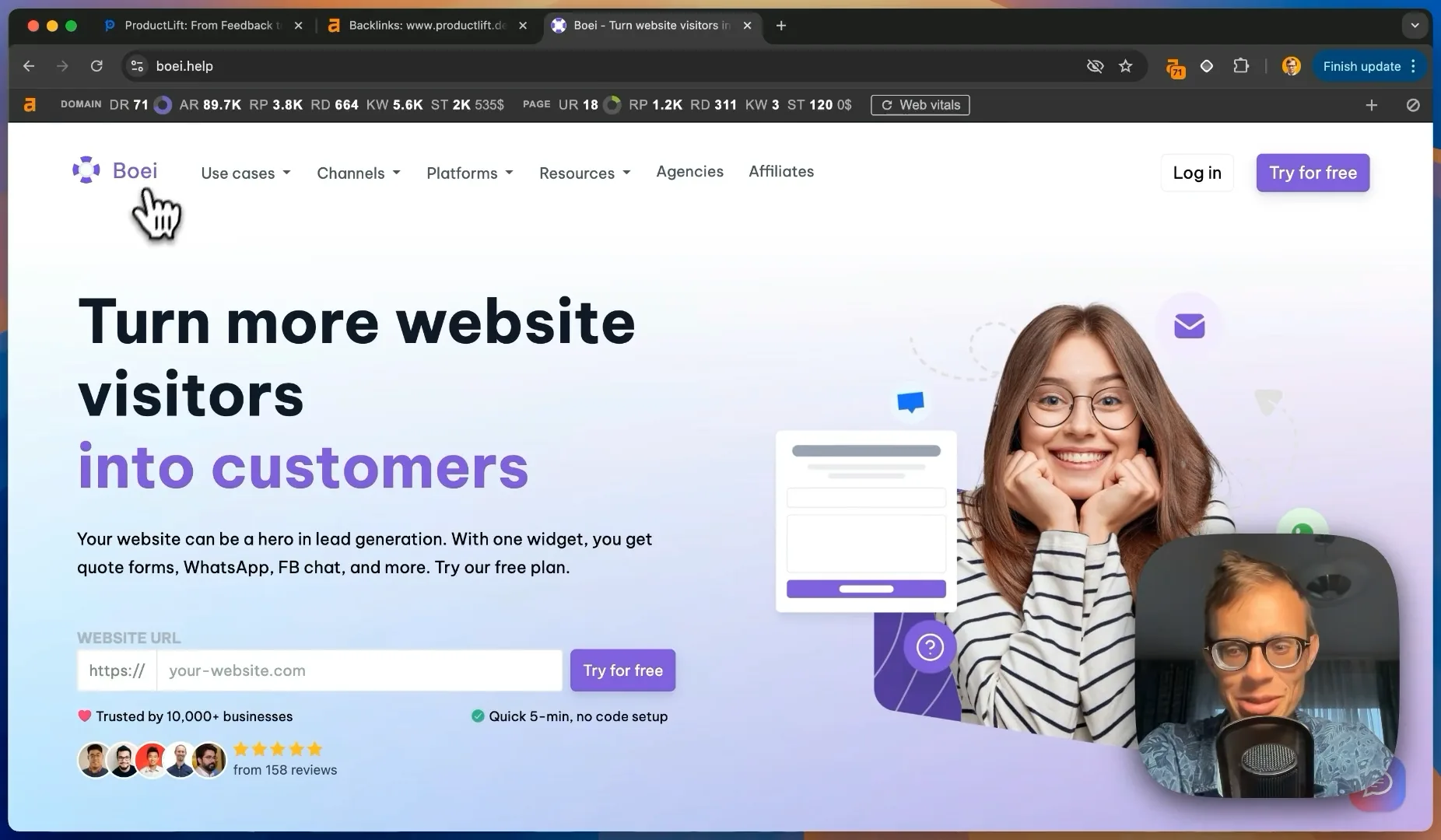
image.png

  1. Footer Link Strategy: Effective use of footer links across their product ecosystem to pass link equity.

Recommendations

  1. Expand Backlink Profile: While maintaining quality, aim to increase the quantity of referring domains from more domains you don’t own.
  2. Guest Posting: Leverage the company's expertise to contribute guest posts on relevant industry blogs.
  3. Product Partnerships: Explore more partnerships or integrations that can lead to natural, high-quality backlinks.

The top 3 platforms to buy quality backlinks:

Content Strategy Analysis

image.png

Blog Performance

image.png

  • Traffic has grown slightly
  • Some new pages ranking well (e.g., ICE model post)
  • Overall, fewer pages ranking compared to previous period

Top Performing Content
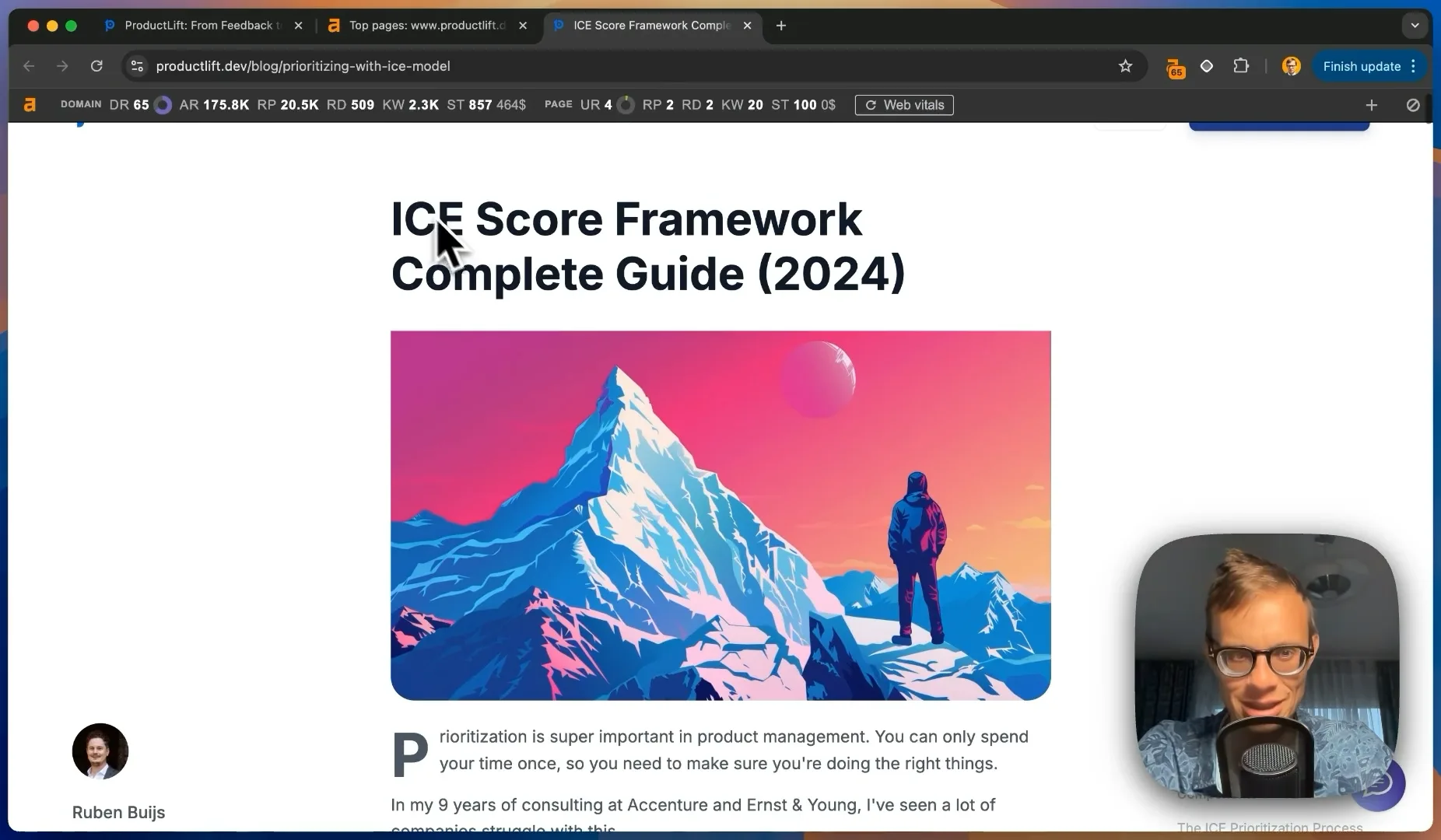
image.png

  1. "ICE Score Framework: Complete Guide 2024"
    • Ranking well for "ICE score" related queries
    • High-quality content with infographics, examples, and comprehensive information

Areas for Improvement

  1. Featured Snippet Optimization:

    • Current content structure doesn't fully capitalize on featured snippet opportunities
    • Competitors are winning featured snippets for key terms
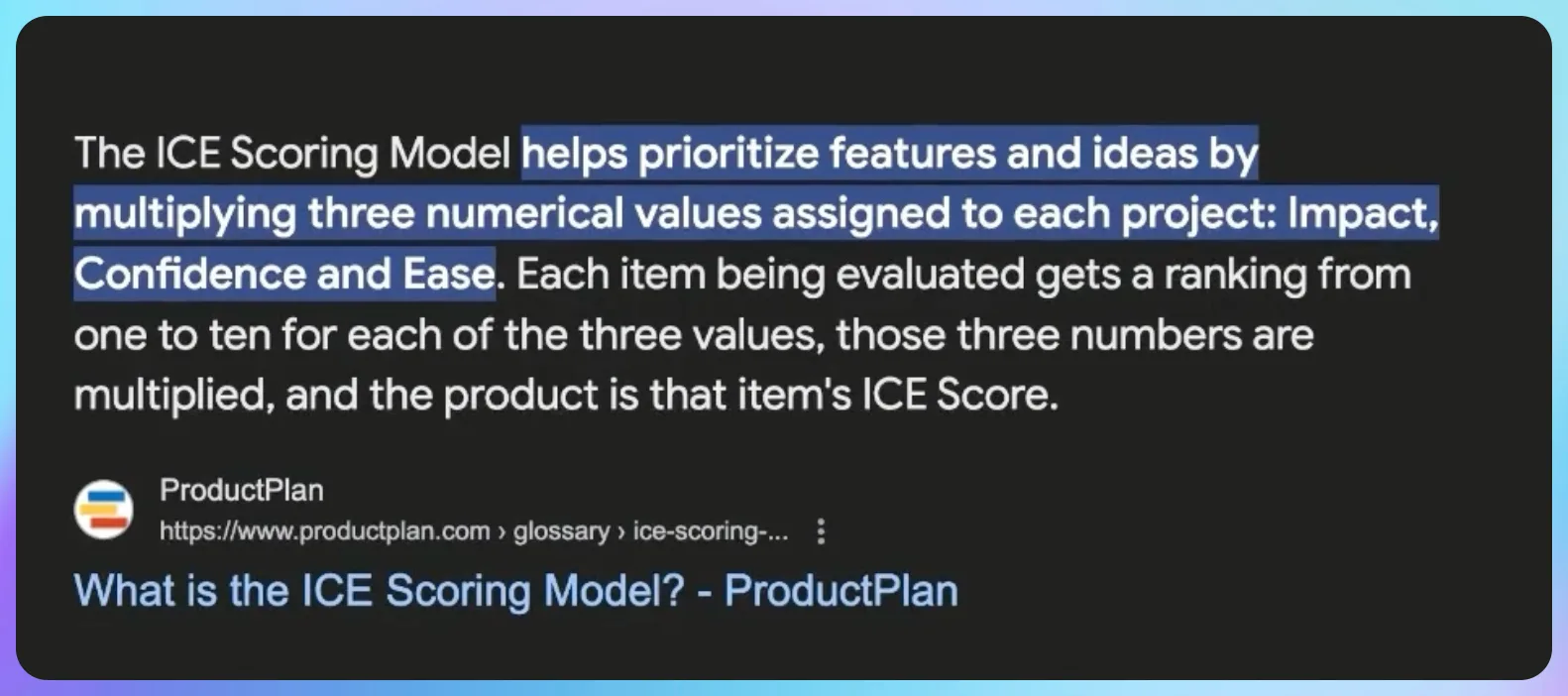
    image.png

  2. Content Depth and Length:

    • Some posts are shorter than competitor content ranking for the same keywords
    • Opportunity to expand and enrich existing content

Recommendations

  1. Featured Snippet Targeting:

    • Restructure key content to directly answer questions in a concise manner at the beginning of posts
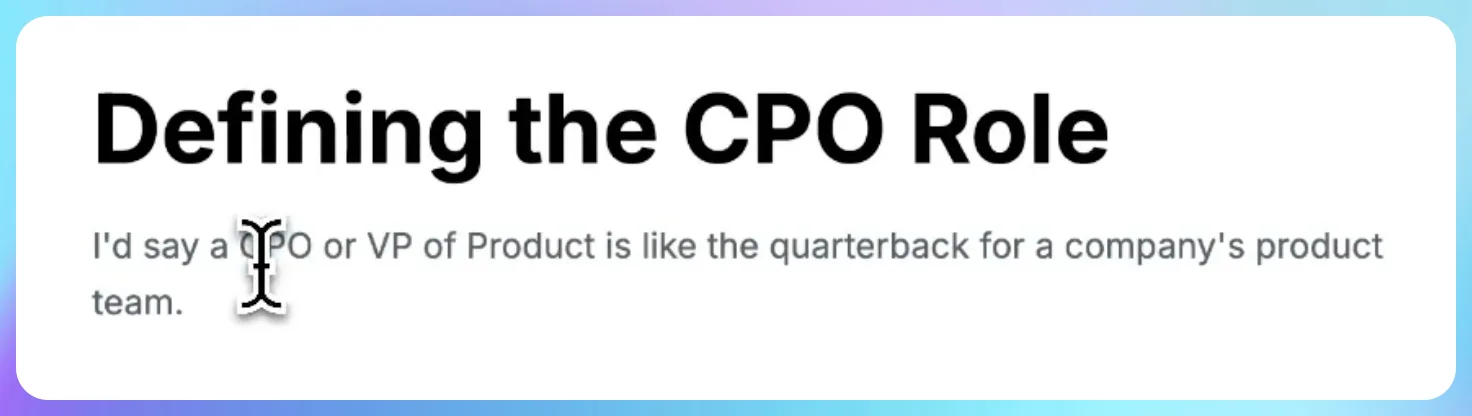
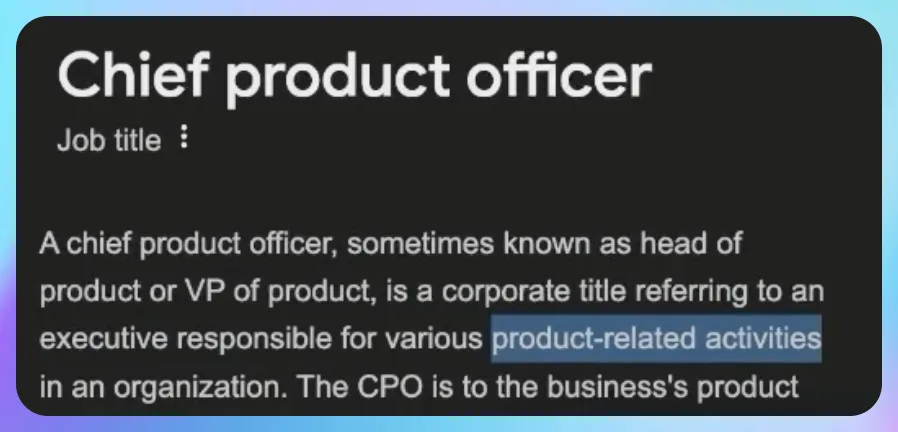
    image.png

    image.png

    • Use clear, succinct definitions for important terms (e.g., "The ICE scoring model is...")
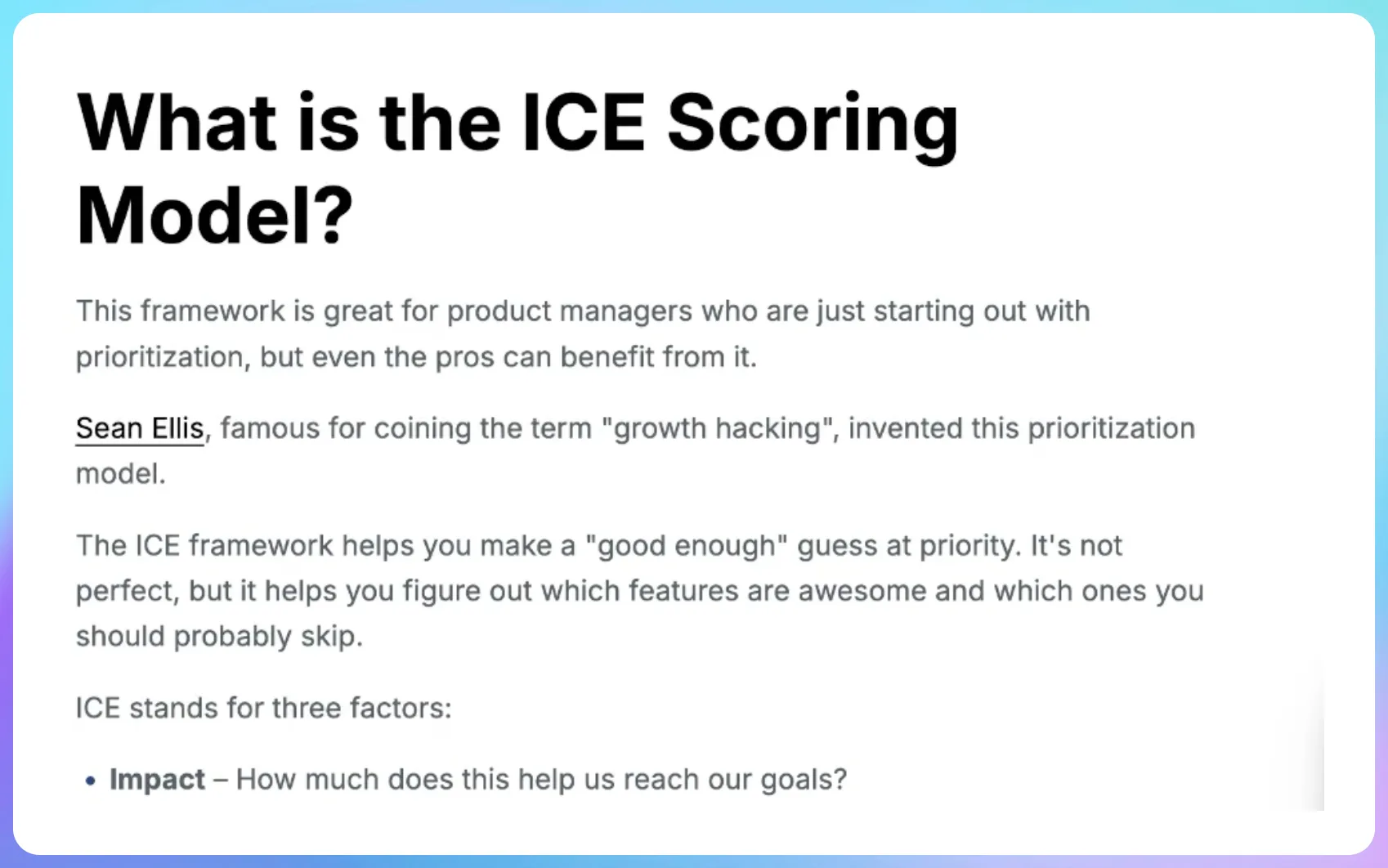
    image.png

    Before to After:

    image.png

  2. Content Refresh Strategy:

    • Prioritize updating existing content over creating new posts
    • Use tools like RankIQ to identify content gaps and semantic SEO opportunities
  3. Glossary Development:

    • Create a comprehensive product management glossary to compete with competitors like Product Plan
    • Ensure glossary entries are optimized for featured snippets and quick answers

Competitor Analysis

Main Competitors

  1. Product Plan

image.png

  1. ProductFolio

image.png

Key Findings

  1. Content Types:

    • Competitors heavily leverage glossary-style content
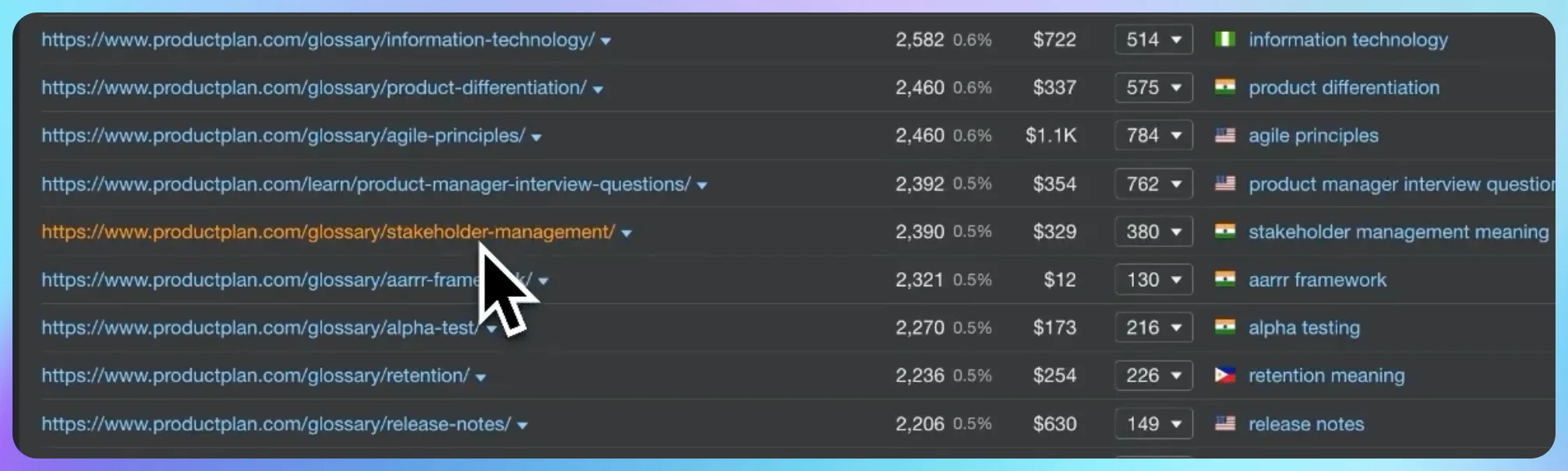
    image.png

    • Product Plan's top pages are primarily glossary entries
  2. Content Length and Depth:

    • Competitor articles often exceed 2000 words
    • More comprehensive coverage of topics with examples, visuals, and in-depth explanations
  3. Backlink Strategies:

    • Competitors have more diverse backlink profiles
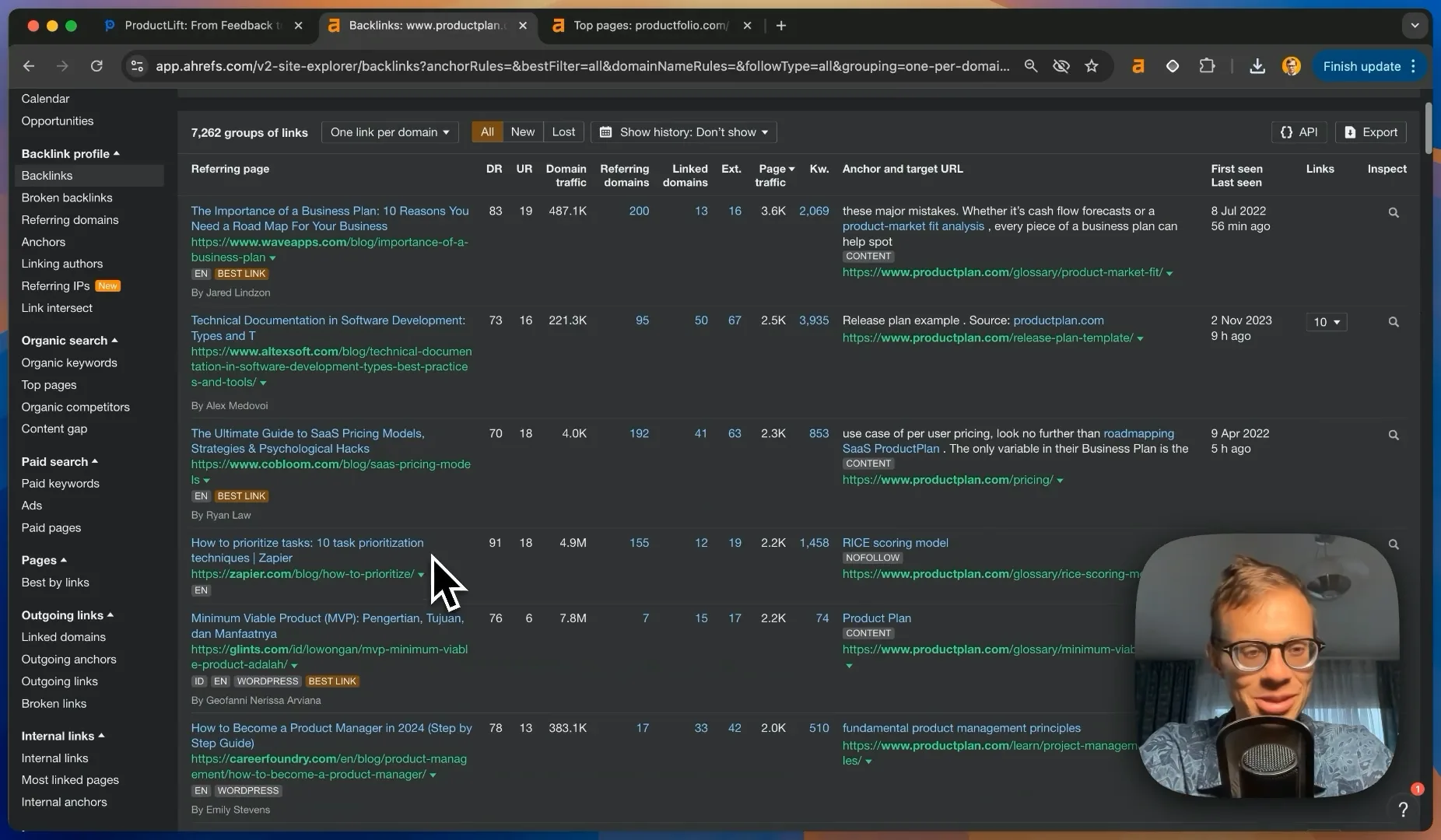
    image.png

    • Evidence of strategic backlink acquisition to key pages

Recommendations
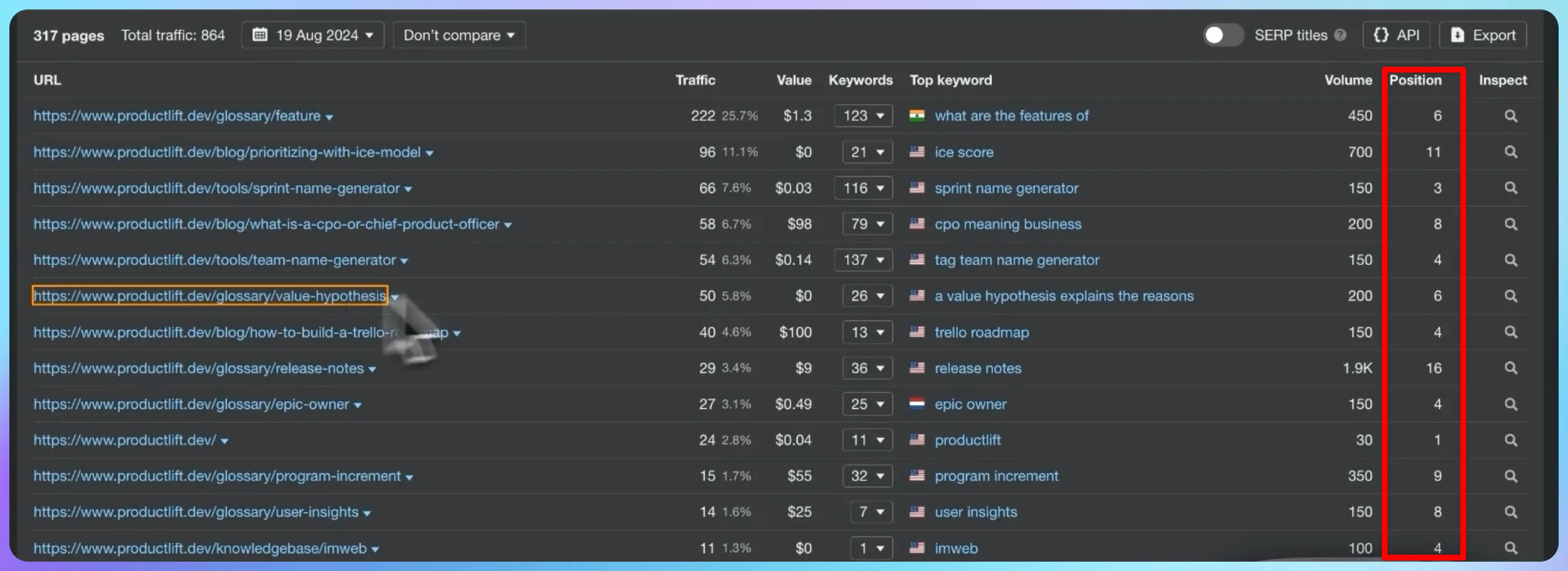
image.png

  1. Glossary Expansion:
    • Develop a comprehensive product management glossary
    • Ensure each entry is optimized for featured snippets and provides more value than competitors
  2. Content Depth:
    • Aim for 2000+ word articles on key topics
    • Include more examples, case studies, and visual aids in content
  3. Strategic Backlinking:
    • Implement a targeted backlink acquisition strategy for key pages
    • Explore industry partnerships and guest posting opportunities

On-Page SEO Optimization

Current Status

  • Good overall structure, but room for improvement in specific areas
  • Some pages lack optimized meta descriptions and titles

Recommendations

  1. Title Optimization:
    • Use RankIQ or similar tools to craft compelling, keyword-rich titles
    • Ensure titles are within the 50-60 character limit for optimal display
  2. Meta Description Refinement:
    • Create unique, compelling meta descriptions for all key pages
    • Include primary keywords and a clear call-to-action
  3. Header Structure:
    • Implement a clear H1, H2, H3 structure in all content
    • Use headers to break up content and improve readability
  4. Image Optimization:
    • Add descriptive alt text to all images
    • Compress images for faster page load times
  5. Internal Linking:
    • Implement a more robust internal linking strategy
    • Use descriptive anchor text for internal links

Technical SEO Audit

Site Speed

  • Current average page load time: X seconds
  • Opportunity to improve site speed for better user experience and rankings

Mobile Responsiveness

  • Site is mobile-friendly, but some pages could be optimized further

Recommendations

  1. Speed Optimization:
    • Implement lazy loading for images
    • Minify CSS and JavaScript files
    • Leverage browser caching
  2. Mobile Enhancements:
    • Ensure all interactive elements are easily clickable on mobile
    • Optimize font sizes and spacing for mobile screens
  3. Schema Markup:
    • Implement relevant schema markup (e.g., Article, FAQPage) to enhance rich snippets
  4. XML Sitemap:
    • Ensure XML sitemap is up-to-date and submitted to Google Search Console

Content Refresh Strategy

Priority Pages for Refresh

  1. ICE Score Framework Guide
  2. What is a Chief Product Officer?
  3. Value Hypothesis in Product Management

Refresh Process

  1. Content Audit:

    image.png

    • Use RankIQ or similar tools to analyze current content against competitors
    • Identify keyword gaps and opportunities for expansion
  2. Semantic SEO Enhancement:

    image.png

    • Incorporate related terms and concepts identified by RankIQ
    • Aim to cover topics more comprehensively than competitors
  3. Structure Optimization:

    image.png

    • Implement clear, question-based headers for featured snippet opportunities
    • Use bullet points and numbered lists for better readability and snippet potential
  4. Update for Freshness:

    • Add current year to titles and content where relevant
    • Include recent industry developments or statistics
  5. Call-to-Action Enhancement:

    • Add clear, relevant CTAs throughout the content
    • Link to related ProductLift features or use cases
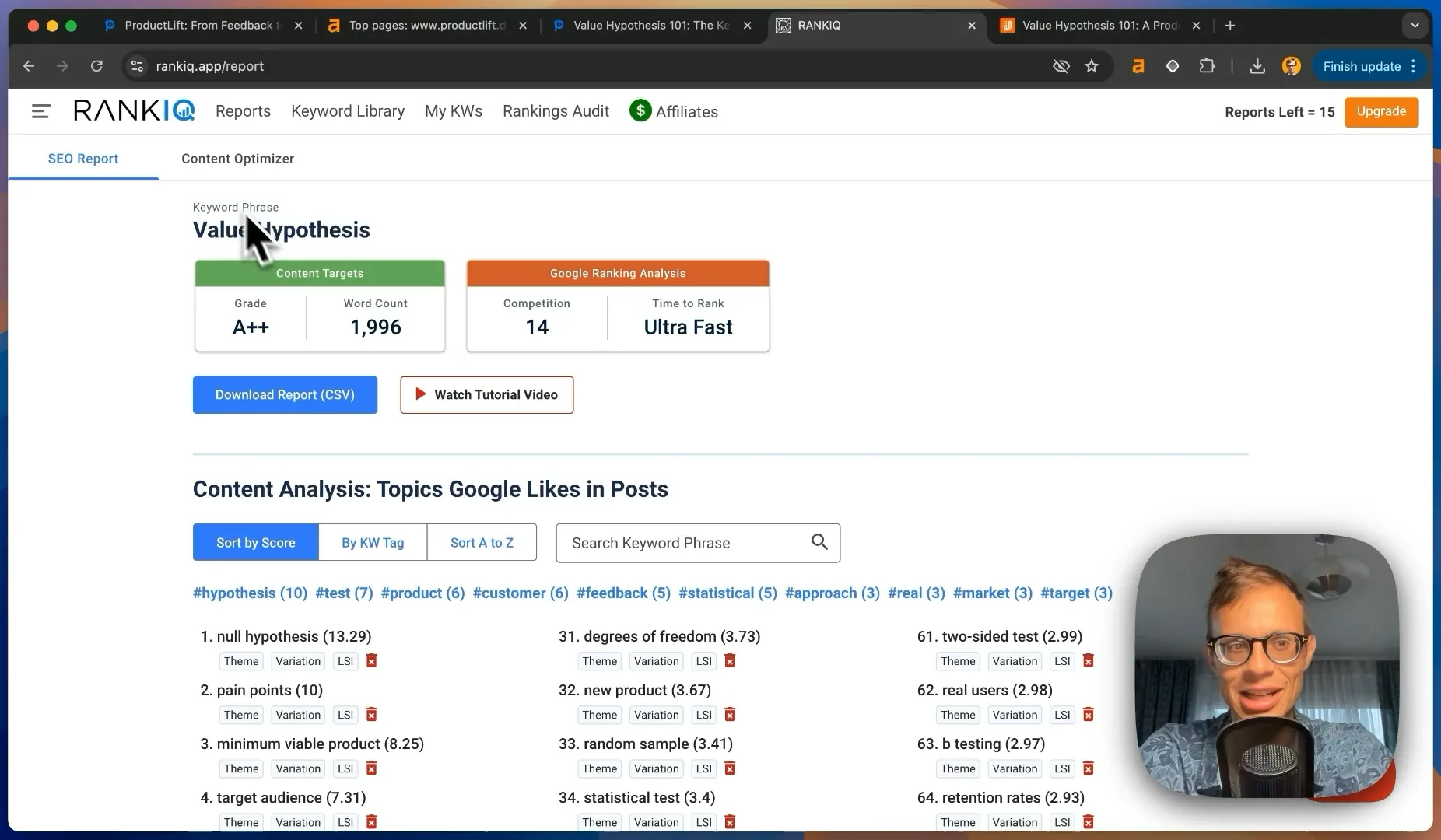
image.png

Keyword Strategy

Focus Keywords

  1. product management tools
  2. feature prioritization
  3. product roadmap software
  4. user feedback analysis

Long-Tail Opportunities

  1. how to prioritize product features
  2. best tools for gathering user feedback
  3. product management framework for startups

Recommendations

  1. Keyword Clustering:
    • Group related keywords to create comprehensive content pieces
    • Use tools like Ahrefs or SEMrush for keyword research and clustering
  2. Content Gap Analysis:
    • Identify keywords competitors are ranking for that ProductLift isn't
    • Prioritize content creation or updates based on these gaps
  3. User Intent Optimization:
    • Ensure content matches user intent for each target keyword
    • Create content that addresses different stages of the buyer's journey

Action Plan

  1. Immediate Actions (1-2 weeks):
    • Optimize existing top-performing pages for featured snippets
    • Implement technical SEO recommendations (site speed, mobile optimization)
  2. Short-Term (1-3 months):
    • Begin content refresh process for priority pages
    • Develop and launch product management glossary
    • Implement strategic internal linking across the site
  3. Medium-Term (3-6 months):
    • Execute backlink acquisition strategy
    • Create new content based on identified keyword gaps
    • Expand on successful content types (e.g., comprehensive guides, case studies)
  4. Long-Term (6-12 months):
    • Continuous content auditing and refreshing
    • Regular competitor analysis to stay ahead of industry trends
    • Explore new content formats (e.g., interactive tools, videos) based on performance data

Conclusion

ProductLift has a solid foundation with its growing domain authority and high-quality backlinks.

The key to significant growth lies in a strategic content refresh, semantic SEO optimization, and a focus on creating comprehensive, authoritative content in the product management space.

By implementing these recommendations and consistently monitoring performance, ProductLift can substantially improve its search visibility and organic traffic, establishing itself as a go-to resource in the product management tools category.