

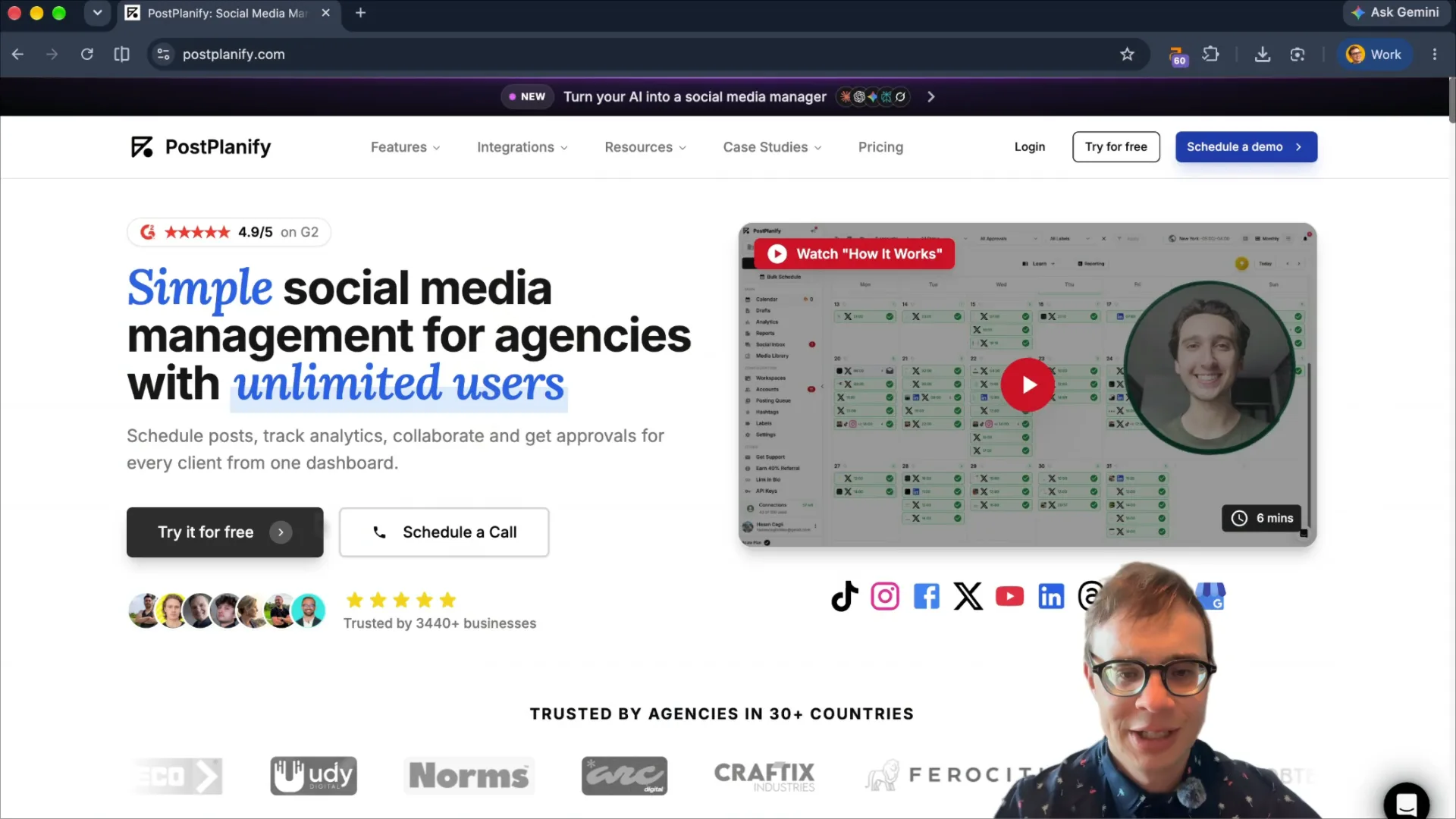
PostPlanify is an AI-powered social media management and scheduling platform built for marketing agencies, teams, and creators across TikTok, Instagram, Facebook, X, YouTube, LinkedIn, Threads, Pinterest, Bluesky, and Google Business profiles. It already has a 4.9/5 rating on G2, 3,440+ businesses, unlimited users, client workspaces, approval workflows, white-label reports, and a link-in-bio tool.
Hasan's paying customers currently come almost equally from SEO, YouTube, and ChatGPT/Claude recommendations. He has built out listicles, alternative pages, comparison pages, feature pages, and backlinks up to DR 60, and recently deleted low-quality free tools that inflated Ahrefs traffic. His question: why is US and European agency traffic still tiny at DR 60, how does he get recommended more by ChatGPT and Claude, and what should he prioritize over the next 90 days?
DR 60, 717 referring domains, and 8 US visits a month
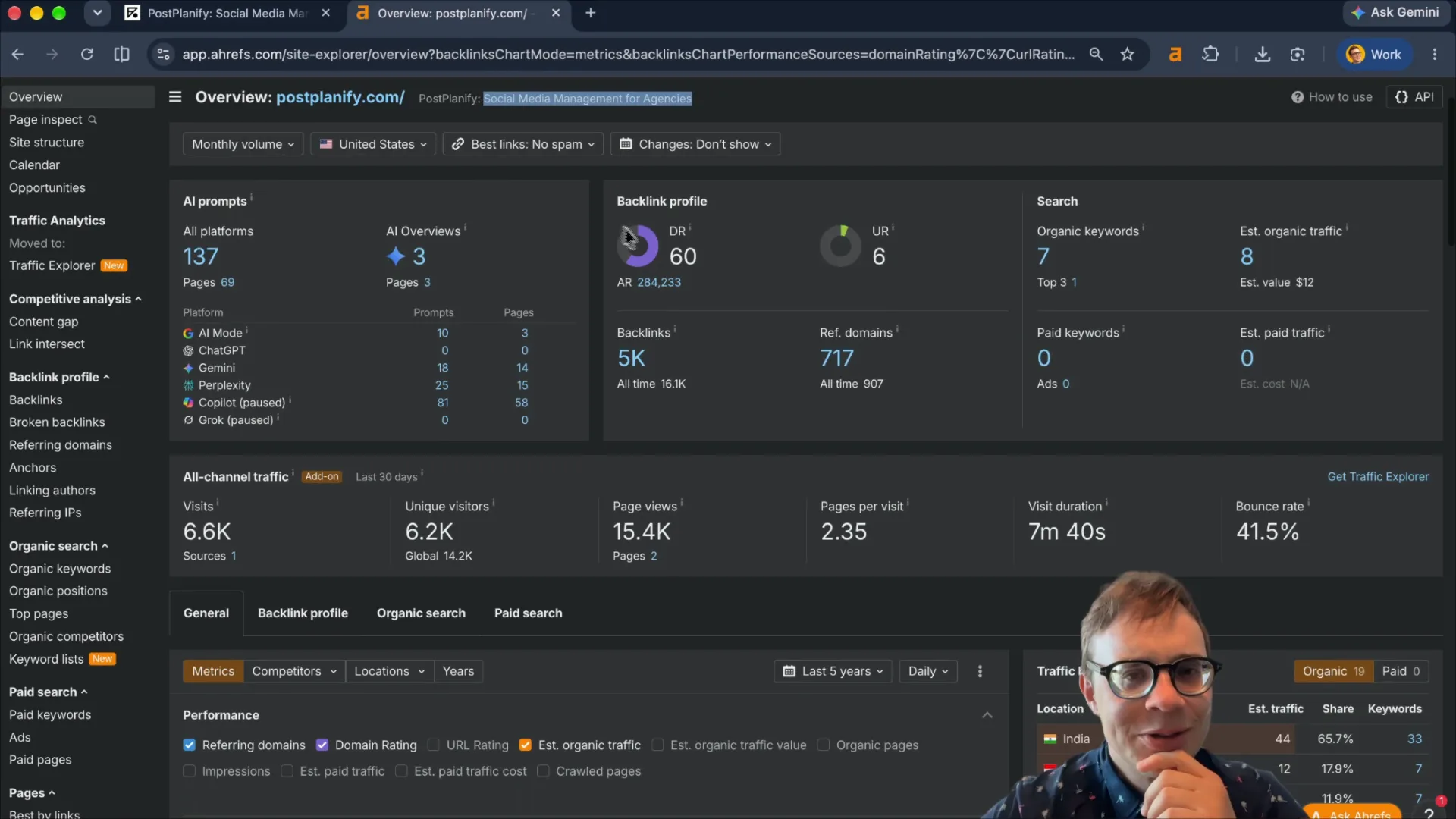
Ahrefs shows Domain Rating 60, 5K backlinks across 717 referring domains (and 143 groups on the "Best links: Only" filter from sites like Postoria, Cool Nerds Marketing, SocialBee, Curator, Juuno, and Dash Social), and 137 AI prompts across all platforms. Yet estimated US organic traffic is just 8 visits per month across 7 keywords, mostly split across blog guides like /blog/how-to-post-a-long-video-on-instagram, /blog/how-to-draft-an-instagram-post, and /compare/loomly-vs-socialpilot.
With DR 60 and real editorial links, traffic should not sit at 8 visits a month. Looking closely at the blog layout and technical setup explains why.
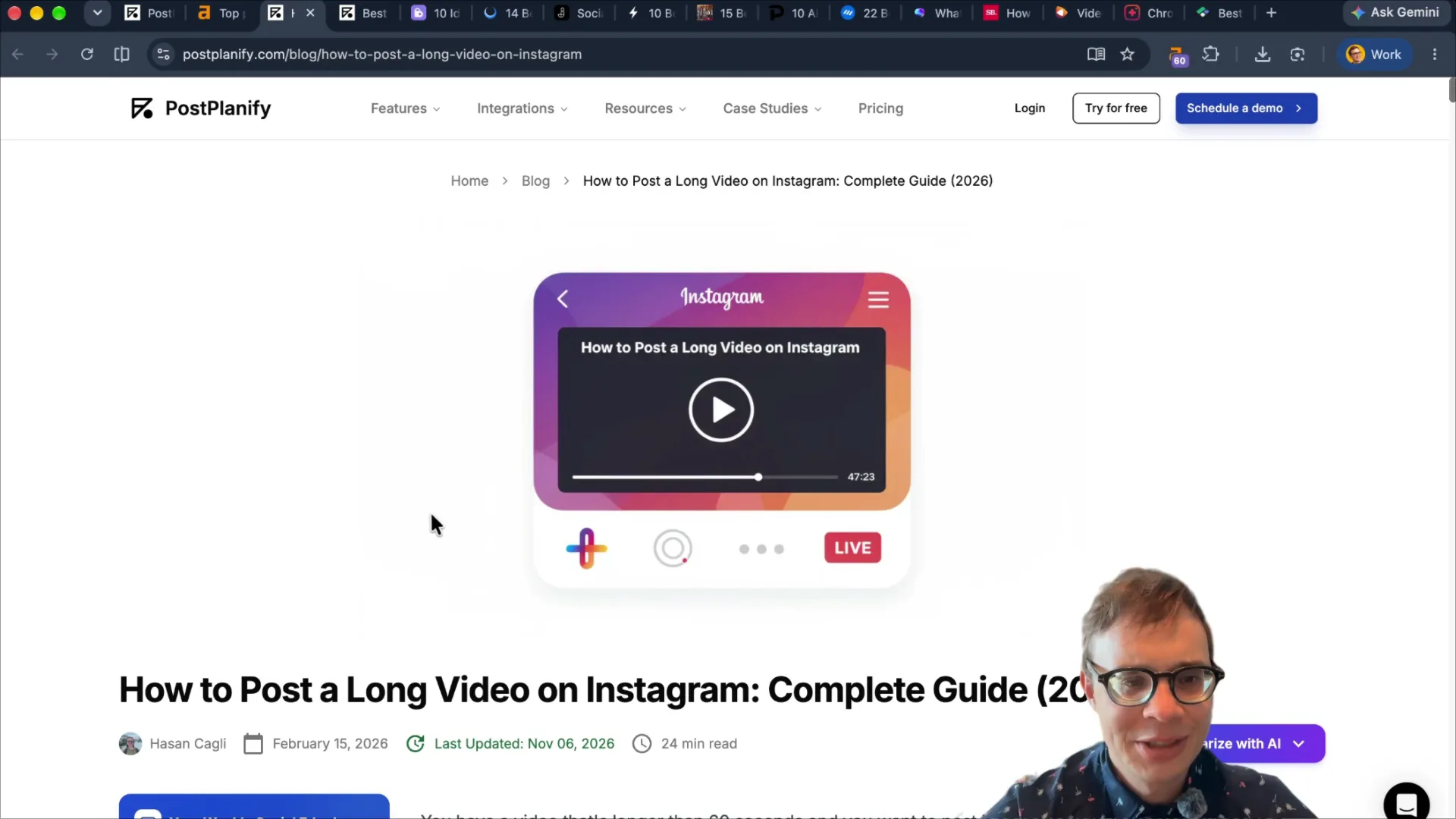
First, a quick UX fix on the blog template: the large decorative cover image sits above the H1 title, pushing the actual headline and table of contents down the viewport on smaller screens. Drop that top cover graphic and move the H1 straight to the top of the article.
The biggest bug on the site: robots.txt blocks /_next/
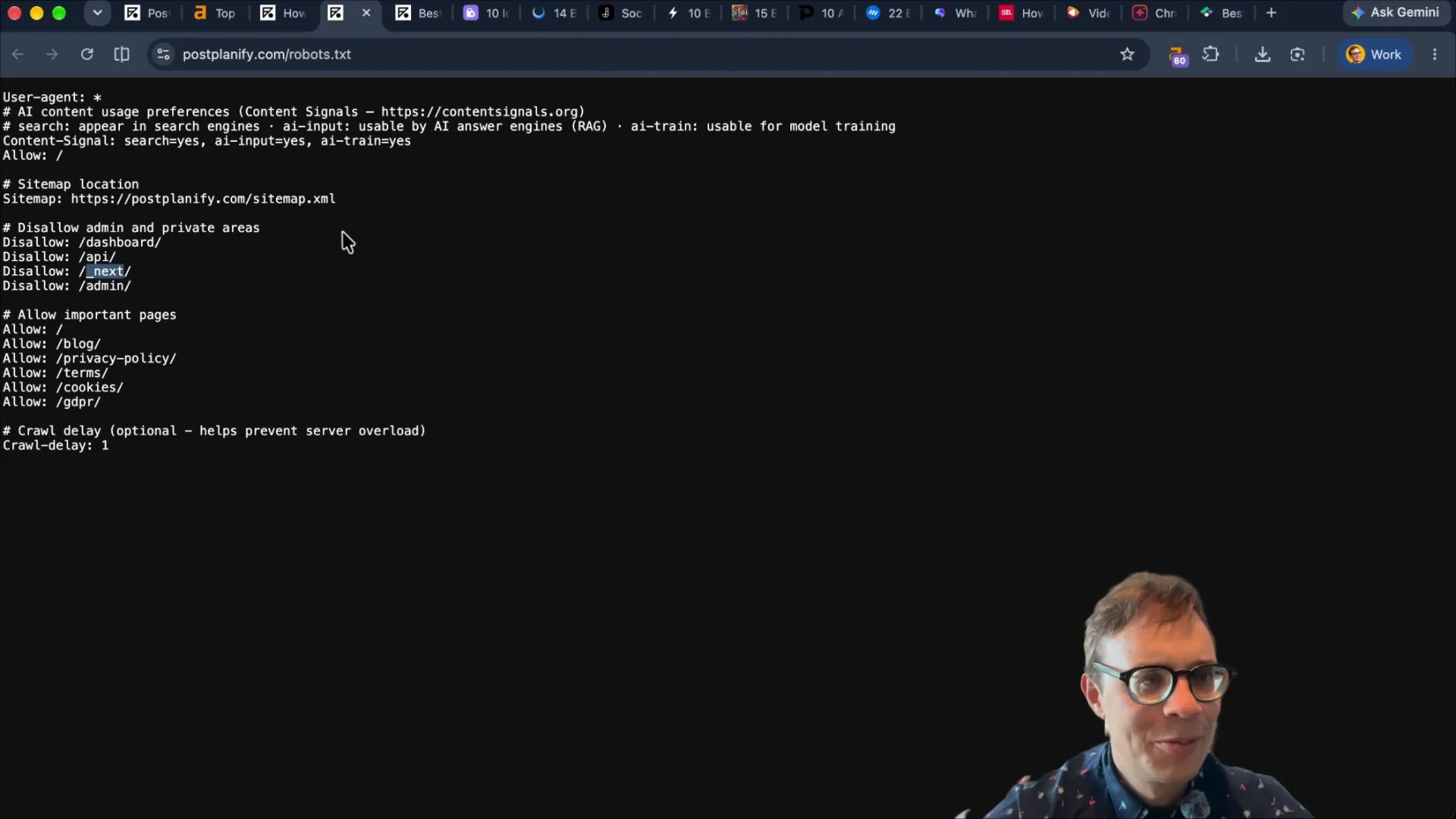
Open https://postplanify.com/robots.txt and you will find the main technical culprit right on line 13:
Disallow: /dashboard/
Disallow: /api/
Disallow: /_next/
Disallow: /admin/
Crawl-delay: 1
Because PostPlanify runs on Next.js, every CSS stylesheet, JavaScript bundle, font, and optimized image loads out of /_next/. Blocking /_next/ tells Googlebot not to fetch the assets needed to render the page.
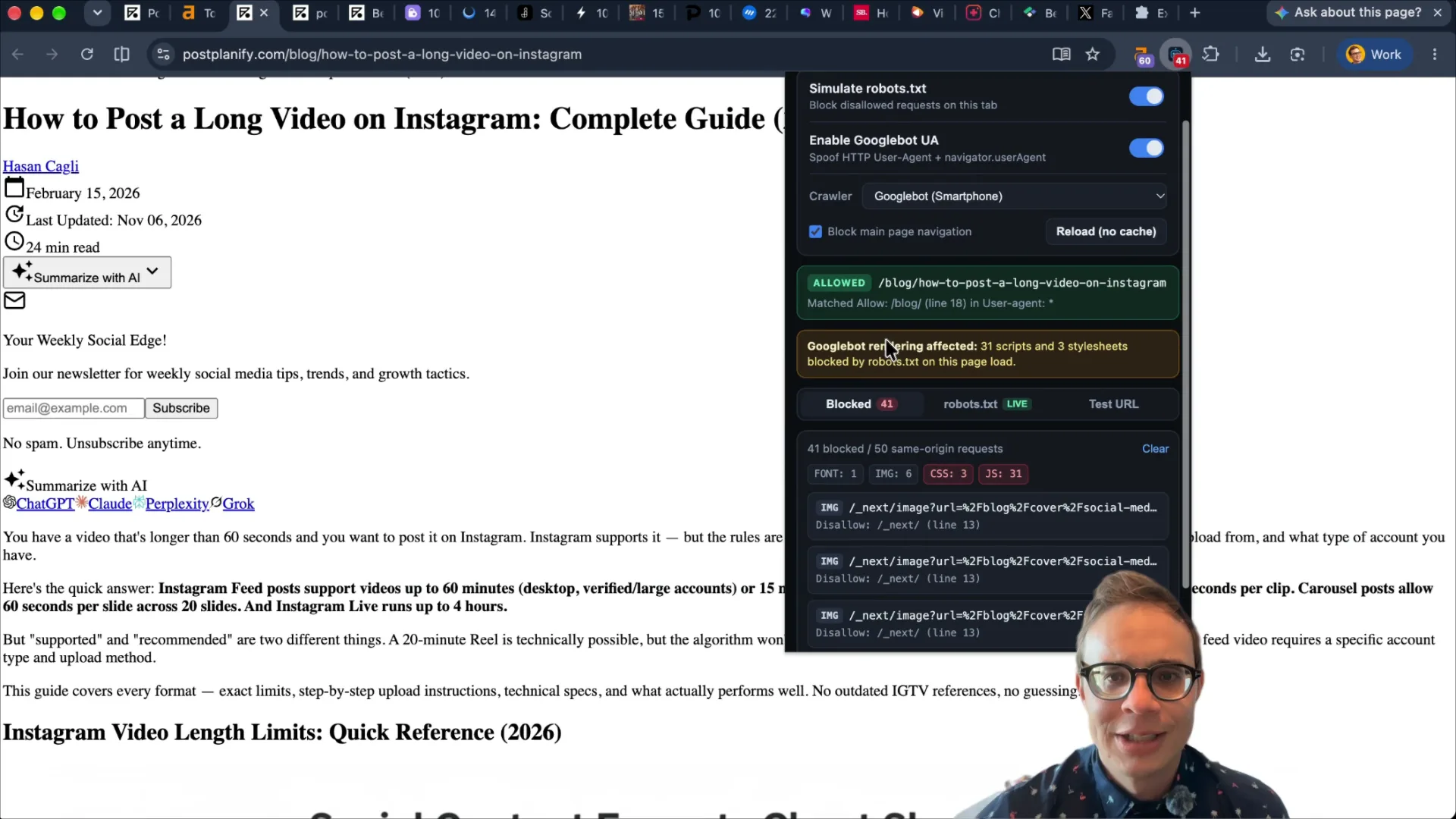
Simulating Googlebot (Smartphone) against robots.txt shows 41 blocked requests out of 50: 31 scripts, 3 stylesheets, 6 images, and 1 font. Without CSS and JavaScript, Google's rendering pass sees raw unstyled HTML. Verify this yourself in Google Search Console under URL Inspection -> Test live URL -> View tested page -> Screenshot & Page resources.
Replace that entire file with a clean User-agent: * and Allow: / plus your sitemap URL, and remove Crawl-delay: 1. Avoid listing /admin/ or /dashboard/ in robots.txt too, since scrapers check robots.txt for sensitive paths (gate those with auth and noindex instead). Fixing robots.txt alone is the highest-leverage technical change on the domain.
Fan out equity from your best-linked pages and stop leaking dofollow links
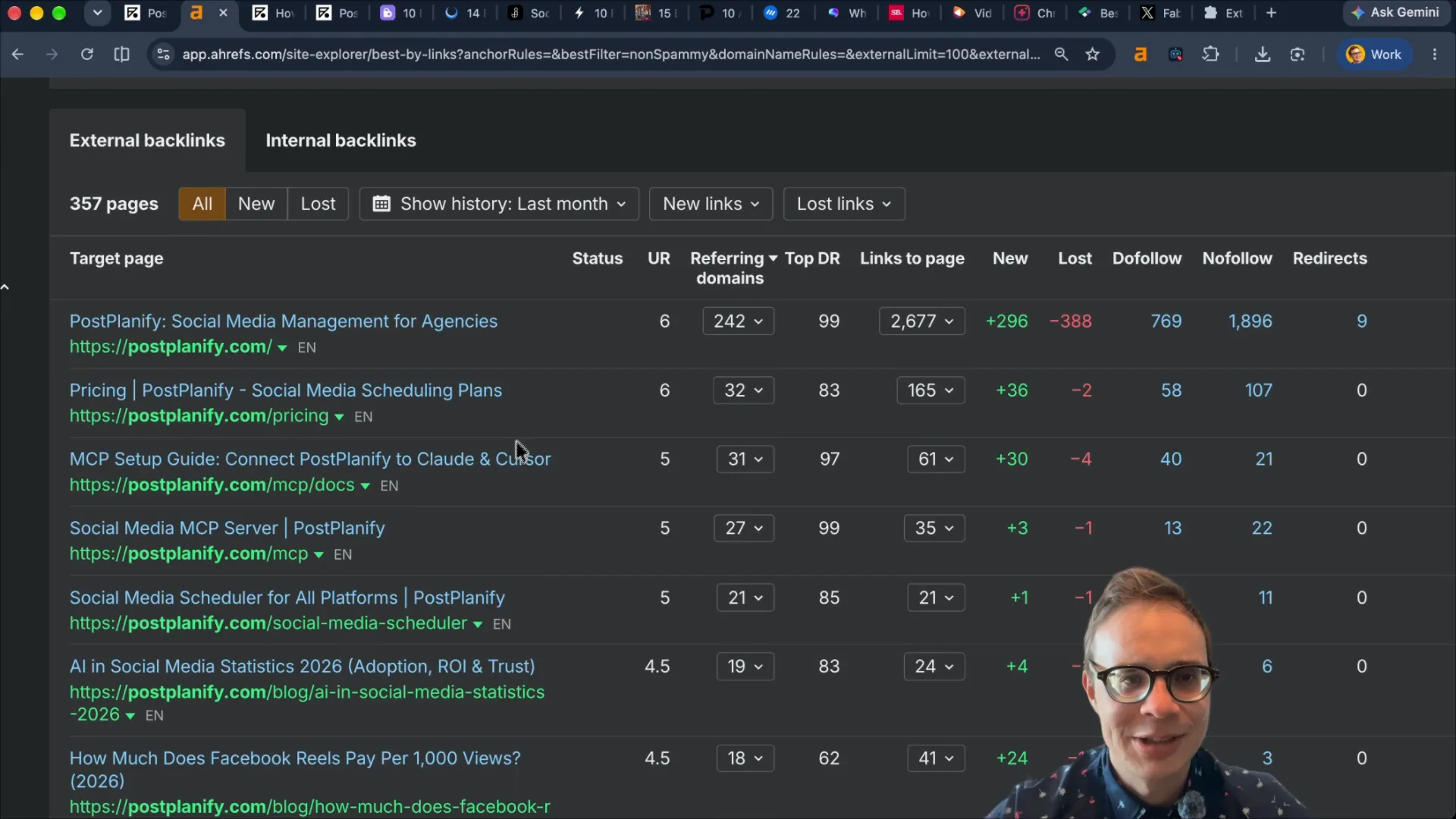
Ahrefs Best by links shows where your DR 60 equity actually lands:
- Homepage: 242 referring domains
/pricing: 32 referring domains (165 links)/mcp/docs: 31 referring domains/mcp: 27 referring domains/social-media-scheduler: 21 referring domains/blog/ai-in-social-media-statistics-2026: 19 referring domains
People naturally link to /pricing and your MCP docs. Right now those pages mostly link out through the generic footer. Add contextual internal links from /pricing, /mcp/docs, and your statistics pages straight into your highest-intent commercial pages (analytics, agency workspaces, approvals, and scheduler).
On your statistics posts (like ai-in-social-media-statistics-2026), outgoing links are a random mix of dofollow and nofollow (Gartner, Edelman, and Meta Newsroom are dofollow while Buffer is nofollow). Switch third-party citations to rel="nofollow", clean up AI-style punctuation, and turn inline source lists into clean Wikipedia-style footnotes so the pages keep their link equity and read better.
Match the SERP layout on /social-media-scheduler and /social-media-analytics
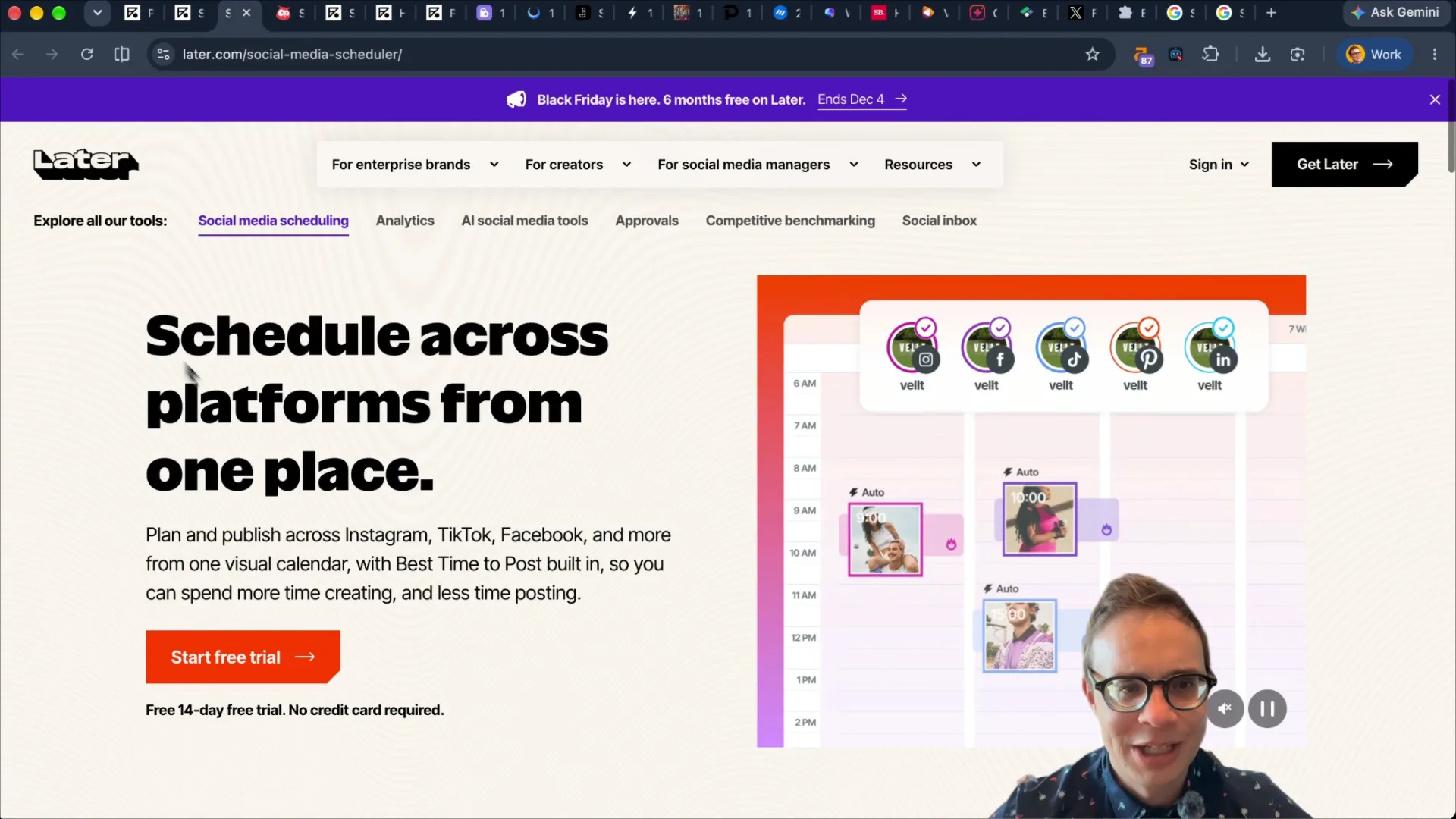
Compare /social-media-scheduler directly against what ranks in Google and AI Overviews (Later, PostEverywhere, Socialync, Buffer, Hootsuite). Later's scheduler page is tight: a clean product visual, three clear workflow steps, an interactive demo feel, and a dedicated Explore all our tools grid linking laterally across their feature pages. Simplify your long text sections and add a visual related-tools grid so both readers and crawlers move across your feature cluster.
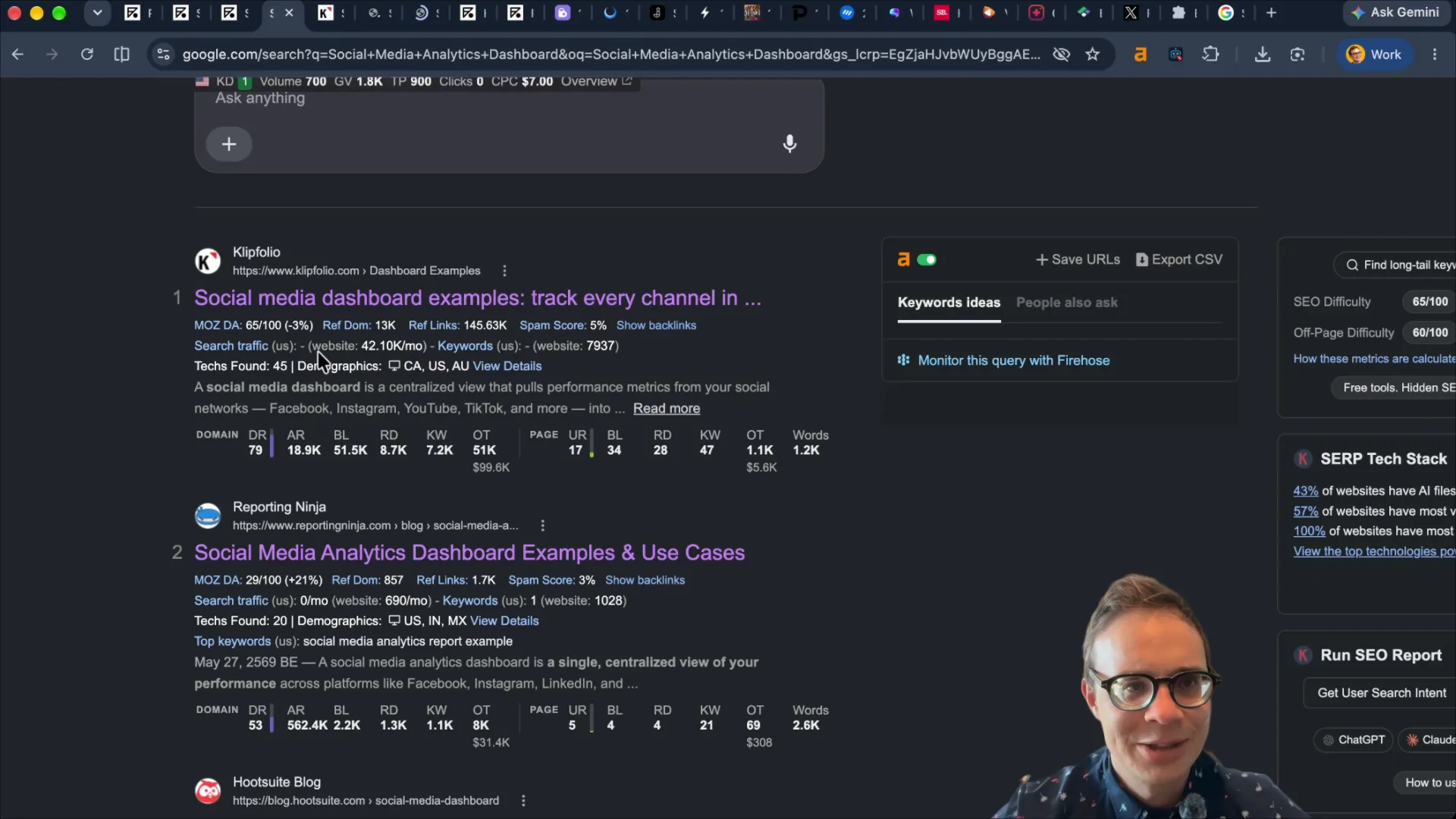
Your analytics page has a title-intent mismatch: it targets Social Media Analytics Dashboard, yet mentions "dashboard" only 9 times and shows no real dashboard examples. By contrast, Klipfolio ranks at the top by mentioning "dashboard" 36 times and showcasing concrete social media dashboard examples across every platform. Either strip "dashboard" from the feature page title and target social media analytics, or build a dedicated page packed with real dashboard templates and screenshots.
For broad informational keywords like social media analytics and best social media analytics tools, refresh older Outrank-generated posts to match the definition + listicle format used by Hootsuite, IBM, and Buffer: real logged-in screenshots of each tool, current 2026 pricing, and direct internal links from your strongest pages.
Map the agency customer journey (start with client approvals, not "scheduler")
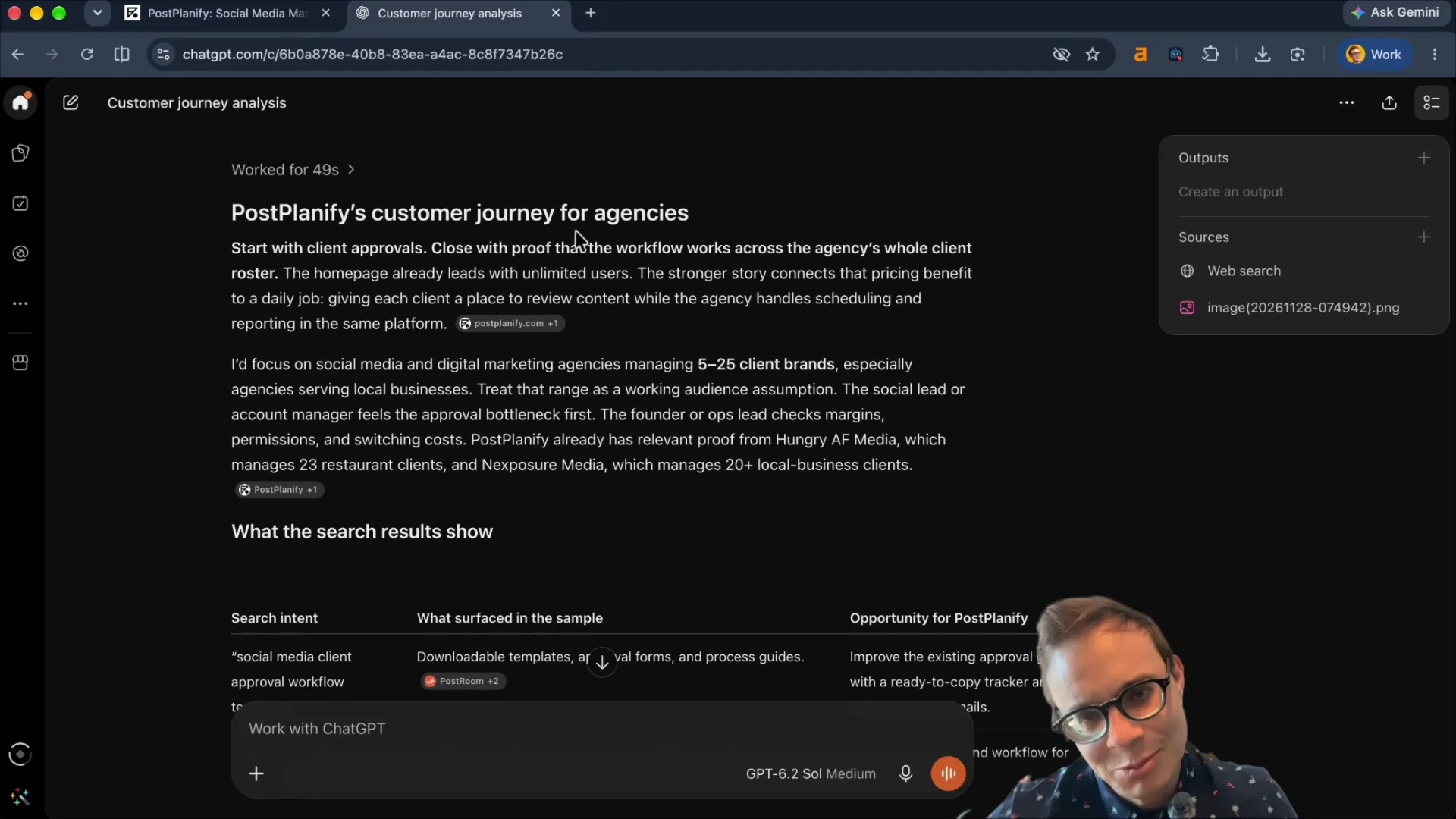
Agencies managing 5 to 25 client brands rarely wake up typing "social media scheduler." They start when Google Sheets, Docs, Notion boards, and email approval threads break down: missed deadlines, clients taking days to approve a month of Instagram posts, and messy permissions.
Build top- and mid-funnel assets around those exact bottlenecks:
- Downloadable client approval workflow templates and calendars inside your
/resourceshub, promoted organically on LinkedIn and X (and via targeted Meta/Instagram ads). - Bundle the template with an extended 30-day or 60-day trial plus a white-glove onboarding call where you set up their first client workspaces for them.
- Short social posts and videos answering exact agency pain points ("how do I get clients to approve a month of Instagram posts without chasing them?"), since Instagram posts, Reddit threads, LinkedIn posts, and Facebook Answers now rank directly inside Google SERPs and AI Overviews for agency workflow queries.
Fix truncated titles and win the "best social media tools for agencies" SERP
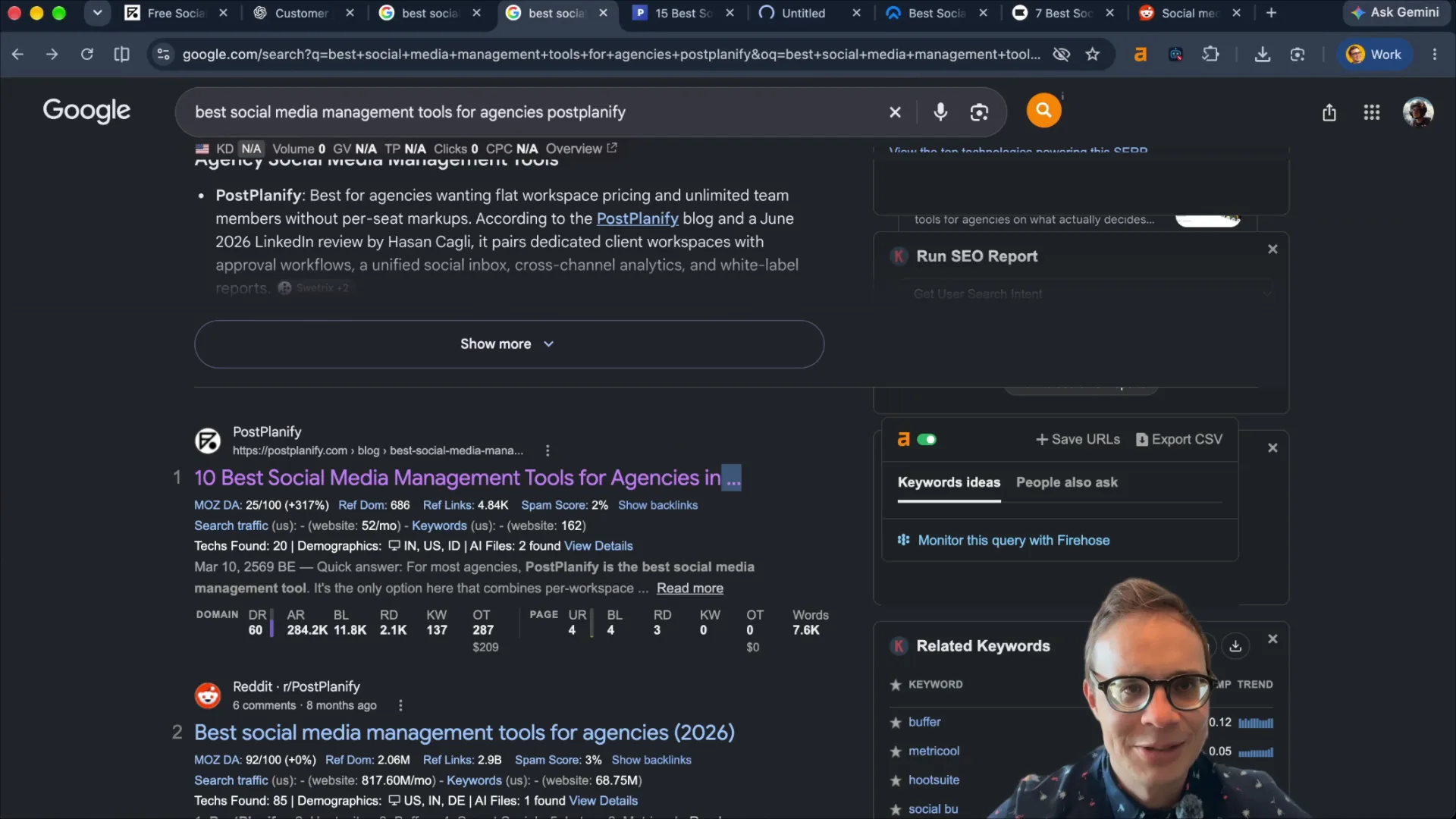
On best social media management tools for agencies, Google AI Overviews highlights Agorapulse, Metricool, Sprout Social, Hootsuite, and Sendible, and the organic results are dominated by listicles, YouTube reviews (like Metricool's hands-on roundup), and Reddit threads.
You already have a post (10 Best Social Media Management Tools for Agencies in 2026), and you are already doing the right thing commenting transparently as co-founder on Reddit. Two immediate upgrades:
- Shorten the title so it stops getting cut off: Competitors fit the full headline by using
(2026)or dropping the leading number. - Record your own hands-on YouTube review of the top agency tools: Test every competitor inside a real account, capture clean screenshots and workflows, publish the video on YouTube (where you already get a third of your paying customers), and reuse those screenshots across your listicles,
/vs/pages, LinkedIn, and X.
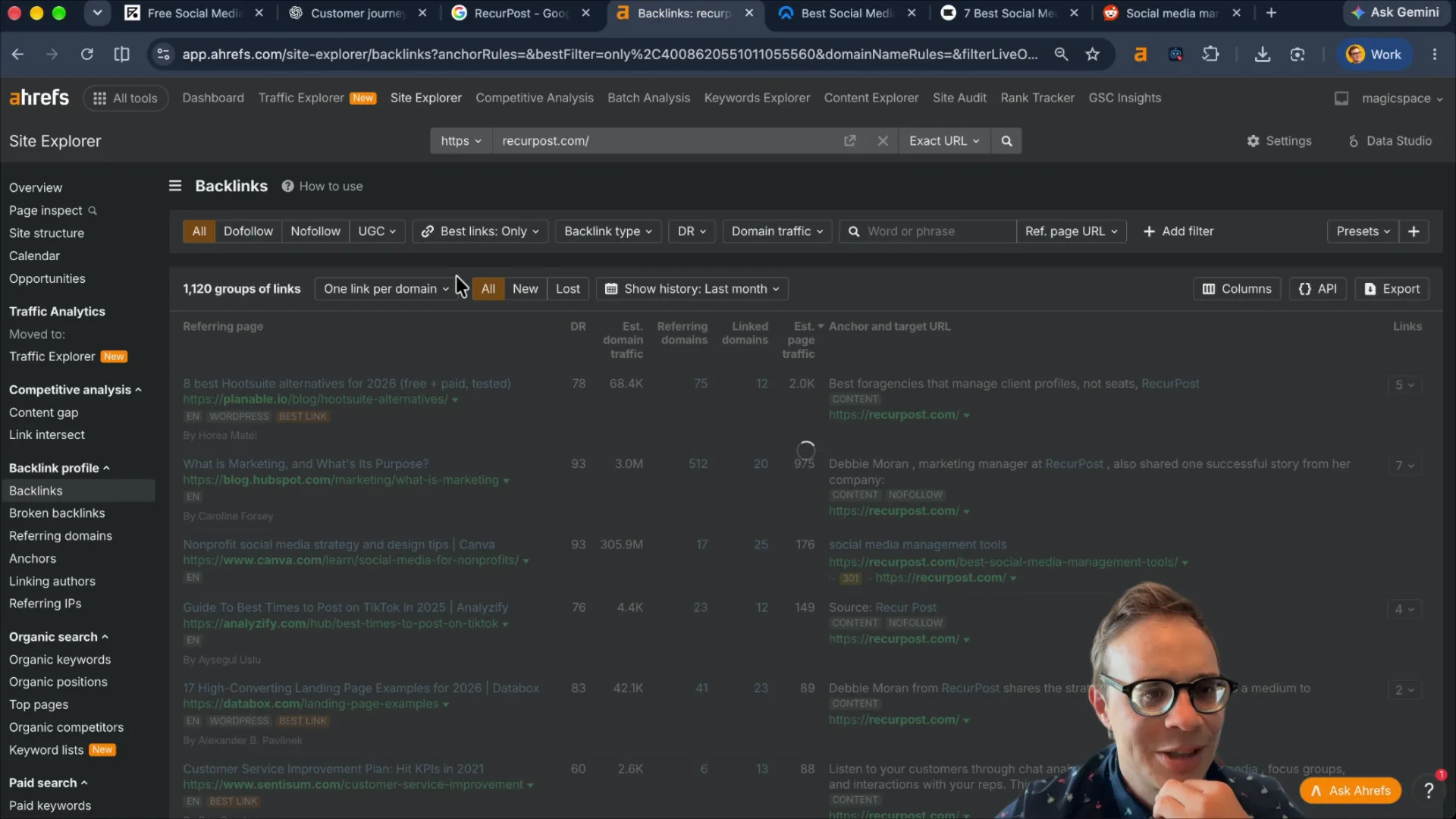
For outreach, reverse-engineer the competitors that appear in those agency roundups, such as RecurPost (~200 "Best links: Only" pages, plus placements on Planable, HubSpot, Canva, SocialBee, and The CMO) and SocialPilot (DR 83). Email sites already listing your competitors (for example, The CMO's "Write for Us" route, or listicles where PostPlanify is already mentioned low down) and ask to be moved up with an updated screenshot and agency angle.
Show up where agency workflows live: Asana, Trello, WordPress, and Zapier
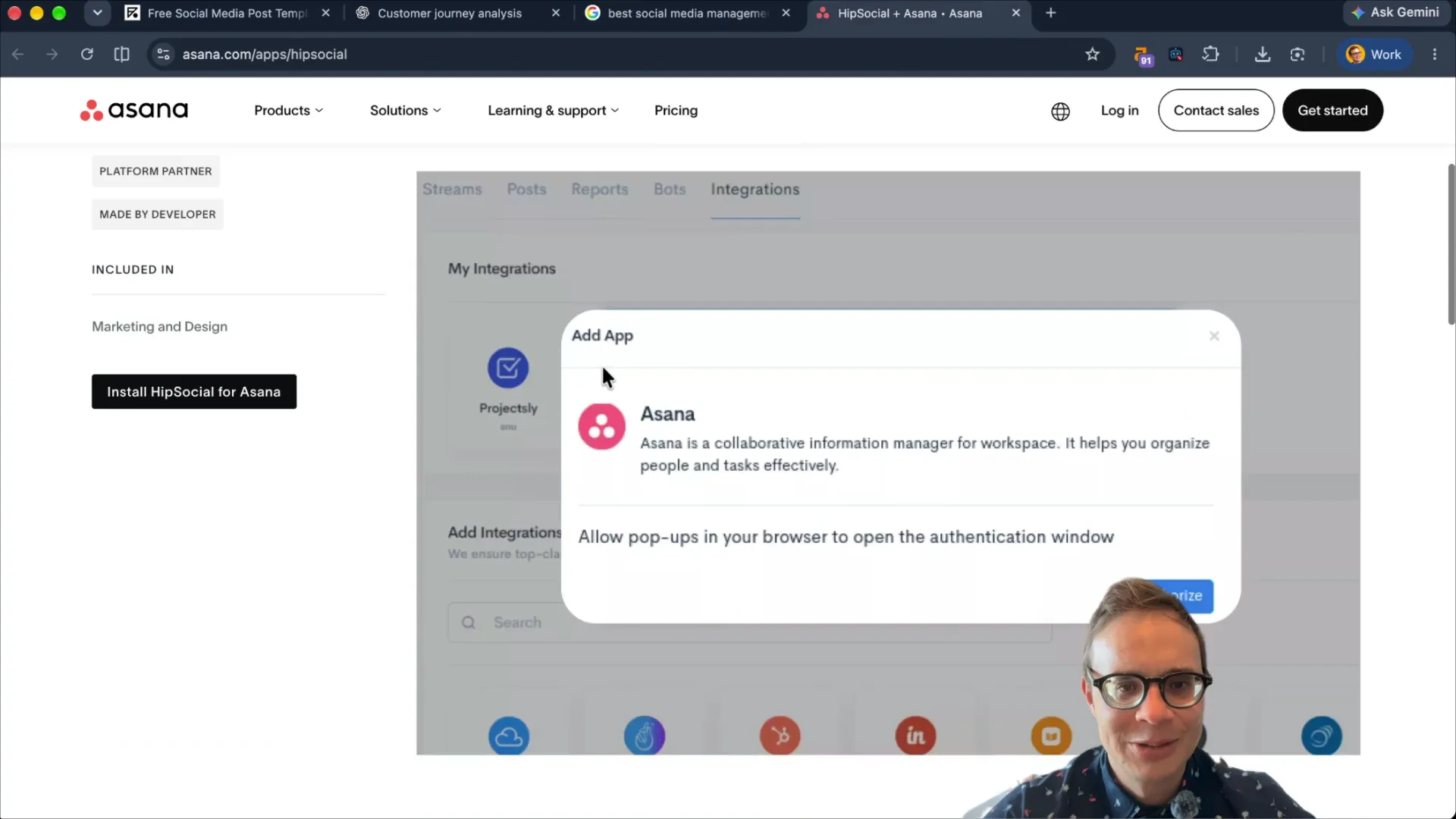
Ask agency customers what else sits in their stack and you will hear the same tools: Asana, Trello, Wrike, Google Sheets, WordPress, Zapier, Make, and n8n. When someone asks Google AI Overviews or an LLM for "social media scheduling software for agencies that connects with Asana / Trello / Google Sheets", AI recommends Hootsuite, Sendible, Agorapulse, SocialPilot, and SkedCast because they sit inside those native app directories and integration pages.
Look at HipSocial listed right inside Asana's apps directory, Sendible's WordPress and Zapier integration pages, and old Atlassian Community threads asking how to post from Trello to social media. Shipping lightweight integrations and getting listed in the Asana, Trello, WordPress, and Zapier marketplaces earns high-authority backlinks and puts PostPlanify directly into the Zapier and third-party listicles AI models cite.
Grok deep research: the $99 vs $344-$399 agency pricing gap
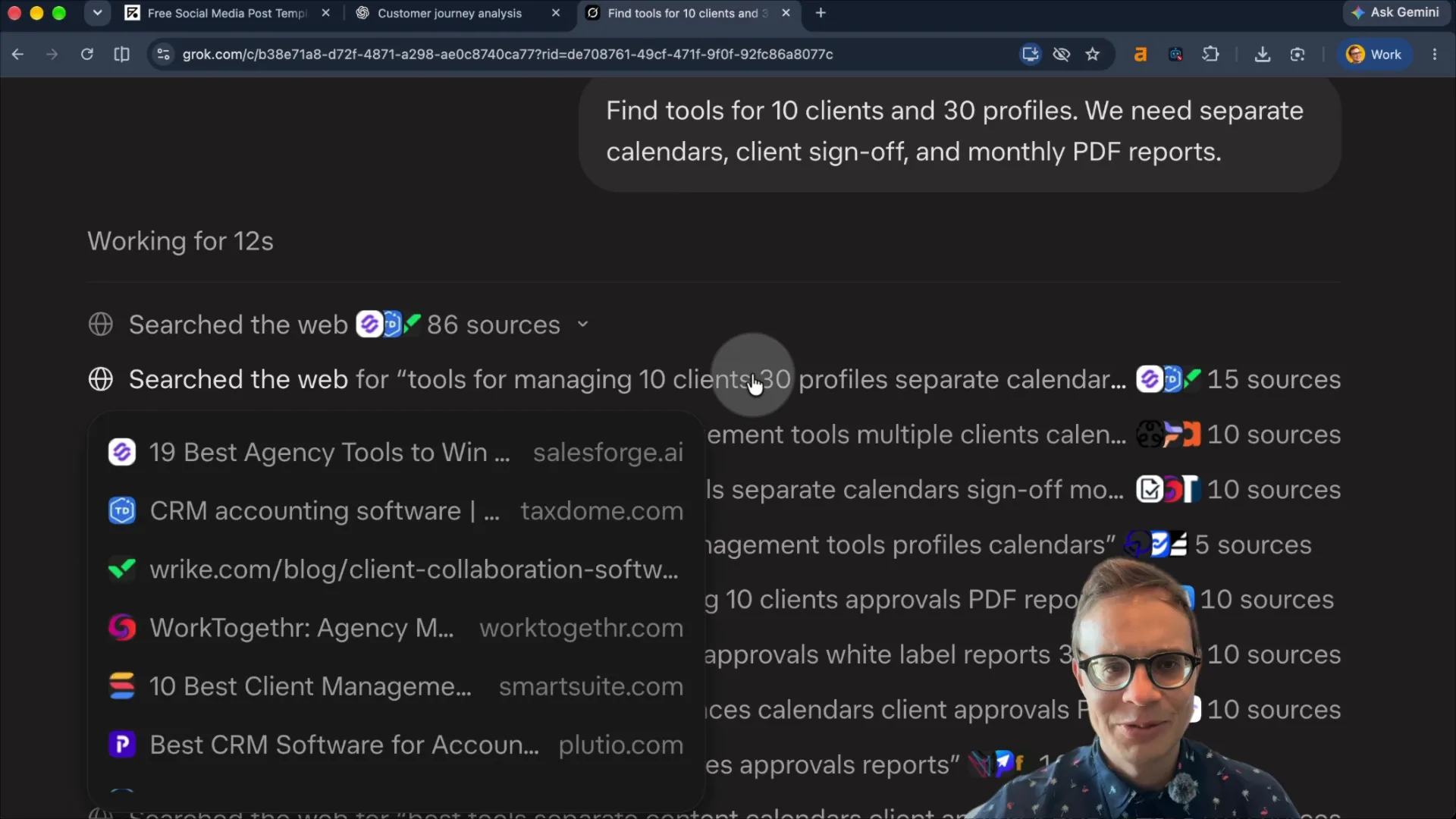
To see how AI actually evaluates PostPlanify for your target buyer, I ran a concrete agency prompt in Grok: "Find tools for 10 clients and 30 profiles. We need separate calendars, client sign-off, and monthly PDF reports." Grok scanned 86 sources (agency roundups, competitor pricing pages, workflow reviews) and picked Pallyy Agency as the closest fit.
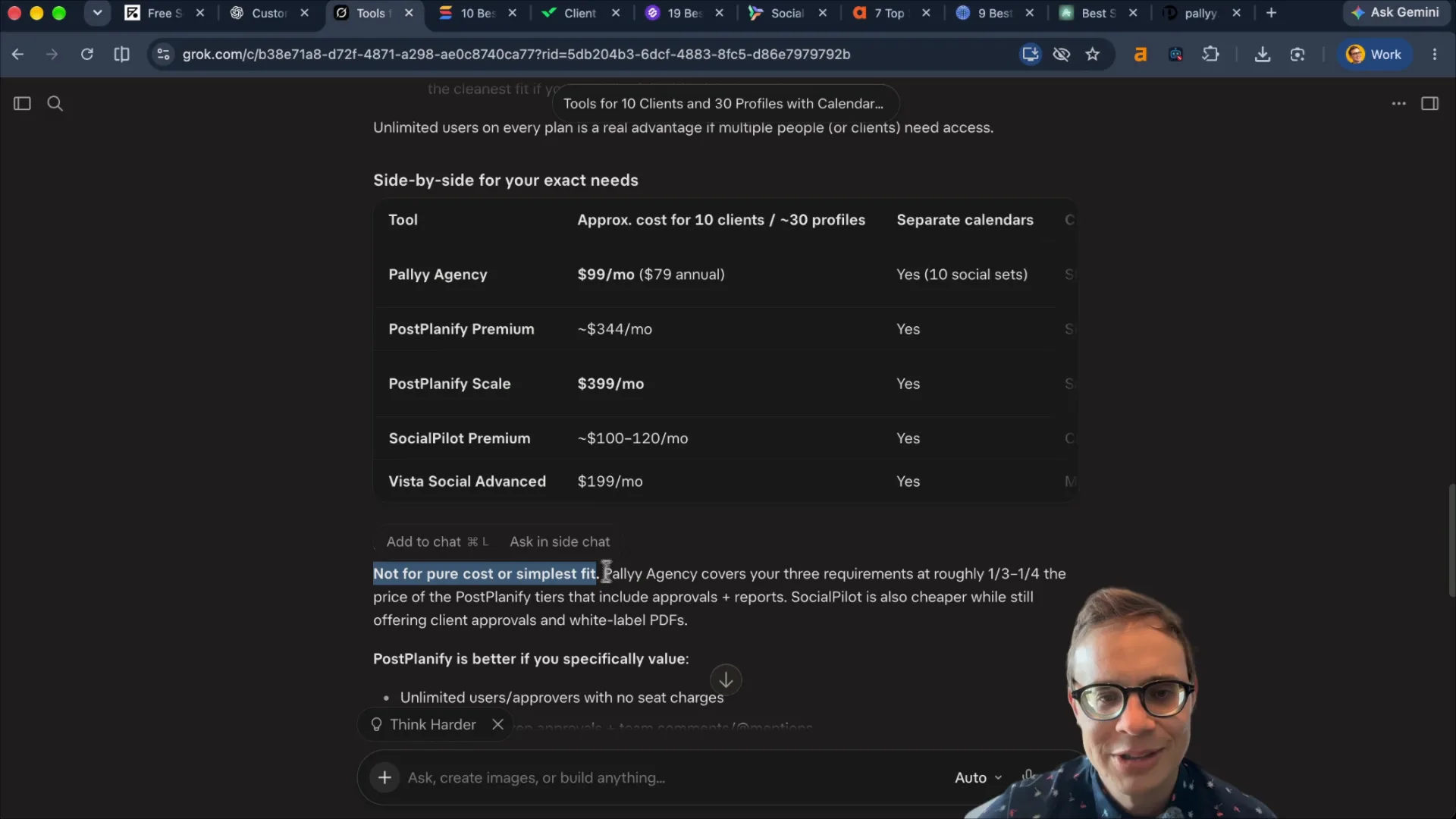
When I followed up with "How does PostPlanify compare, and is it a better option?", Grok gave a brutally honest verdict:
"Not for pure cost or simplest fit. Pallyy Agency covers your three requirements at roughly 1/3-1/4 the price of the PostPlanify tiers that include approvals + reports."
Grok's side-by-side table priced 10 clients and 30 profiles at $99/mo on Pallyy Agency ($79 annual), ~$100-$120/mo on SocialPilot Premium, $199/mo on Vista Social Advanced, and ~$344-$399/mo on PostPlanify Premium/Scale (while also noting accounts-per-workspace caps and white-label gating on Scale). Meanwhile, on PostPlanify vs Planable, Google AI Overviews already praises PostPlanify's flat-tier plans ($99 / $199 / $399), unlimited seats, and built-in analytics compared to Planable's per-workspace pricing and paid analytics add-on.
Two takeaways for getting more ChatGPT, Claude, and Grok recommendations:
- Test your own ICP prompts in deep-research mode (10 clients / 30 profiles, 20 clients, etc.) and inspect all ~50-80 cited sources. First verify AI is reading your current pricing and limits accurately, then decide whether your agency tiers need adjustment or sharper framing around where you clearly win (unlimited team seats and client approvers, built-in analytics, and scheduled PDF reports).
- Make your roundup and
/vs/pages specific and date-stamped: Show the exact lowest tier for a real agency scenario (e.g., 10 clients, 30 profiles), include sample PDF reports and real screenshots, and state honestly who each competitor fits better. AI models pull directly from first-party comparison pages when they are specific and verifiable.
Programmatic /connect/ pages and AI agent directories
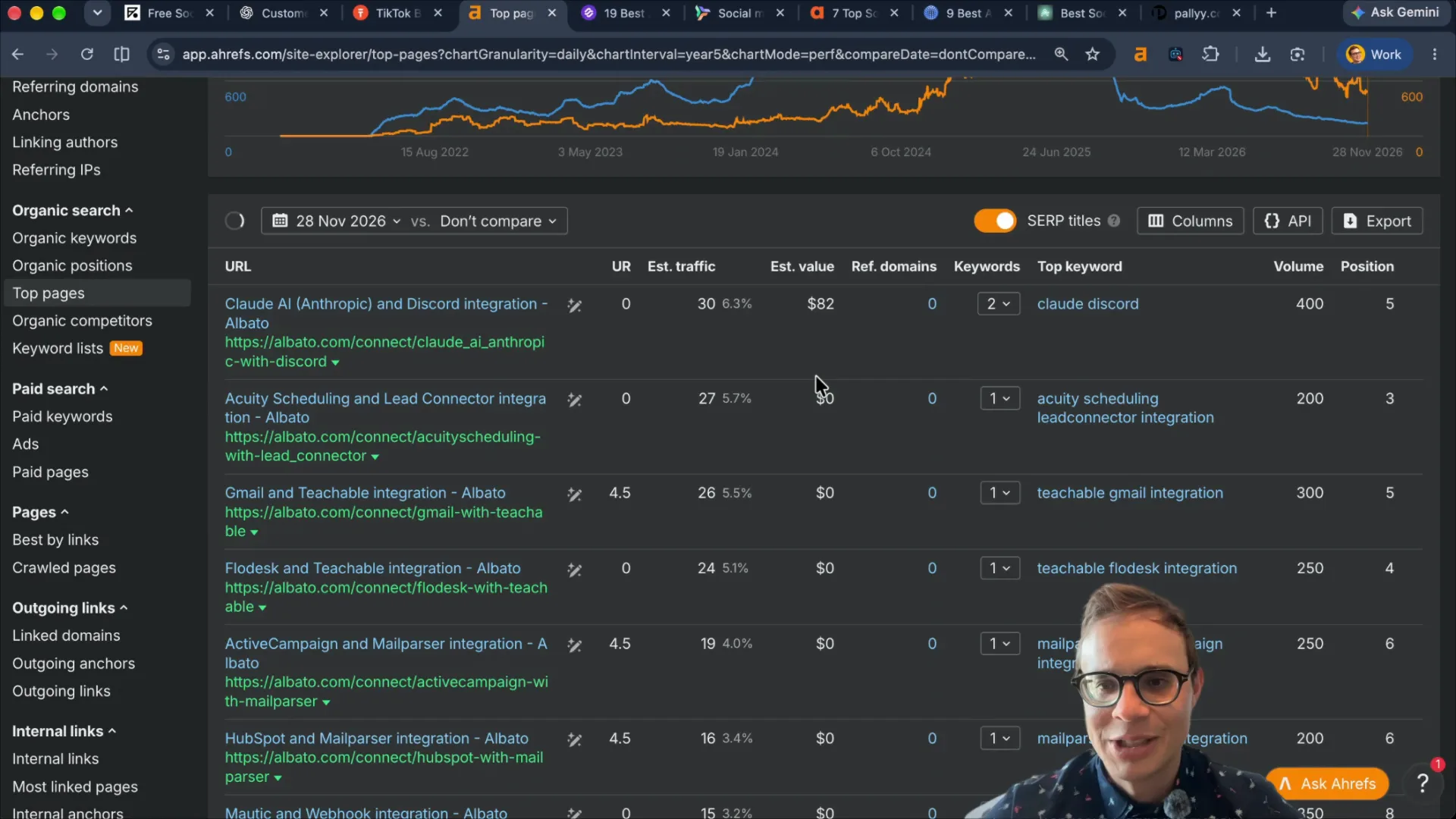
Notice how Albato (albato.com/connect/...) captures long-tail integration queries with 139 programmatic connect pages (Gmail + Teachable, Flodesk + Teachable, ActiveCampaign + Mailparser, Claude + Discord). When an agency asks an AI agent how to connect Wrike, Google Sheets, or WordPress to TikTok or LinkedIn, those dedicated connect pages are what search engines and LLMs retrieve. Pair real Zapier/Make/n8n/webhook templates with clean /integrations/ or /connect/ pages for every workflow your agency customers use.
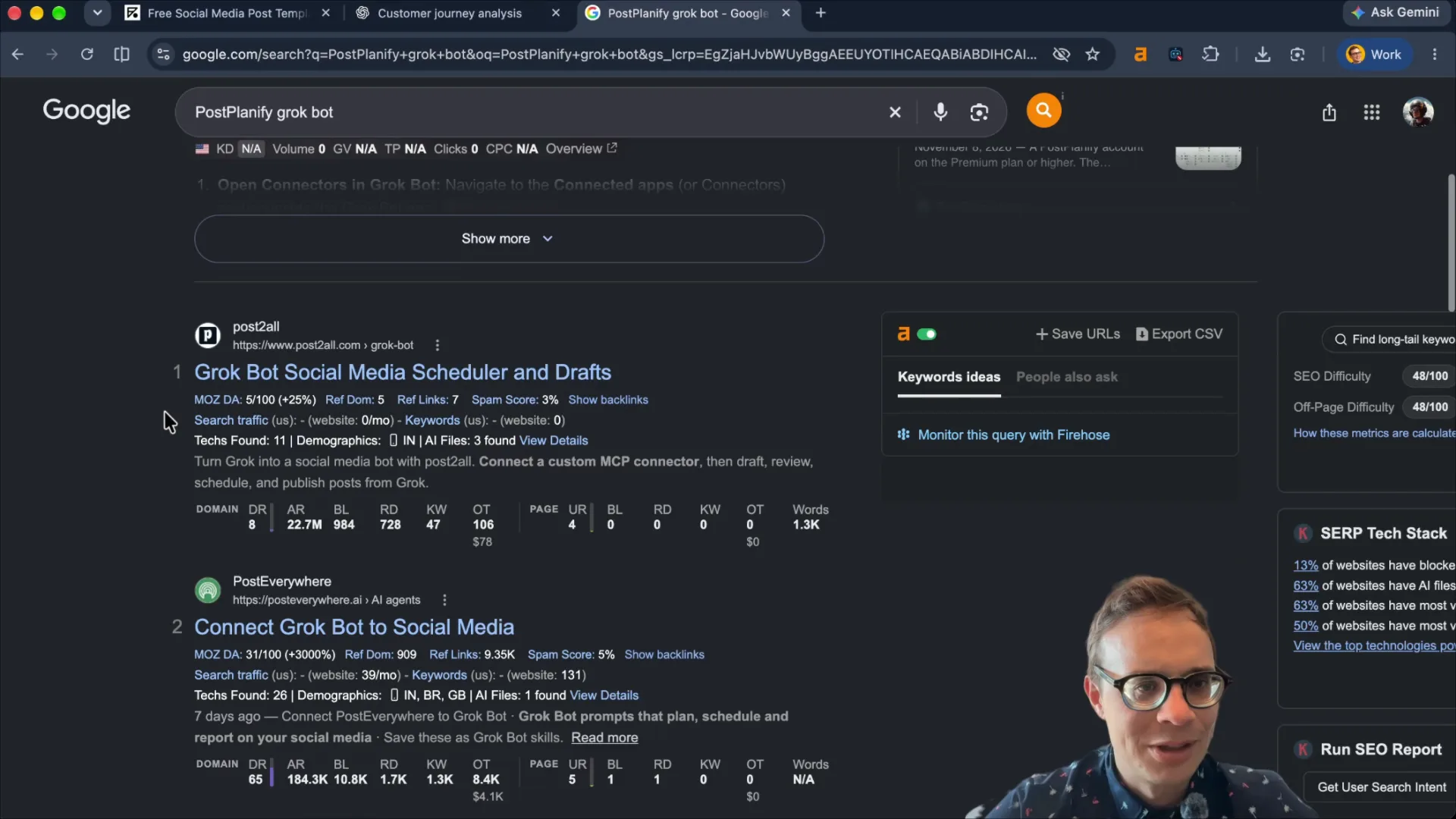
Finally, you already have a head start with your Claude plugin and MCP server (/mcp and /mcp/docs). Extend that same distribution across the newer agent catalogs before competitors lock them down: publish dedicated pages and directory listings for Grok Bot (like post2all.com/grok-bot and posteverywhere.ai already have) and cursor.directory so agency operators asking Claude, ChatGPT, Grok, or Cursor to schedule posts can connect PostPlanify in one click.
TLDR
- Fix
robots.txttoday: RemoveDisallow: /_next/andCrawl-delay: 1, then verify the rendered screenshot and Page resources in Google Search Console URL Inspection. - Clean up blog layout and link equity: Drop the oversized top cover image above the H1, shorten truncated SERP titles, add contextual internal links from
/pricingand/mcp/docsto your commercial pages, andnofollowrandom third-party links on statistics posts. - Audit your agency pricing and proof in AI deep research: Run real 10-client / 30-profile prompts across Grok, ChatGPT, and Claude, check the cited sources, close the Pallyy pricing/packaging objection, and refresh
/vs/and agency roundup pages with date-stamped pricing tables, real screenshots, and sample PDF reports. - Build agency-first top-of-funnel magnets: Publish free client approval workflow templates bundled with an extended 30/60-day trial + white-glove onboarding call, and record a hands-on YouTube comparison video of top agency schedulers whose screenshots feed your blog and social posts.
- Expand into workflow and AI marketplaces: List PostPlanify in the Asana, Trello, WordPress, and Zapier directories, ship programmatic
/connect/workflow pages, and add Grok Bot andcursor.directorylistings alongside your Claude MCP plugin.