
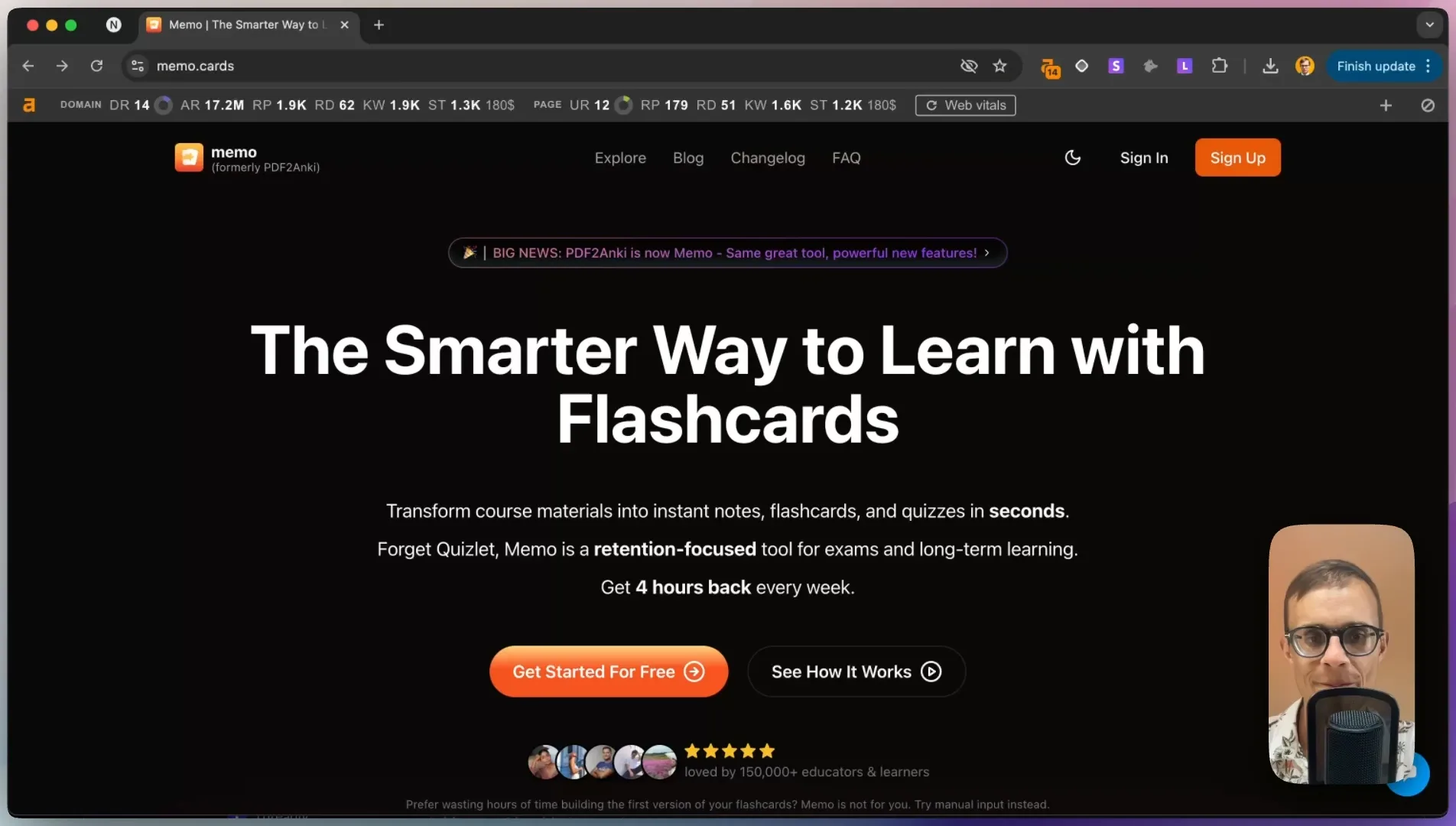
Hey everyone, today we're doing a SEO audit for Memo.cards. They rebranded from PDF to Anki to now Memo. And they actually made one of the coolest looking letters that I saw. It really explains everything quite well, why they did it, why they changed, why they're using Memo, what's new, their vision for the future and everything else. This really makes a blog post look super good and helps them create a lot of brand and authority that Google really likes. However, the keyword that they're ranking or trying to rank for is Memo. This will be a little bit more difficult to rank because, of course, if you type in Memo on Google, you will see that a lot of different type of stuff is ranking. If we look in the US-based search using the Ahrefs SEO toolbar in the simulator over here, we will see that the results that we get are a dictionary page, we will see the meaning of Memo, a written message, especially in business, and the Wikipedia page, Memorandum, which explains that a memorandum, also known as a briefing note, is a written message that is typically used in a professional setting, which is similar, mostly correct for our keyword, but, of course, not exactly the same. We're also using Keywords Everywhere, a Chrome extension that I love, and it shows us all of this information and data, which is the trends data. For example, here we see that the trend data for Memo has been mostly the same. It has a lot of searches, which is really nice, but also this is really difficult to rank for. If we look at the keywords that, right now, Memo.coids is ranking for, we will see that the best possible keywords are Quizlet, Anki, and Anki Flashcoids. Anki Flashcoids is actually ranking really well. It's at number 18, and this is probably one of the most interesting types of keywords that they could rank for, because I feel like it's very relevant at what they're doing. If we type in Anki Flashcoids, we see that the keyword difficulty is very high. It's 81, but they have a lot of really good traffic, and the results we get are different types of Wikipedia results for the computer program and the official Anki web website. But still, we do see some competitors. For example, AnkiPro.net, that is ranking over here with a domain rating of 41, and they have a bunch of backlinks, and the other results are AnkiWeb, which is, of course, the top result, and AnkiApp.com with a domain rating of 54, which is also really good. And then we have some Google Play Store, which is the Google Play Store and the App Store as well, which are easy to rank for, especially if you have an app, then you need to build some links to those pages. As you can see here, they have each a bunch of backlinks to these specific App Store and Play Store pages. And YouTube, how to use Anki like a pro by a learning expert. This could be a way for you to promote your own result as well, because, for example, Justin is promoting Drops, a newsletter that they made. The other results are Reddit, so that's some targets that you could have as well. So you could say, what's the deal with Anki flashcards? And you could, for example, explain Anki in a really well way and say, okay, I love Anki because I use memo cards, right? The other results are really similar. You could also have the same strategies where you promote your own app in those pages. LearnAnki.com with a domain rating of 27, also a good potential competitor as we could target, and these are the top 10 results for this result. But eventually we want to see something either here, but people also search for, where we have our brand memo over here. We could also play Google Ads in this list or build more backlinks so that we rank in these potential pages. If we take a look at some of the competitors, for example, LearnAnki.com, we see that the domain rating is decent, but their top pages are not super high. So the top results that we see here for them are how to use Anki. So like a blog post, subtle casting method, best Anki settings for language learning, make a stick summary, and so on. What I would try to do in this case for these types of results, let's take a look if you have a page like this, for example, how to use Anki, they're ranking really well for this, is to build a blog post that is much better than this one. So the way that you start with this, if you have a list like this on the top keywords of a competitor, what you should do is Google it, use the Keywords Everywhere extension, see if it's trending up, so there's more interest, more people are looking for it, and then which is one thing that you can do, that is look at the other results here on this page. For example, you see here how to use Anki, an efficient tutorial for beginners. Also, we see the YouTube results, so you can make a YouTube video, promote your stuff on Reddit, also make another YouTube video, and AnkiWeb has a manual over here, so either if we look at these pages, we can out-compete this result or these three results. So if we compare and do a deep dive into the pages that are ranking, we see that how to use Anki in this keyword, we should be, Google is showing us this page, and this is a little bit in-depth, but it has a lot of depth and information. It doesn't really have a lot of fluff, so it's really useful, but I think it's not super useful to someone who doesn't know Anki at all to be like, okay, here's a deck, whatever, right, and not really knowing how to use it, what are the apps to use, so it's not really useful. Here's another article that has a domain rating of only five, but it is ranking really well. Why? And that's because it's very comprehensive. For example, here we see, download it here, and this link goes to the official app, not even their own app or anything, and they have a lot of information about closed deletions, they explain the cost, they explain the theory behind it, how to use it, why you should use it for a video, Anki 101, how to get started. This is, as you can see, super in-depth. If I would share, if some friend would ask me, like, hey, how do I use Anki, I would potentially send them this blog post, and it's really explained as well. Similar to Learn Anki, it's in-depth, and it explains this lesson number one, and then they explain why you should use Anki, some examples, why Redditors agree, what is Anki, how to use it, and so on, so this article is even more in-depth, and it explains really well how to make the cards, explain everything quite well, so those types of blog posts are stuff that you can copy, so if you look at learnanki.com, just look at these keywords, and make similar blog posts. Another example by ankipro.net, they're ranking here as well, in this example, the top results are also like blog posts, so very similar ideas, make blog posts that work well. Here, the next result is ankiapp.com, their top results are support, so that seems to be more like forum stuff, but they're really ranking only for the homepage, ranking download, and everything else, like, drops off quite quickly, so this is an okay result, but I wouldn't study or copy this, let's say. So the other results here that we, if we go back to memo.cards, we see that they're really picking up quite well, they started, they changed the domain, right? So if we take a look at pdf2anki.com, I believe, or pdf2anki, we should be able to find out which one it is based on the backlinks that they get, so we have pdf-anki.com, if we look at their old domain on Ahrefs, we see that they grew for some years, and then they changed the domain, and Google is really actually rewarding this quite well, because we see that they're ranking for more keywords than they did in the past, and they have a lot more traffic here, so even in February, they had some traffic, but it wasn't that crazy. Wait, let me filter out on two domains. Still, about 100 organic traffic, and which is now about 150, so this change has been quite successful already, and it's been working quite well. The referring domains have all been migrated to this one, so we see that they're also shooting up quite quickly, so this seems to be quite a decent migration. The only thing that you can do, for example, here, is if you have the backlinks for memo.cards, we can see that some of them might be either broken, or just pointing to the old domain, pdf2anki, so one thing you can do is reach out to everyone in this list, and tell them, like, okay, let's rename our product fan page, instead of pdf2anki, let's change the website to memo.cards. If you just do this, it would be useful. For example, here, for Toolify, one suggestion that I could give you is if you have these links, like top AI tools and so on, AI tools, 12 tools, all these other tool directories, is don't rename them, just add a new listing, it will give you, like, two positions on those specific pages, so that will even work out better for you, because you can rank for pdf2anki, but also rank for memo.cards, so you will have a few more backlinks, you will just have to submit your tool again, but likely they will never really find out that suddenly it's redirected or anything, they don't generally have tools or ways to detect this, so this could give you, like, even more backlinks, by just making new domains, and trying to rank for them. The backlinks that I see are okay-ish, but they're not, like, your very best backlinks, so if we filter on the best backlinks only, we said there's only two that are really good, the other ones are, like, submissions or directories. If we look at, like, the best backlinks, what does this mean? It's, for example, here, these pages, they talk about, like, flashcard apps, they have their own page traffic, they have their own domain traffic, and they really directly talk about your tool and domain. For example, here, the best flashcard generators, we're talking here about memo, really good backlink, as we can see, and this is what we need more of, more examples of this. The easiest way to do that is try out linkdr.com, where you can do, you would get backlinks on autopilot by mailing or co-emailing everyone who has something similar, so what you could do is look at searches of, like, best AI flashcard generators, look at everyone who is ranking here in this list, and then email everyone over here. For example, we need this one, or this one. If they have best or top in the name, they likely are able to submit you. For example, here, we're not at it, and this is something that linkdr could detect easily. So that's about it for now. Let's see what else we have. So we have the top pages on memo.coids, and the results that we see here are flashcard examples. So we have memo.coids explorer. This slug is a little bit more difficult to understand, so if you're able to improve it, that would be a lot better. For example, here, you see the top keywords, and one way to improve this is make it a little bit shorter. For example, here we have a keyword, types of liquid crystals, and here we have this slug that is very hard to understand. One way that you could do this is, oh, you just stop using UID4, well, because these are, like, too long. Usually I try to use numbers, so there's no reason why this could not be, like, 1 to 3, but I understand it's already a little bit late to change. So one way that you could do this is, like, always detect the UID, and either make it, like, something like this, so slash liquid crystals slash UID, right? So you add, like, random keywords, and here, anything could work generally, right? And then you always check for this part to actually detect the content. But having this inside your slug could make it a little bit more clear what the keyword is that you're ranking for, and you could use the title, for example, that you have here to insert it into the slug section. So here are the actual keywords. Not bad. I would make sure that you have some words that talk about, like, flashcards and memo cards, or, like, copy this memo card. This would help you rank here as well, instead of just nothing. So this would be very helpful. But, yeah, that's one quick way you could generally auto-generate this. Like, medium.com has a similar system where they have slugs that are random, so they don't need to be always the same, but you just need to make sure that your canonical URL is set correctly. For example, here we have the canonical URL. You need to include the keyword that we just mentioned in this list. Otherwise, you can optimize, of course, the title, but I think this is already quite good. For your homepage, I would make sure that you have the canonical URL over here. You have the sitemap set up. You can add the explored pages over here, all of them, and this will help you rank. Then you just need to use something like TagParrot to index them all automatically, so that will help you as well. Over here, we see the OG URL is set correctly, but the canonical URL isn't. What else? You can check a few of your blog posts, and here we see a decent title. We see Elevate, so maybe it's written by AI. The canonical URL needs to be set here as well, but you can do a lot of this stuff, like have Ahrefs site on it, which is 100% free, and it will run a complete SEO audit of your website, and then it will tell you all of these things. Generally, I would take aim at, okay, all your blog explored pages are really nice, but I would try to make sure that some of these blog posts that you're writing also rank, so you have maybe a lot more blog posts, but they're actually getting SEO traffic, and the position is super high, so it's not that great. For example, one way that you could improve it is how to use Anki for music theory. I would make sure that if you have a site like this, how to use Anki for music theory, which is decent, but it's not matching the keyword, that you don't have something like this. One tool that I would recommend is using the AI content analysis. So if you use something like, there's a tool that I made, and there's a content analysis, so it'll Google that keyword for you and tell you what other pages have content in the content. Here I see it's super AI written. It's definitely too long, and talks a lot about stuff, but it needs a lot more images and some more information that is okay-ish, but if you would have some more images inside the text, I think it would be helpful, like screenshots of the app or your own app. That would be useful. So here we see that how to use Anki for music theory. You have memo cards, because we have this exact same URL, but you have some other examples here, and I made an AI title analyzer, which will tell you the best titles to use, as an example, from novice to virtuoso using Anki for music theory. You could use something a bit more correct that matches the slug in a way. Let's take a look at what the tool gives us. But in general, it will be something like, how to self-teach myself, or something like, how to learn a music theory using Anki. And here we can see that the grade is good. It has the right amount. Here's the final result from title grader. So this uses AI to make titles based on the other content and based on what other pages have. So how to use Anki for music theory from novice to virtuoso would be a lot better, instead of this result, because it has the keyword and the slug that what people type in, a lot closer to the beginning part of the title, instead of at the end. The only thing here in Google search preview, it's a little bit too long. You could have it like this, and then it's not too long. Or you could make other blog posts that have similar ideas, for example, 10 Essential Anki Decks, which is also very useful to people for learning music theory, or Mastering Musical Theory of Anki, a beginner's guide. So some of these blog posts could be a lot better. Just try out the app and tell me what you think. I would try to run this for all of your blog posts and all your keywords, and optimize the titles. Once you have this, add some more images, really try to improve them, then try to package it up so that it's actually useful. In a way, you could see about rewriting or using your blog posts in a way to promote them on Twitter, send them out as a newsletter, make a mini guide, make some useful Anki Decks, add some more explore pages that you have over here. So these could be linked between each other. So you could say, here's a few music theory decks that are super useful. And that's one good way that you could promote your app. So I hope some of this helps. Definitely try out the blog post improvement stuff, but you also need a lot more backlinks. Try LinkDR for that, and also submit your apps again to the AI directories. That will help you a lot more as well. In general, for your blog to rank higher, you also need backlinks specifically to those blog posts. You have a few of them, but it's not enough. You need a lot more. You either can get like five per month, or 10 per month, and open a SEO agency, or use any of the provided ideas for purchasing backlinks. Usually the one that I use is like Bazoom. It works quite well. You can just purchase backlinks over here, if you're interested. Otherwise, use LinkDR to do more and genuine code outreach. All right, I hope this helps. Good luck.
No template scorecard here. The details below come from this specific audit.
SEO Audit: Memo.cards - Flashcard App Optimization
Memo, formerly known as pdf2-anki.com, has recently undergone a rebranding and domain migration.
This audit analyzes their current SEO performance, identifies opportunities for growth, and provides actionable recommendations to improve their organic search visibility.
Key Findings
Successful domain migration from PDF to Anki to Memo.cards
Targeting competitive but valuable keywords like "Anki Flashcards"
Opportunities for on-page optimization and content improvement
Need for increased high-quality backlinks
Detailed Analysis
Domain Migration and Rebranding
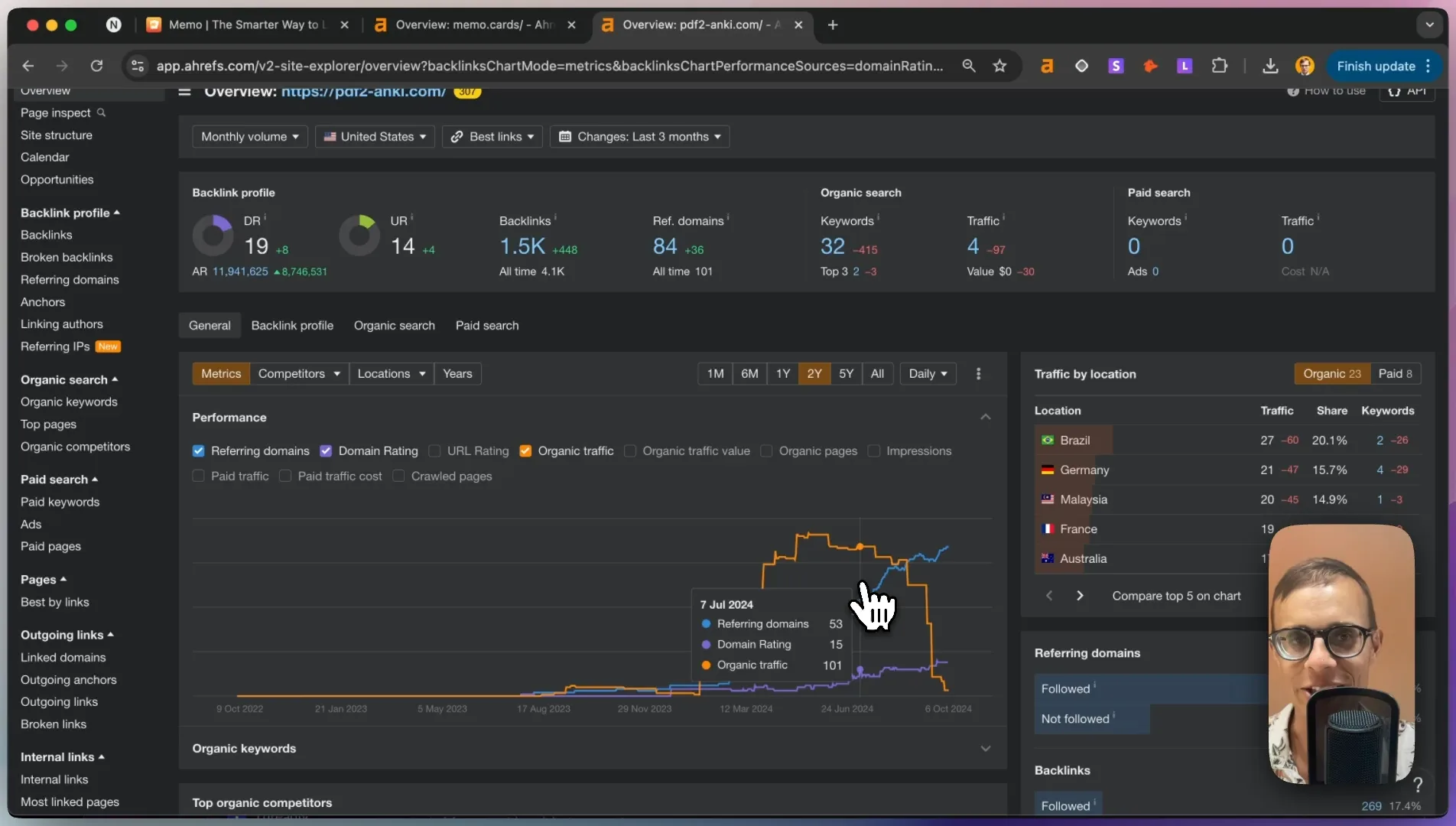
Memo.cards has successfully migrated from their previous domain (pdf2-anki.com) to their new brand (memo.cards).
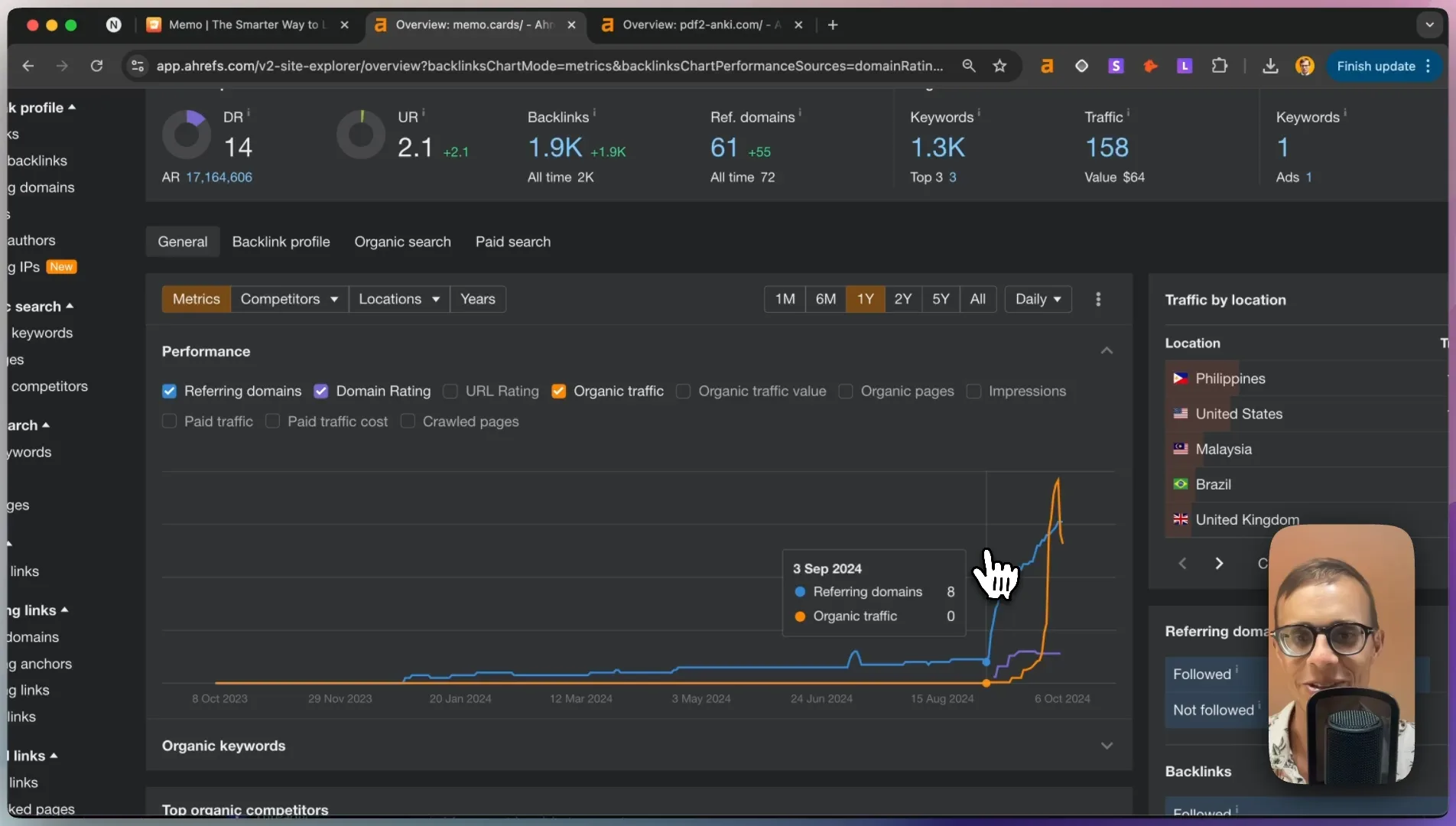
The migration appears to have been executed well, with Google rewarding the change:
Organic keywords have increased post-migration
Traffic has grown from about 100 to 150 organic visits
Referring domains have been successfully transferred to the new domain
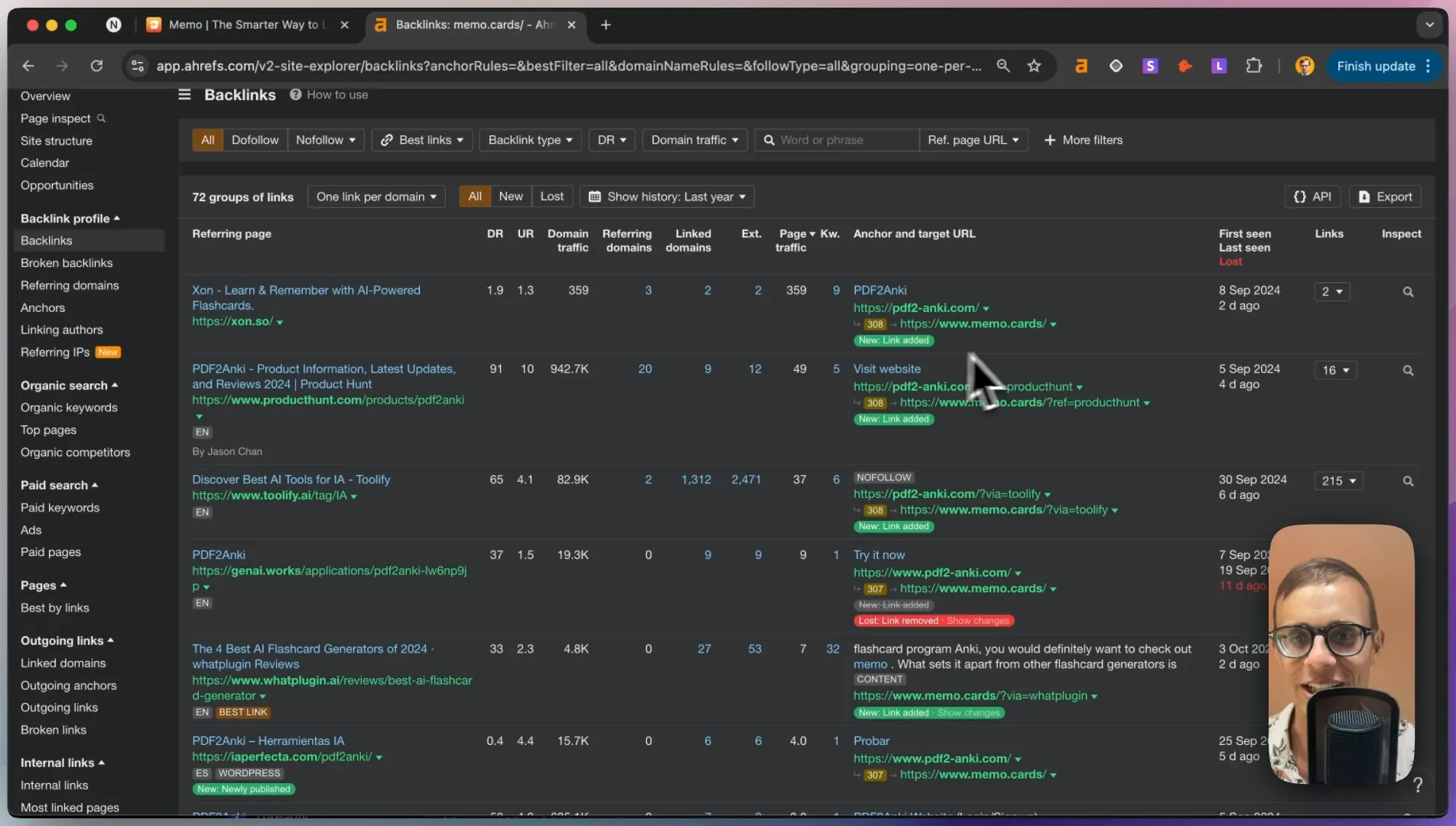
Recommendation: Reach out to backlink sources still pointing to the old domain and request updates to the new domain name and URL.
Keyword Targeting and Competitiveness
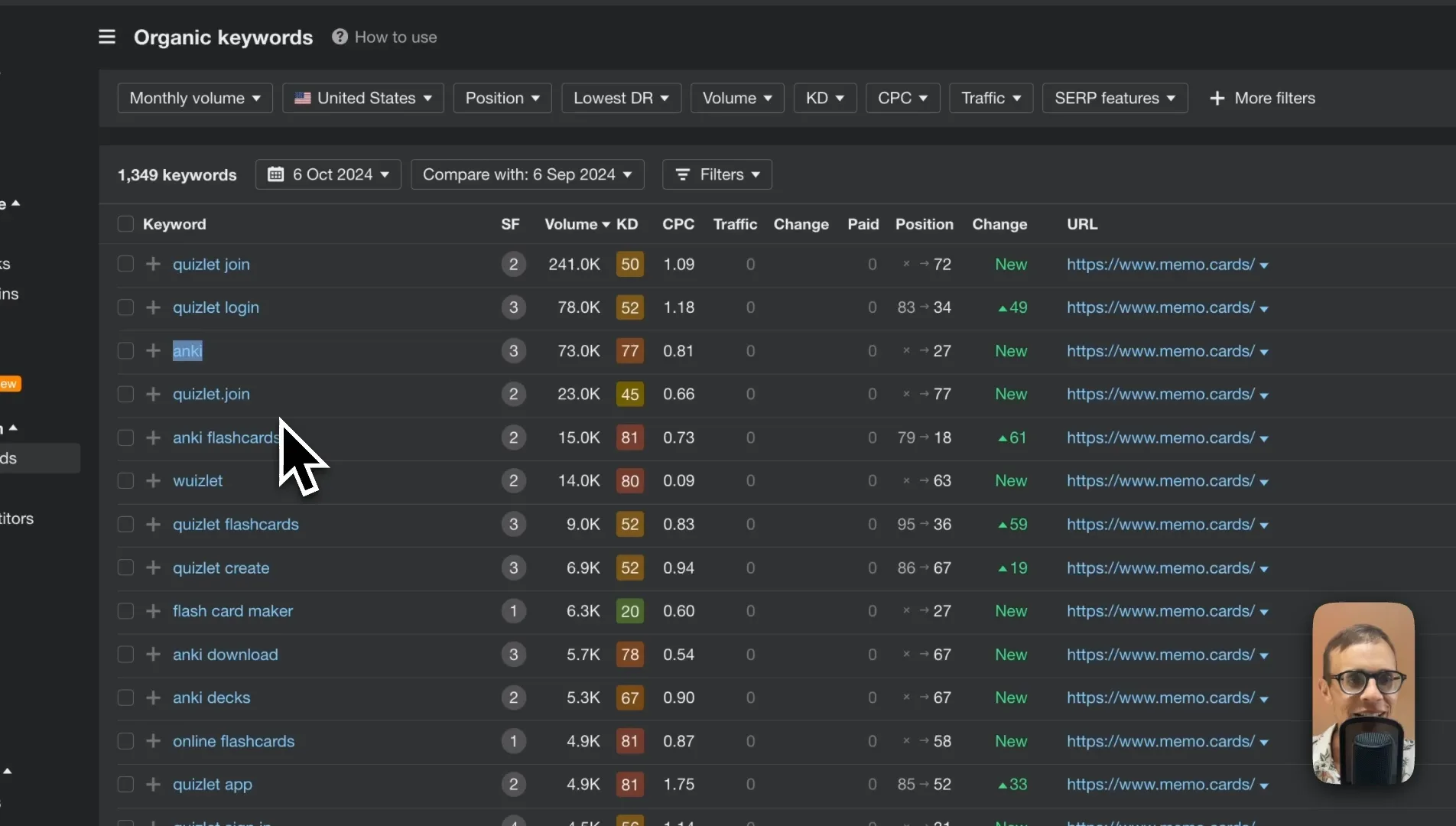
The main keyword "memo" is highly competitive and may be difficult to rank for due to its broad meaning. However, there are opportunities in more specific, relevant keywords:
"Anki Flashcards" (Keyword Difficulty: 81, high search volume)
"Quizlet"
"Anki"
Recommendation: Focus on long-tail keywords related to specific use cases of flashcards and spaced repetition learning.
On-Page Optimization
Title Tags and URLs
Some blog post titles and URLs could be optimized for better search performance:
Example: "How to use Anki for music theory"
Current title: "From Novice to Virtuoso: Using Anki for Music Theory"
Optimized title: "How to Use Anki for Music Theory: From Novice to Virtuoso"
Recommendation: Use the AI Title Analyzer tool to optimize blog post titles for better CTR and keyword relevance.
URL Structure

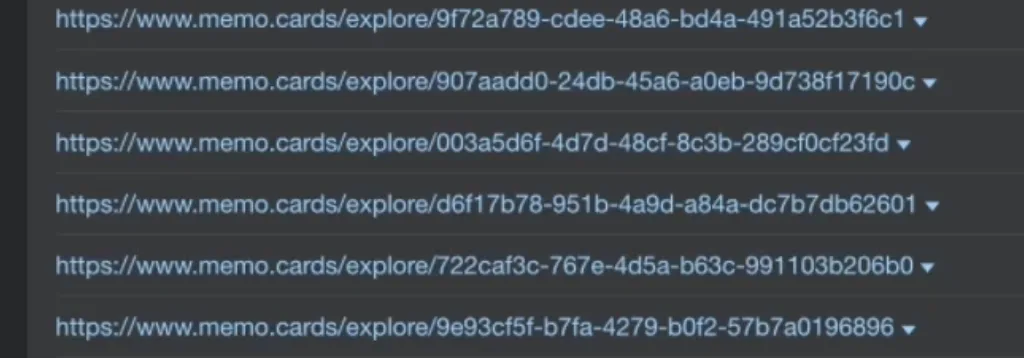
The current URL structure for flashcard examples uses long, difficult-to-understand slugs:
memo.cards/explorer/[long-uid]
Recommendation: Implement a more SEO-friendly URL structure:

memo.cards/flashcards/[topic]/[uid]
This change will make URLs more readable and potentially improve rankings for specific topics.
Content Strategy
Create comprehensive, in-depth blog posts on topics related to flashcards, spaced repetition, and learning techniques.
Develop content that directly competes with top-ranking pages for target keywords.
Include more images, screenshots, and visual aids in blog posts to improve engagement and time on page.
Recommendation: Use AI content analysis tools to ensure blog posts cover all relevant subtopics and match the depth of top-ranking competitors.
Backlink Strategy
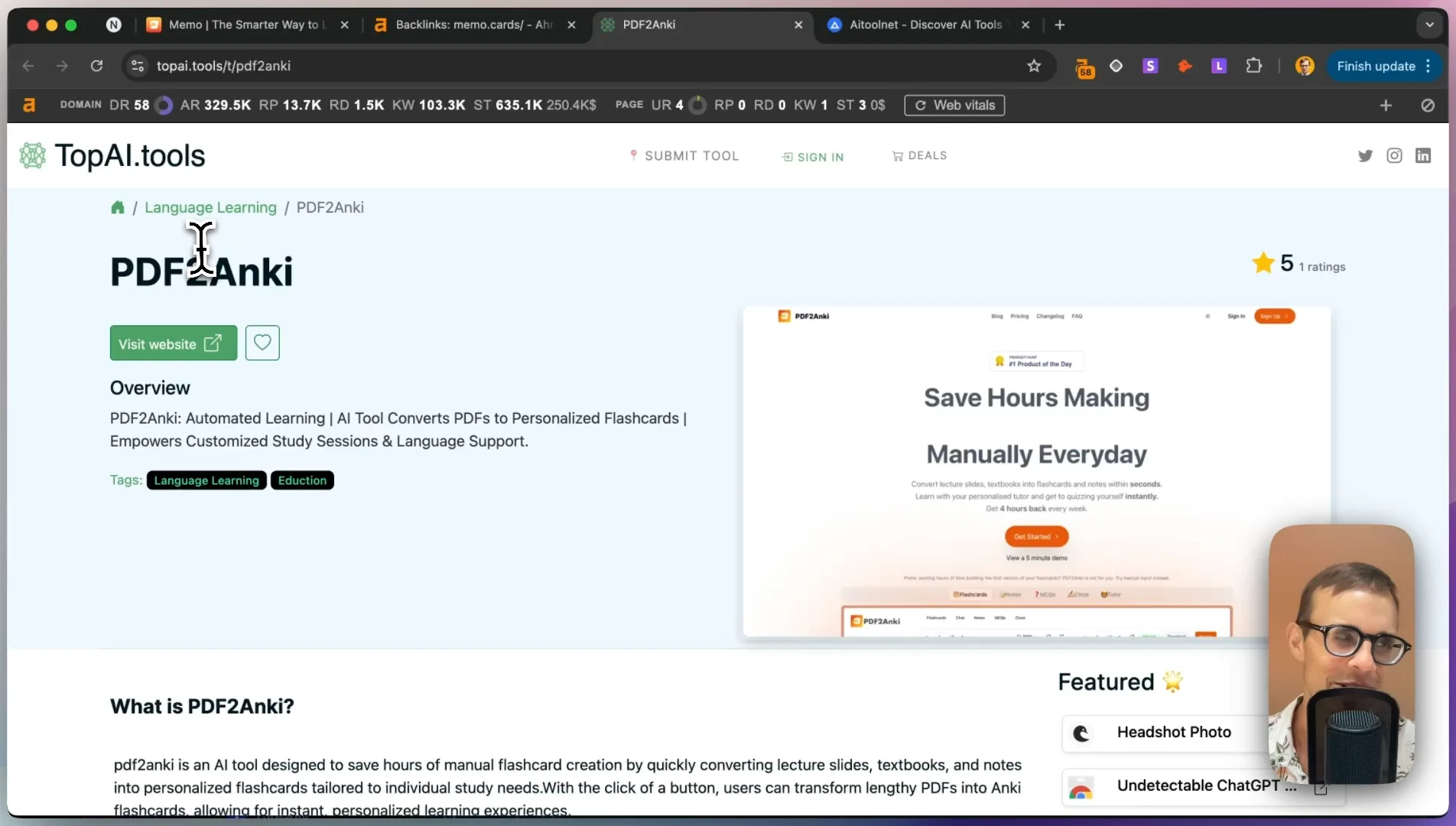
Submit your tool again to more directories, but now as Memo, you will get 2x the backlinks!
While Memo.cards has some quality backlinks, there's room for improvement:
Utilize LinkDR for automated outreach to potential backlinking opportunities.
Target "best of" lists and tool directories in the education and productivity niches.
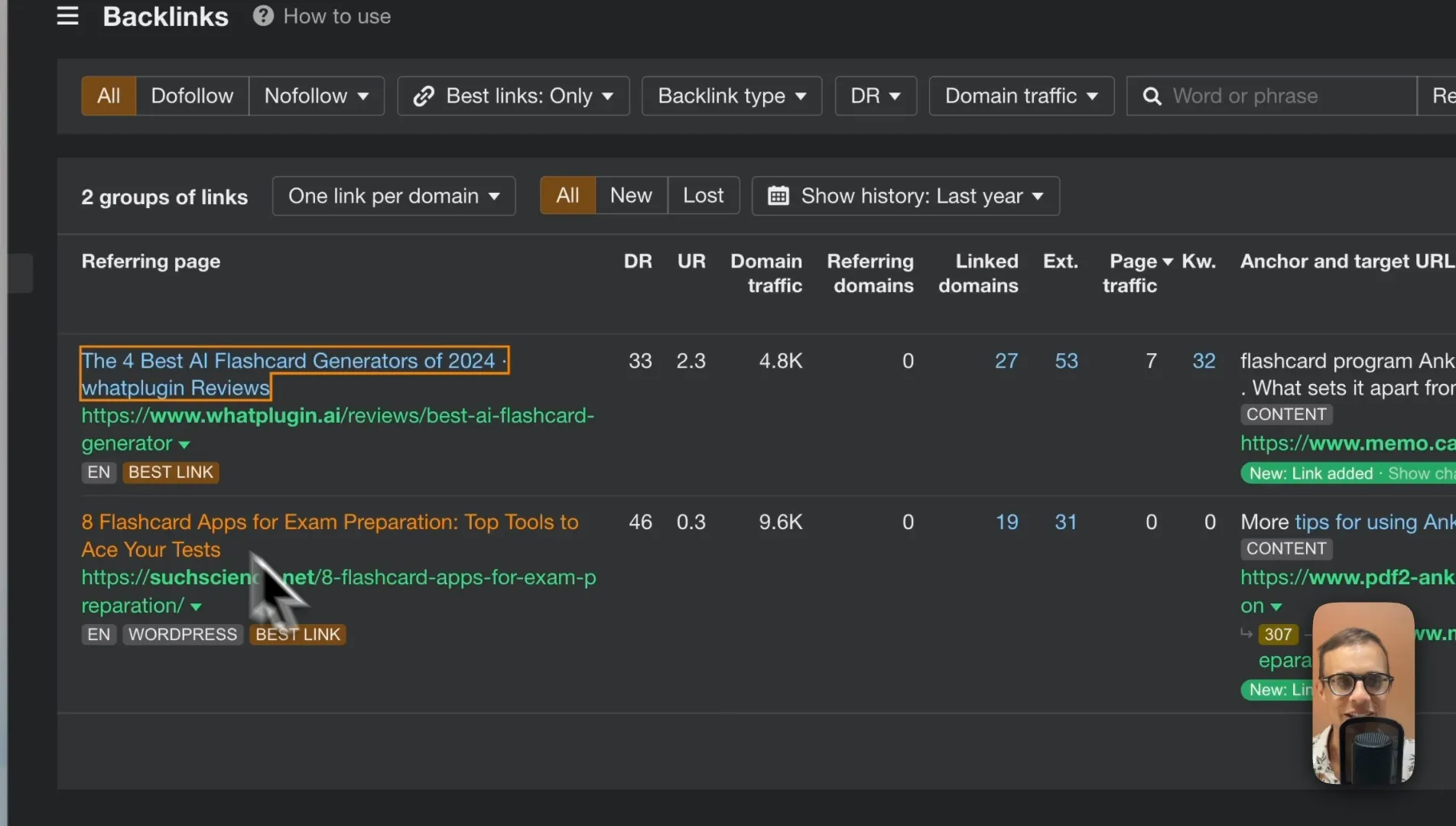
Create high**-quality, shareable content** to naturally attract backlinks.
Recommendation: Aim for 5-10 new, high-quality backlinks per month through a combination of outreach and content marketing.
Technical SEO
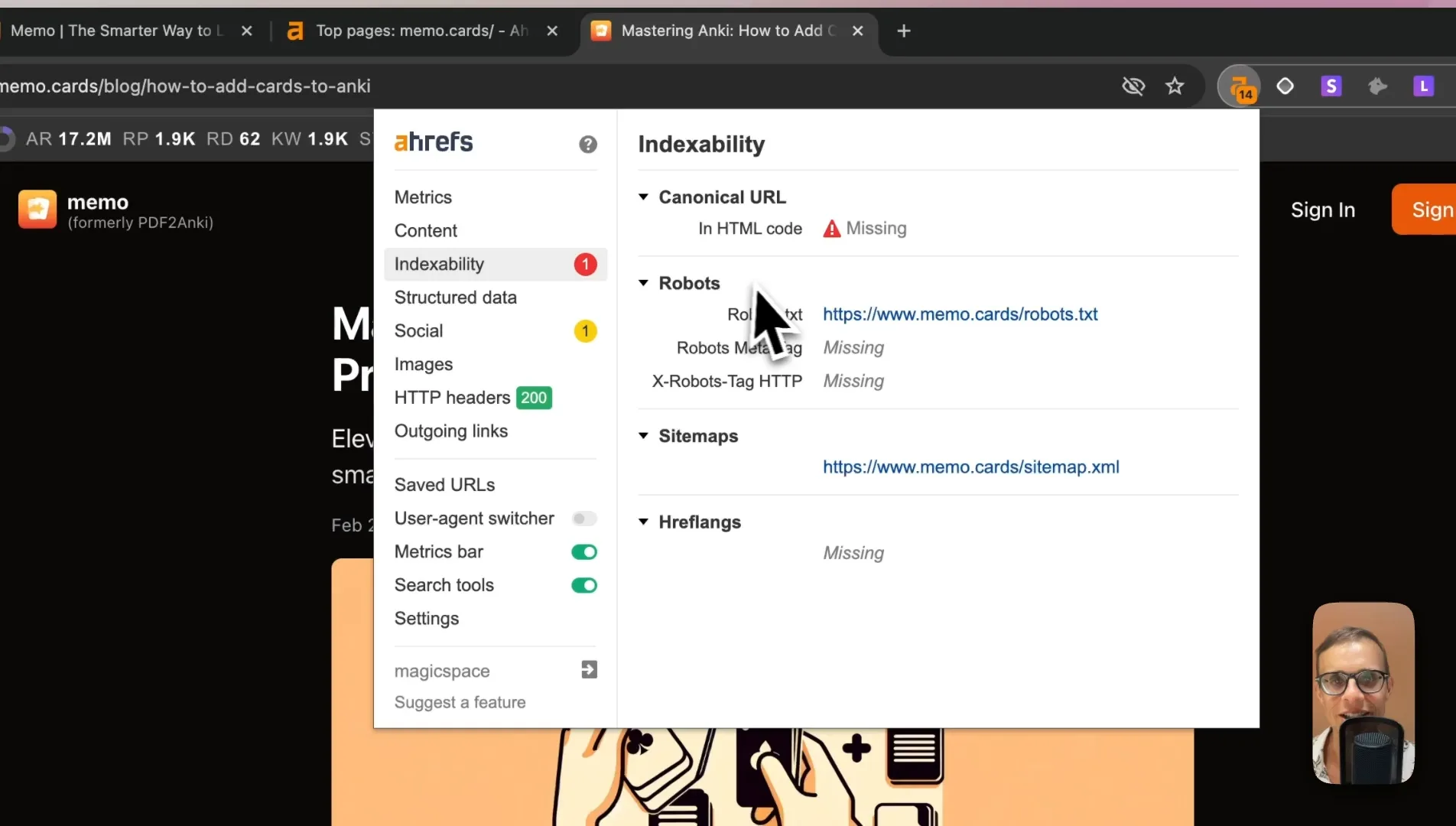
Ensure proper canonical tags are set for all pages, especially the homepage and blog posts.
Implement a comprehensive XML sitemap, including all explore pages and blog posts.
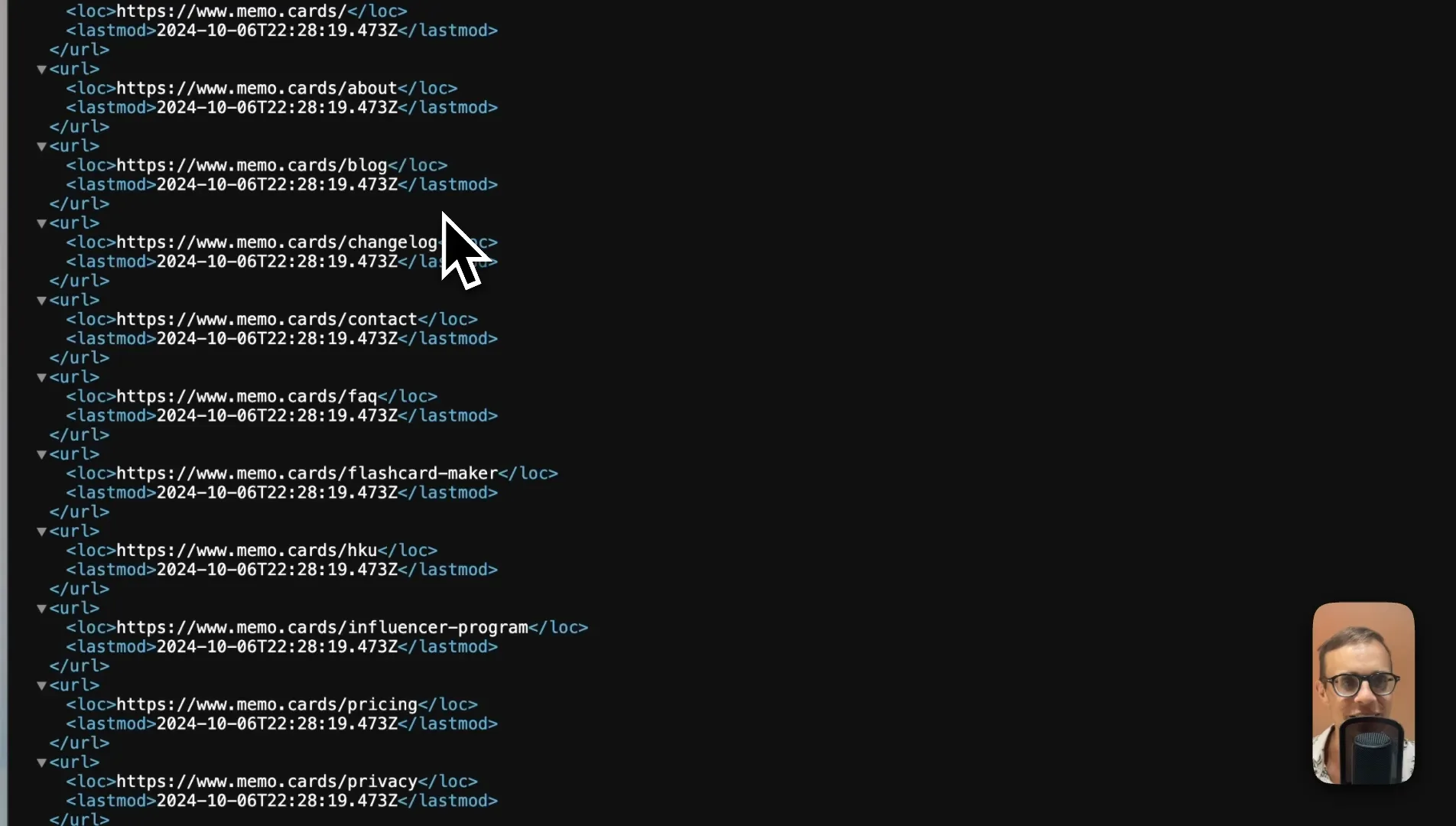
Use TagParrot or similar tools to ensure efficient indexing of new content.
Implement a more SEO-friendly URL structure for flashcard examples.
Develop a content calendar focusing on in-depth, valuable content for target keywords.
Launch a backlink acquisition campaign using LinkDR and manual outreach.
Update technical SEO elements (canonicals, sitemaps, etc.).
Regularly monitor and adjust strategy based on ranking and traffic performance.
By implementing these recommendations, Memo.cards can improve its organic search visibility, attract more qualified traffic, and establish itself as a leading platform in the flashcard and spaced repetition learning space.
Get roasted
Want the uncomfortable version?
I’ll record a teardown of your site and tell you what I’d fix first. Not a 40-page PDF. Actual next moves.