I'm doing a quick roast about Clue, which is an AI search engine by Sandra. First we will take a quick look at hreads, let's go. So the first thing that I see is that somehow they have two titles and two descriptions. Let's see if this is true by opening up the view page source and adding LineRapt and finding the title. Yes, so it is twice, so that's like a first quick SEO mistake that you can make. Usually you want to have one title tag, right? And one description, so find information instantly. That's a very bad title because that's not really something that people search for. AI search engine, the first, the other one is a lot better, search engine for your work apps. It's not bad if people look for this, they end up finding new.com or like perplexity.ai or AI.google or ask.ai or something. So this is not really more specific, it may be more like AI search engine for business is already a lot better. And then we see stuff like BloomRage, Kovio and Google shows us a bit of more like enterprise AI search platforms. There is even a blog post article about this stuff like Guru, Kovio and Golings or Golia. I don't know if they are very relevant or if they are just completely different tools. So this one, they might not always be AI, by the way, and just like a search engine that ingests all the data that you have in your work app because the idea of Clue is that you have a bunch of stuff like a notion and Google Docs or Slack and that it's impossible to find stuff. That's why cool people like Zapier and so on, they are enabling and using the spotlight for all apps that you can combine stuff and chat with your data and with productivity and it's all secure and so on. But the thing is, I think it's now it's super clear if you can find anything in your apps with one search bar because it doesn't specifically speak to the type of customer that you want. And from talking to Sandra, they are really looking for customers that are enterprise instead of just like personal pro or personal because this segment of people, they try out the app, Craycast or other products or like Alfred, but the pro version is already a bit better, of course, because you have like unlimited everything. But the very good one to focus on is like very B2B and then you aim for like small to large teams and you have SSO, permissions, pro versions or tools or data encryption and so on. So this is this target segment that you want to reach for in your app. And the way to do that might be a little bit different than what you're doing now. So I'm not sure if enterprise search is the right one, but it seems to have like a bunch of existing competitors that are here. So bring AI and point gen, e-commerce, maybe not super, knowledge, discovery and link management. So it's more like short URLs, oh yeah, the keyword volume, add the on-page data. In general, yeah, like just this is not hard to check. Just get Ahrefs as a free toolbar, add your website in the site audit and it will run a scan for all your technical SEO issues and then you'll stop having issues like this where you need to set a canonical URL, you need a sitemap, you need structured data, you need to fix your search area, social area and fill in the final Twitter cards, add stuff like an alt tag to your data. There's like the very basics that everyone should have, but this is quite easy to get through and it shouldn't take so much effort, but it's something that you just have to do. Otherwise, let's take a look at the top pages. There's something that I always start with and you see that Clue has something, some keywords that are ranking for enterprise search engine, maximizing productivity in the digital age, which I doubt actual humans look for, AI calendars, all calendars in one place is a really good one, so that is like combining all your calendars, but it's showing mostly calendar apps. Maybe there's one that you can post on Reddit or something similar, Clue Experience, Norsense Search, Gmail Search Bar, Slack Knowledge Management. So overall, they have zero keywords that are really getting no traffic. It might be possible that they're getting decent results, but I think it's very bad. One thing that I really needed to notice is that these slugs on your blog are way too huge, so like how to make Gmail and Outlook work for you with Clue, it doesn't make sense. This is nice content marketing and it shows what the tool does, but it's never something that people look for. Nobody searches for how do I do this for Clue because they're not aware of Clue right away, but it's fun. For example, this article also has a way too big slug, the ultimate guide to blah, blah, I'm not going to read it. But overall, what it is ranking for is the Gmail and Slack integration. So this is actually like a keyword that people type into Google and they go here and they're like, okay, I want to integrate Gmail and Slack, or Gmail to Slack, and then you show, you look basically what Google shows you in this list, and then you figure out, okay, how can I connect Slack with Gmail? And then you make an article on this one, for example, and then explains what is Slack, what are the features of Slack, and explains everything, how Clue plus Slack integration helps because this is an article that you would have, and you would show something like Clue here that highlights how the searching works, and then FAQ and so on. But this is way too long. This title just takes like half of the page. If you compare it to, for example, this blog, the title is over here, but then you actually see like the intro and an image. But this one, if you compare them side by side, on the first glance, like above the folder is like just an image, nothing else. So this really is bad. So overall, even if you scroll down, the title takes over everything. So just find a nice blog template that you can copy and make it something like this, right? And then on the left, on the right, you have the content, which is not too wide, and then a table of contents that could be very useful, and write out the content either with AI or something, add some call to actions over here, explain like what Slack is, what Gmail is, and how to connect them together. Because this blog post doesn't make sense. It's combining like Slack, Gmail, Notion, but meanwhile, you should focus on Slack to Gmail integration. Like your slug should be the exact keyword that people are looking for. For example, instead of the ultimate guide to app integration of Clue, streamlining your workflow across Slack, Gmail, Notion, and more, you should just have Slack, Gmail integration like this. So you want to focus on all of your pages, list out all the pages you have, figure out what are the keywords that you are getting traffic from. You can use search console and improve every single piece of blog post content over here. So even something like unifying Slack and Notion for smarter search and knowledge management, this doesn't make sense to me, like in my mind. I don't know what it's going to be about, but ideally it will probably be something like Slack, Notion, Slack integration. So again, change your slug to the keyword, which is just Notion, Slack integration, and then talk about what is compared to the things that Google shows you, you will see a comprehensive guide to integrating Notion with Slack. So it could be something like this, small, short, explaining like from screenshots, how to connect Slack to Notion. And this should be ideally your blog strategy. And if you have a lot of this content, figure out all the things that you have integrations for at Clue and then write blog posts, right? How to integrate like Notion with Gmail, how to integrate Notion to Slack. How to integrate Slack to Google Docs, Google Calendar, combine like Trello to Google Calendar or something. So a lot of these integration connections, Zapier will also have, but it might be useful to also write about this with some extra stuff like AI. So I hope this helps and good luck.
No template scorecard here. The details below come from this specific audit.
I Did an SEO Audit of an AI Search Engine Startup (Klu)
🤖 This section has been automatically generated with AI based on the transcript from the video Audit.
AI search engines are an exciting new technology, promising to make finding information across apps and data silos fast and seamless. As the founder of an SEO agency who helps startups grow, I was intrigued when I heard about Klu, an AI search startup founded by Sandra. I decided to do a quick SEO audit and provide some feedback on how they can improve their organic search strategy.
In this post, I'll share where I see room for optimization in Klu's SEO, from technical issues to content and keywords. My goal is to provide constructive tips to help them better attract and convert their target customer base.
Examining Klu's Current SEO Strategy
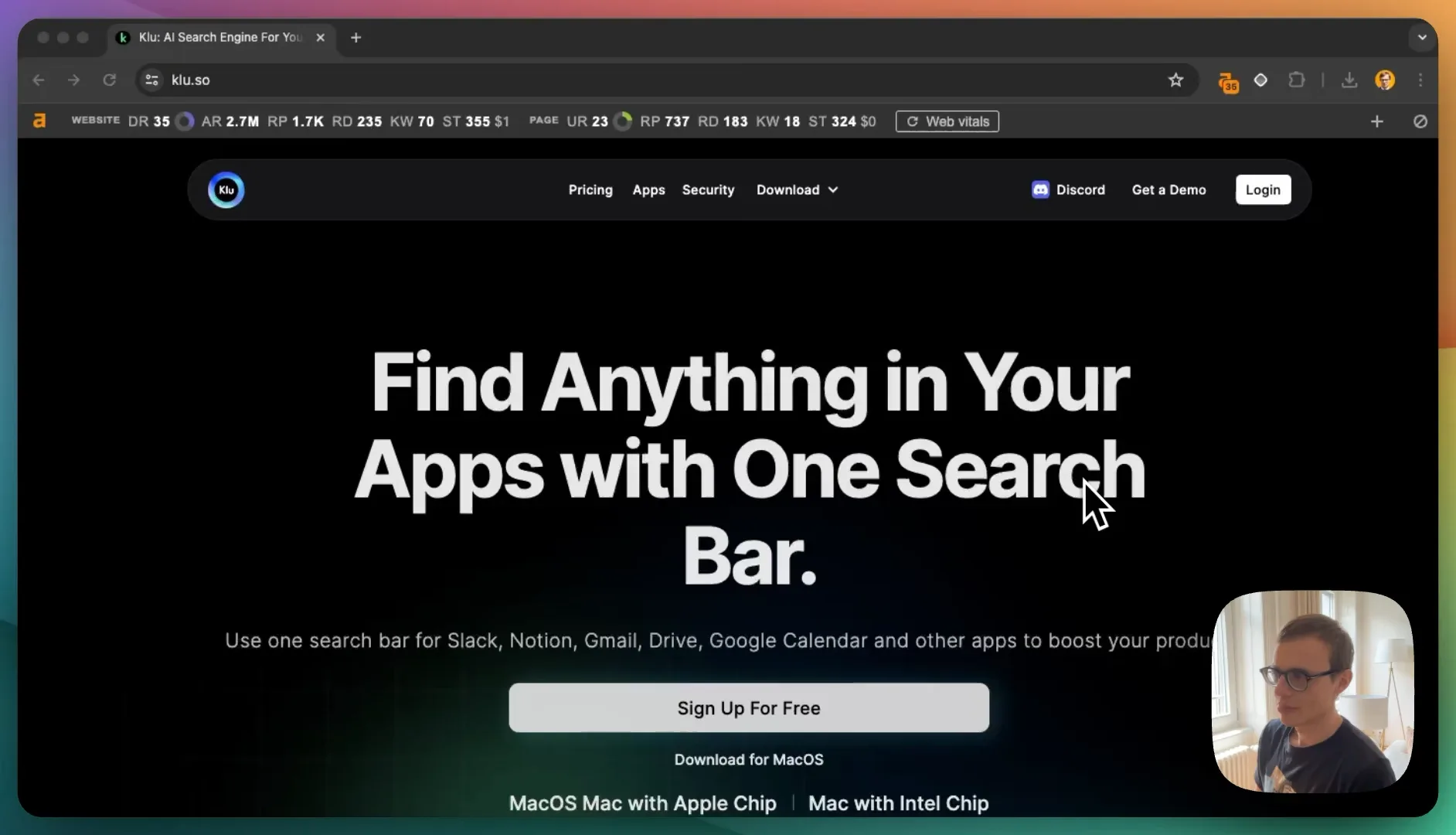
I started my analysis by looking at Klu's current presence in Ahrefs, a leading SEO toolset. Right away, I noticed a couple of on-page SEO issues:
Duplicate Page Titles
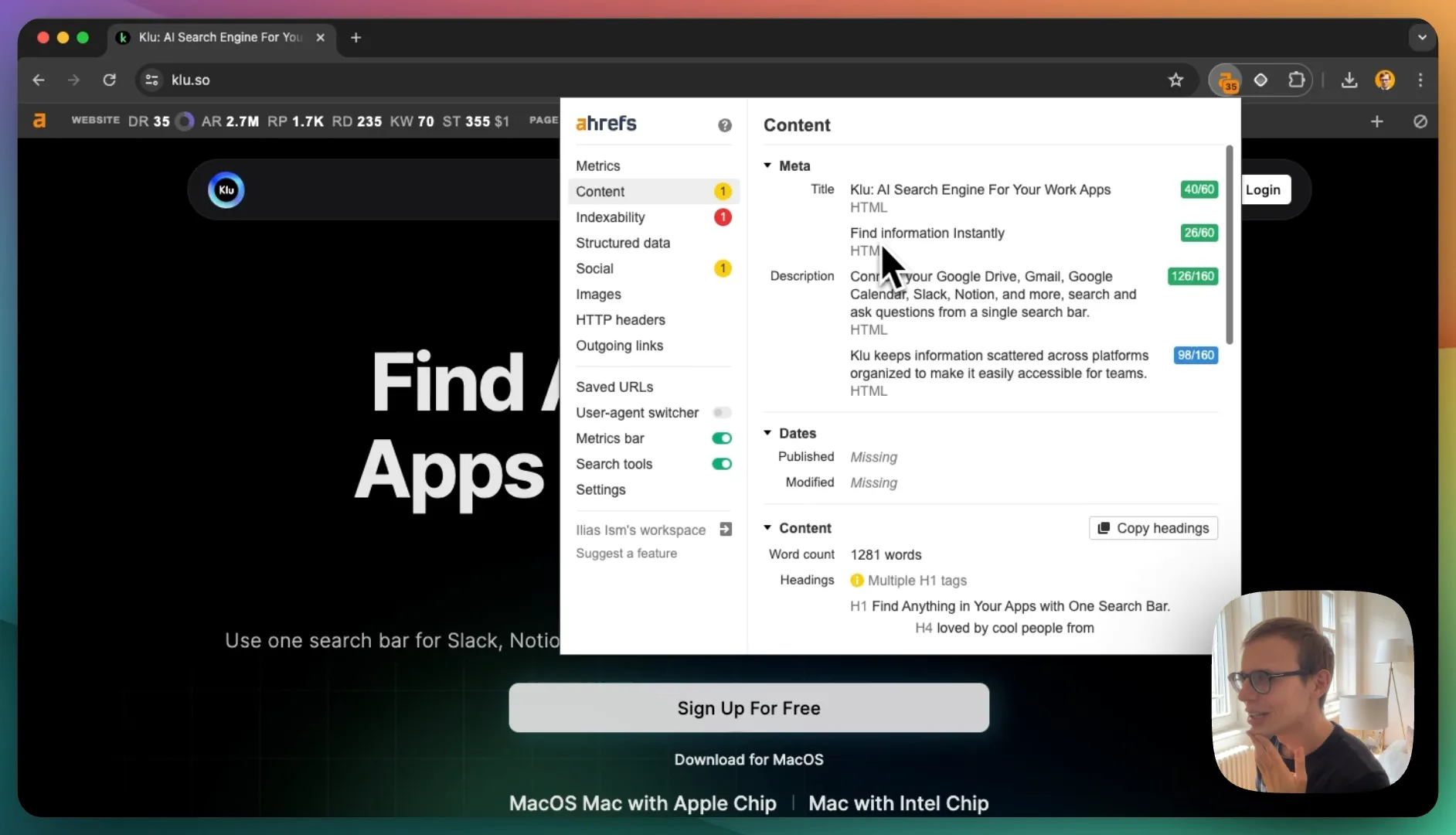
In Ahrefs, I could see that Klu has two <title> tags on their homepage. This is invalid markup that could confuse search engines about the page's focus.
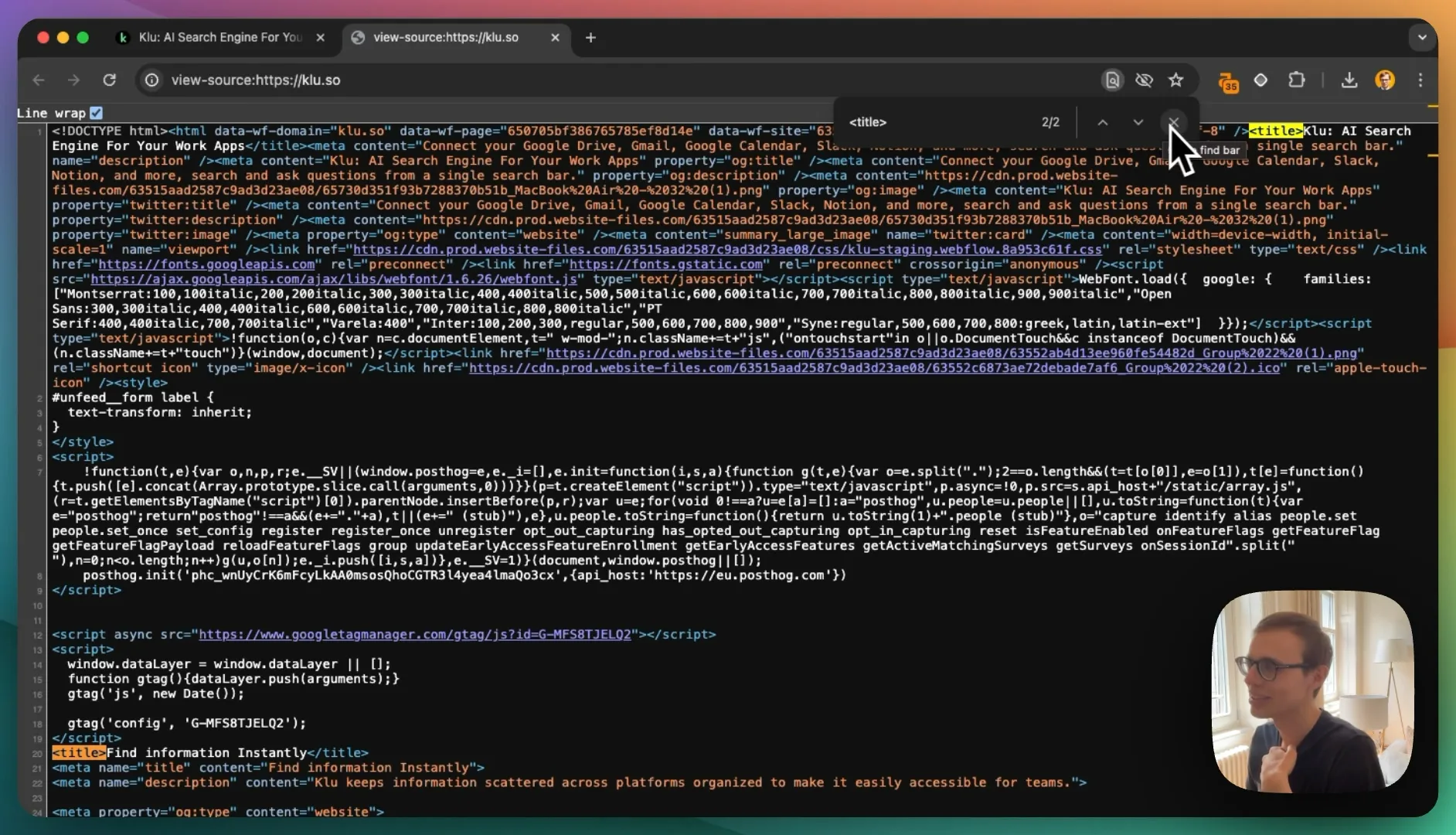
I confirmed the duplicate titles by viewing the page source and searching for the <title> element:
<title>Find information instantly</title>
<title>Klu - AI Search Engine for Your Work Apps</title>
Best practice is to have just one <title> tag per page.
Suboptimal Title Tag
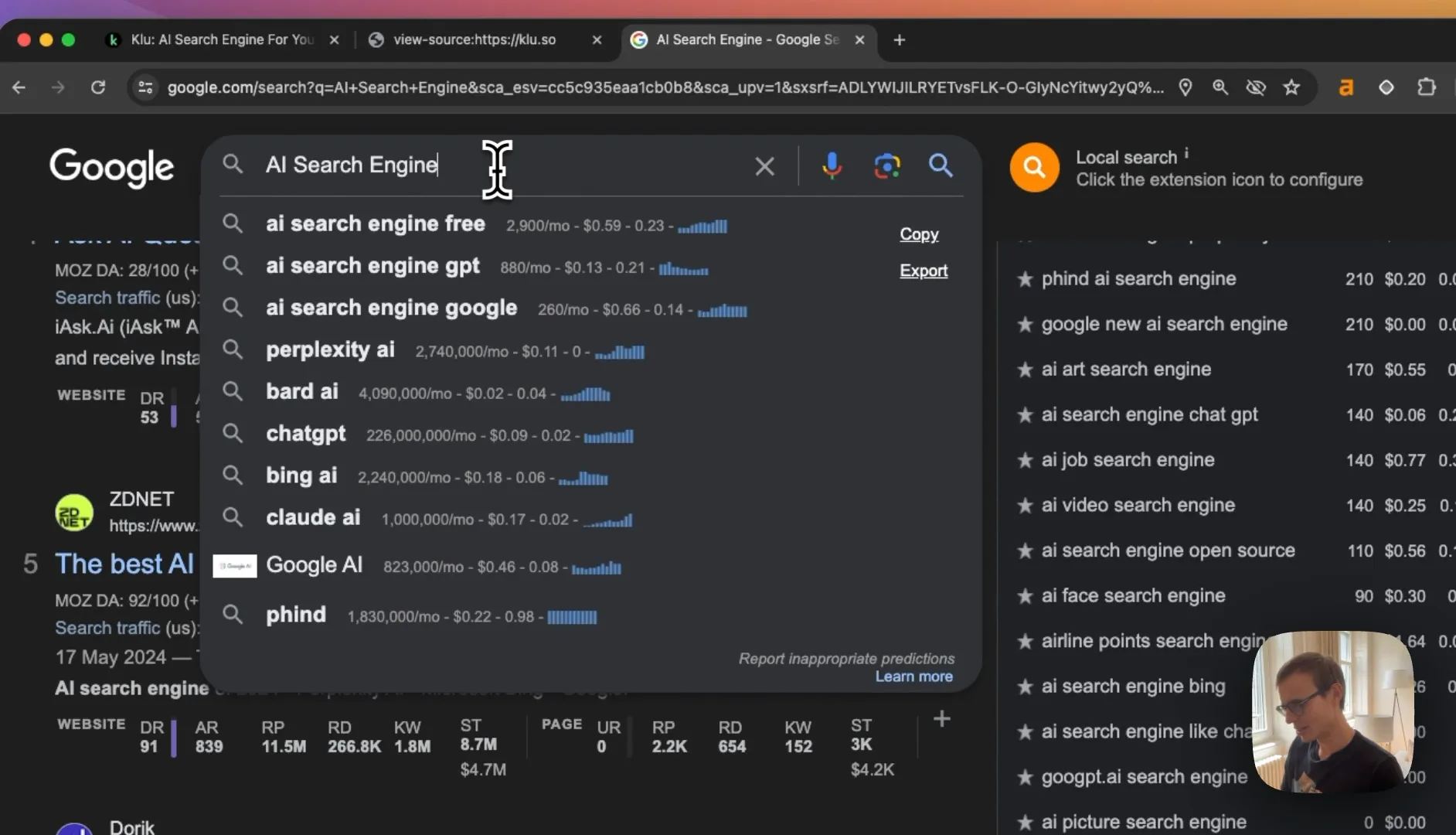
The first title tag - "Find information instantly" - is very broad and not something users would search for related to an AI search engine.
The second title - "Klu – AI Search Engine for Your Work Apps" - has potential but could still be improved. Using a more specific title tailored around Klu's unique value proposition and ideal customer segment could help them better attract searchers.
For example, something like:
<title>AI Search Engine for Enterprise Knowledge Management | Klu</title>
This still contains the relevant keywords but positions Klu for enterprise search buyers specifically.
Existing Enterprise Search Competition
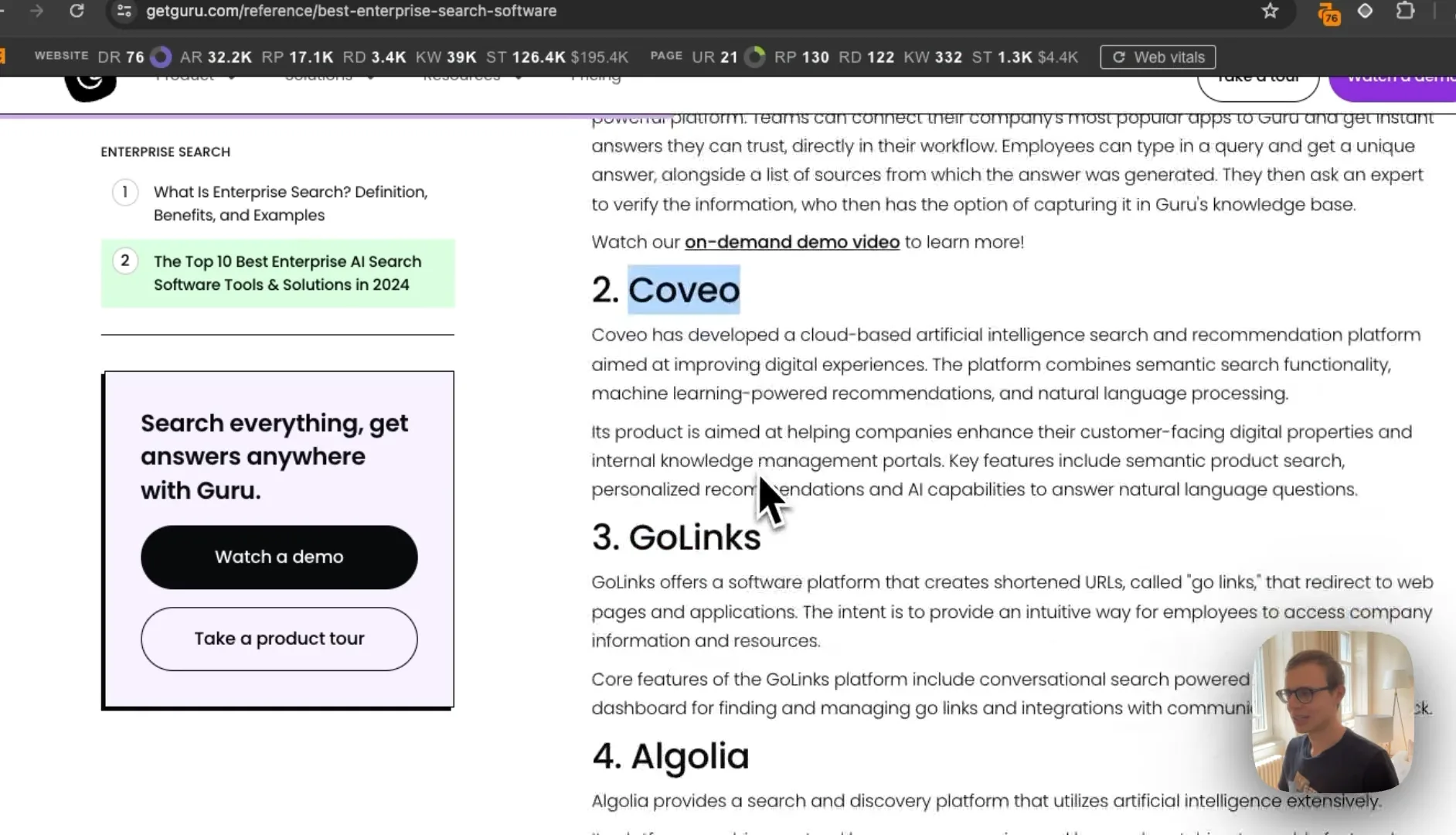
When I search for related keywords around Klu's current title tag, competitors like Bloomreach, Coveo, and even Google itself appear.
There are also existing articles reviewing enterprise AI search platforms like Guru, Coveio, and Algolia.
This indicates that Klu faces stiff competition for generic enterprise search keywords. A more targeted SEO strategy is needed to differentiate their offering.
Optimizing Technical SEO
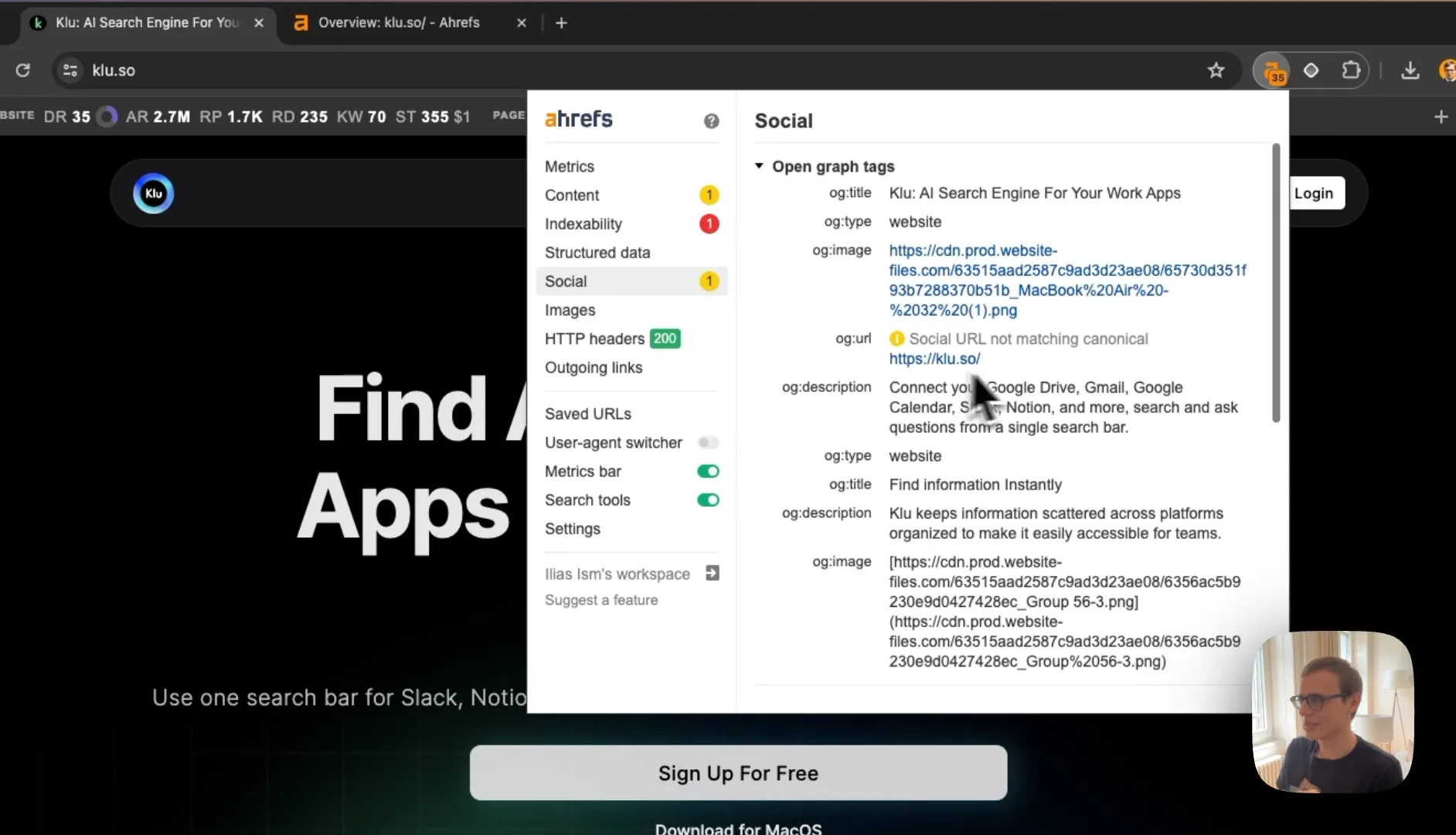
Before diving into content and keywords, I wanted to review Klu's technical SEO implementation. This establishes critical site infrastructure needed for SEO success.
Running Klu through Ahref's Site Audit tool, I immediately saw some areas needing improvement:
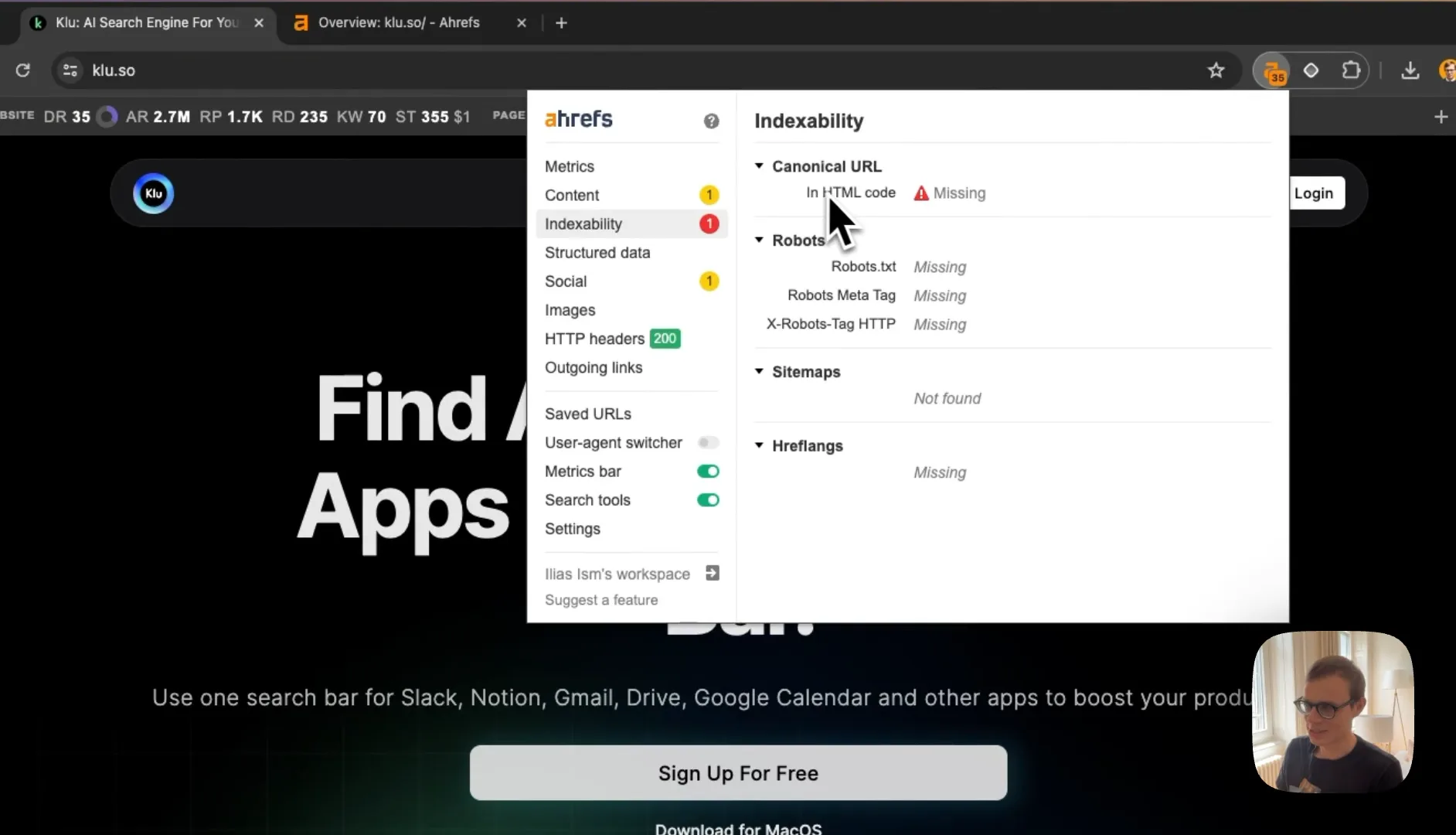
No rel="canonical" tag - needed to prevent duplicate content issues
Missing XML sitemap - makes crawling and indexing harder for search engines
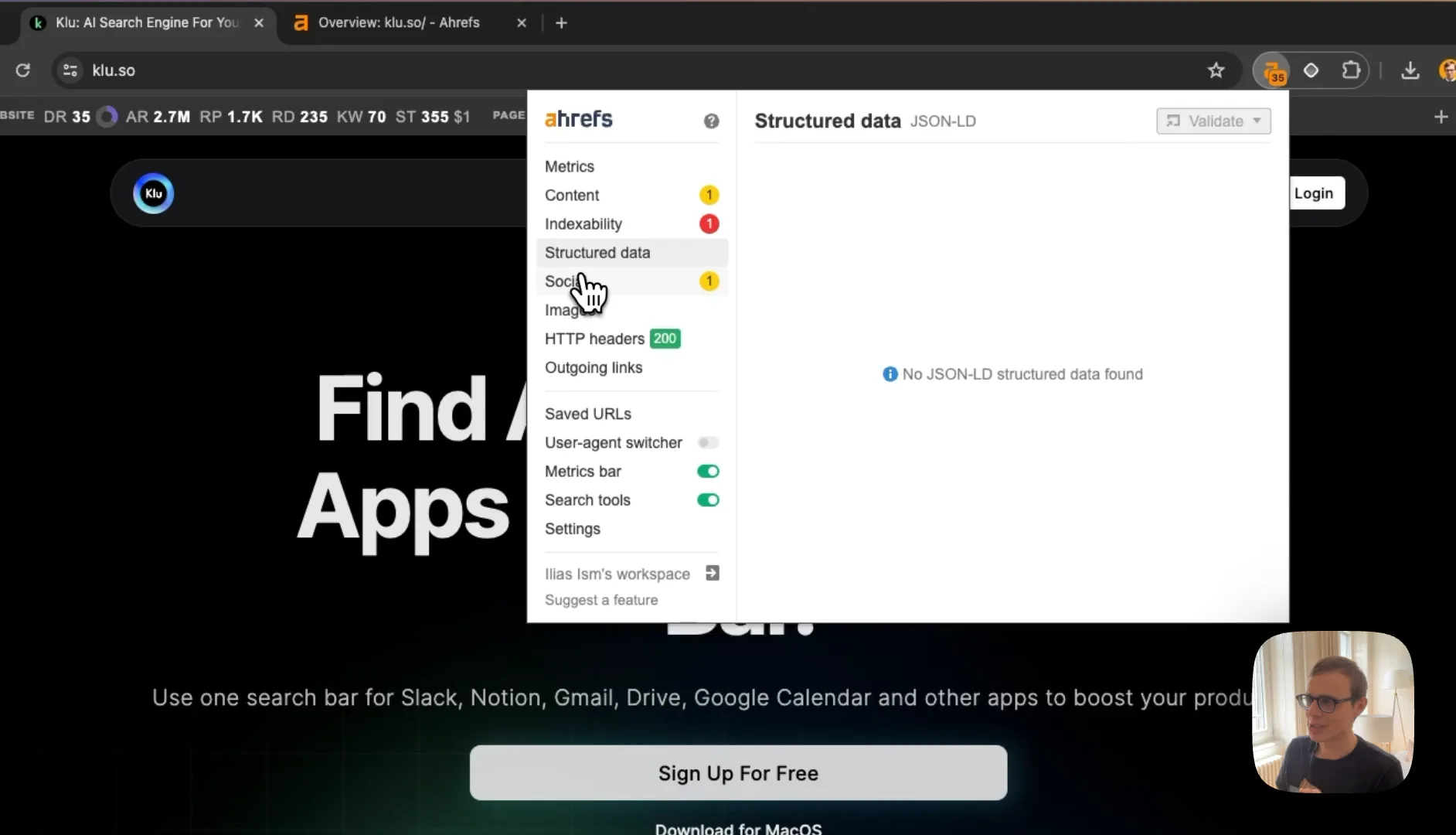
No structured data markup
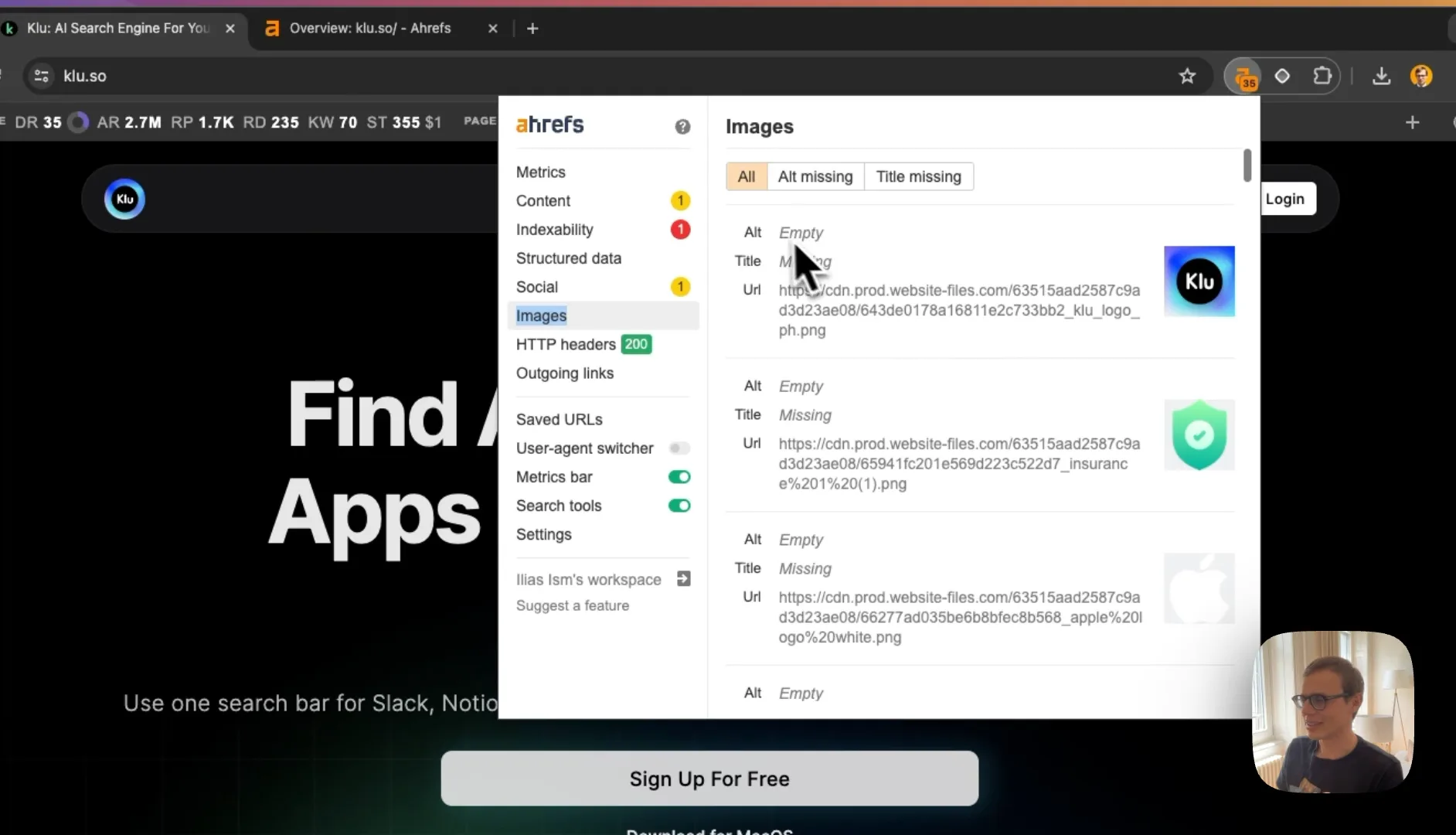
Limited alt text usage - misses SEO optimization opportunities
Fixing technical SEO issues like these is relatively straightforward. It just takes some knowledge of best practices and a tool like Ahref's site audit to identify gaps.
I'd recommend Klu go through this process to resolve any technical problems. That will make it much easier to get pages indexed and ranking with the content optimization tips I'll cover next.
Evaluating Existing Keyword Rankings
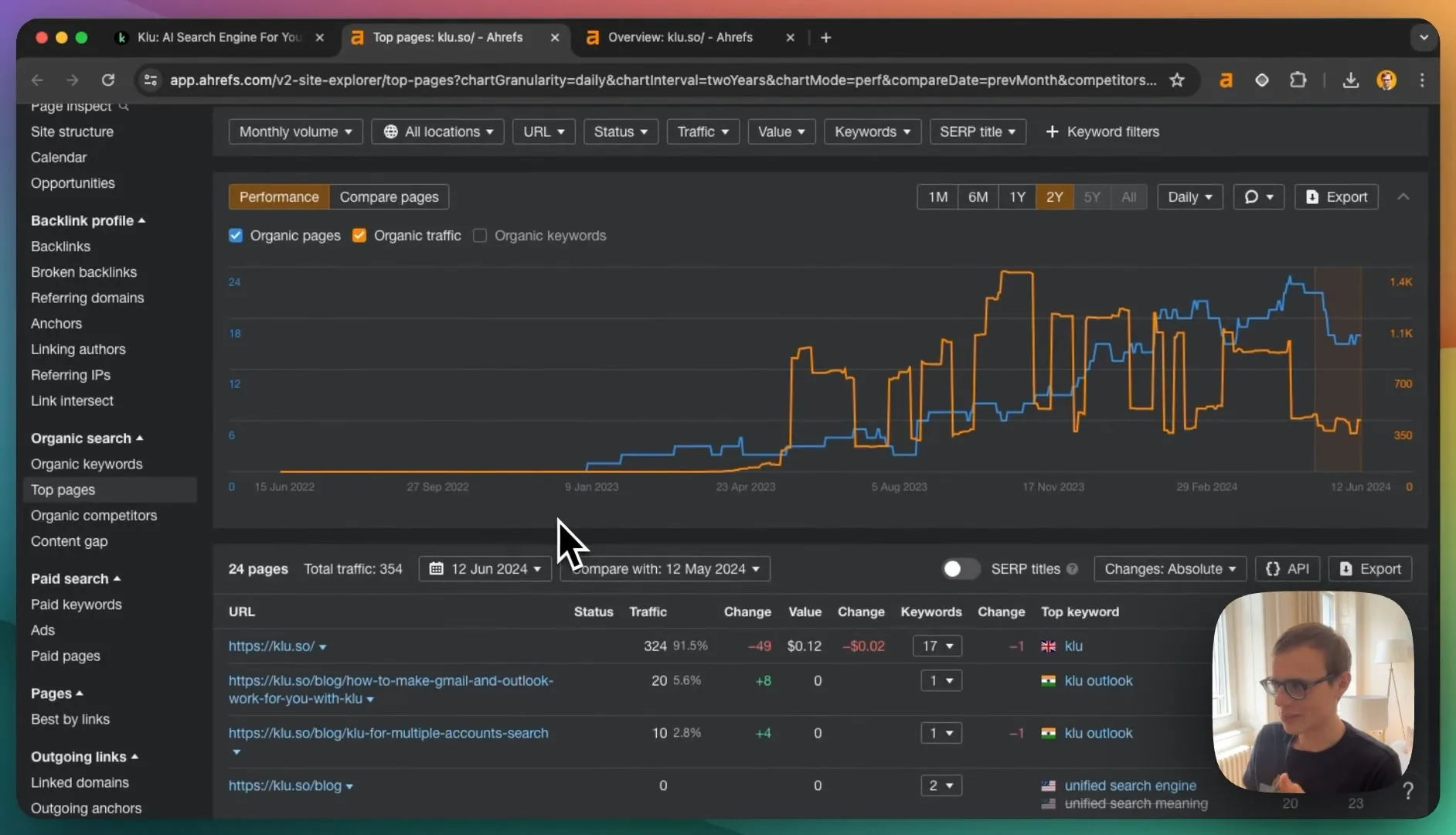
I next wanted to analyze what terms Klu currently ranks for. In Ahrefs, I sorted their pages by position to see the top keywords driving traffic:
Maximizing productivity in a digital age
AI calendars
All calendars in one place
Clue experience
No search bars
Gmail search bars
Knowledge management
However, none of these seem likely to drive significant search volume. For example, "maximizing productivity in a digital age" is not a common user search query.
And rankings for one-off keyword phrases containing "Clue" itself indicate very little non-branded organic traffic.
So despite some homepage keyword rankings, Klu doesn't appear to have any meaningful search presence currently.
Blog URL Slugs Are Too Long

Looking at Klu's blog specifically, I noticed very lengthy URL slugs:
These verbose titles might work for on-page copy, but make for poor URL structure and keyword targeting.

For example, this blog post ranks for "gmail slack integration", which is a useful search term. But the slug itself includes no relevant keywords - it's focused entirely on branding Klu rather than matching search intent.
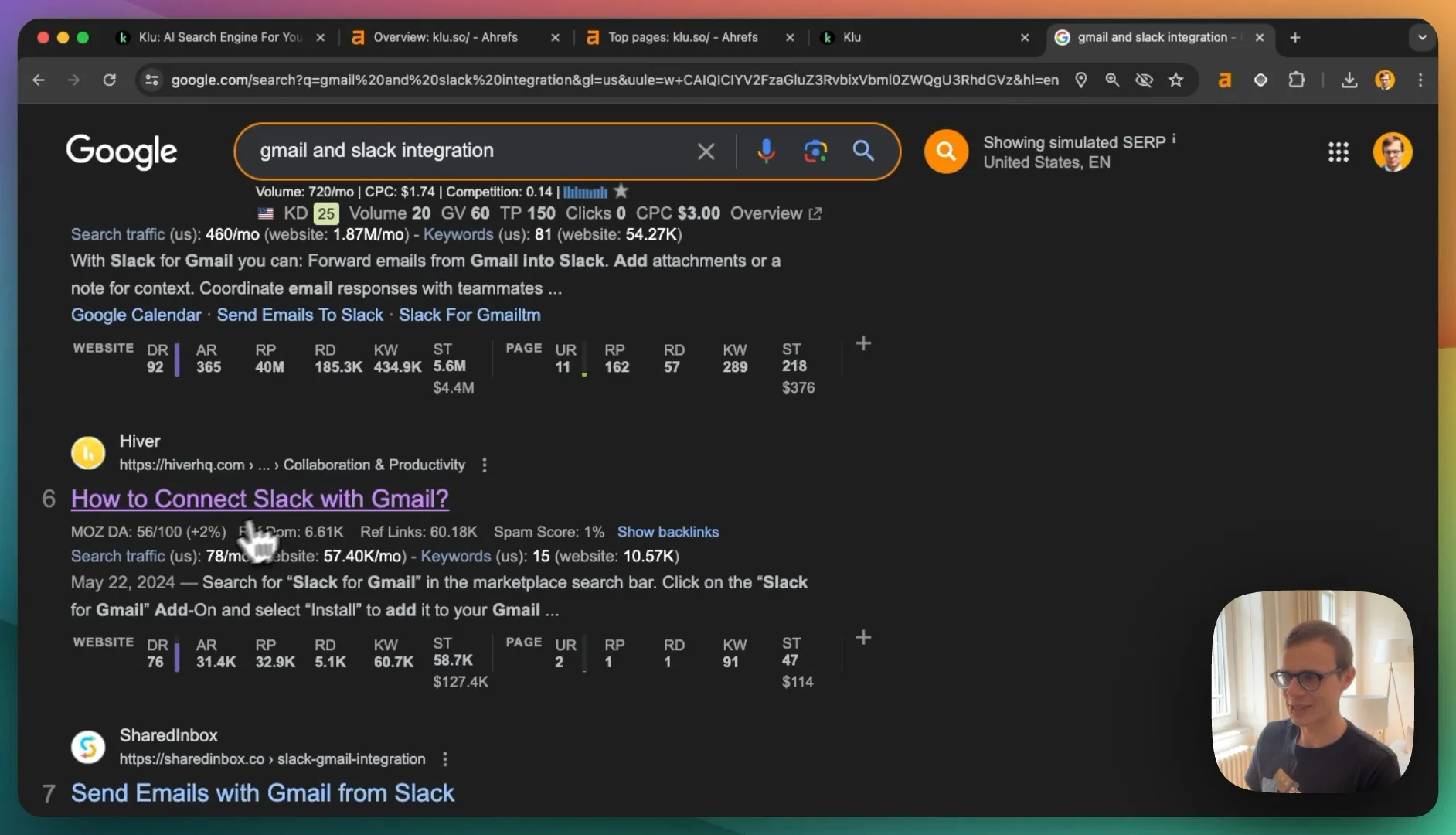
In general, blog post slugs should contain just the core keyword you want to target to have any chance ranking.
Improving Blog Content for SEO
In addition to optimizing URL structure, Klu's blog content itself could be better formatted for organic search.
Let's look at a few ways to improve their existing posts.
Use Shorter Titles
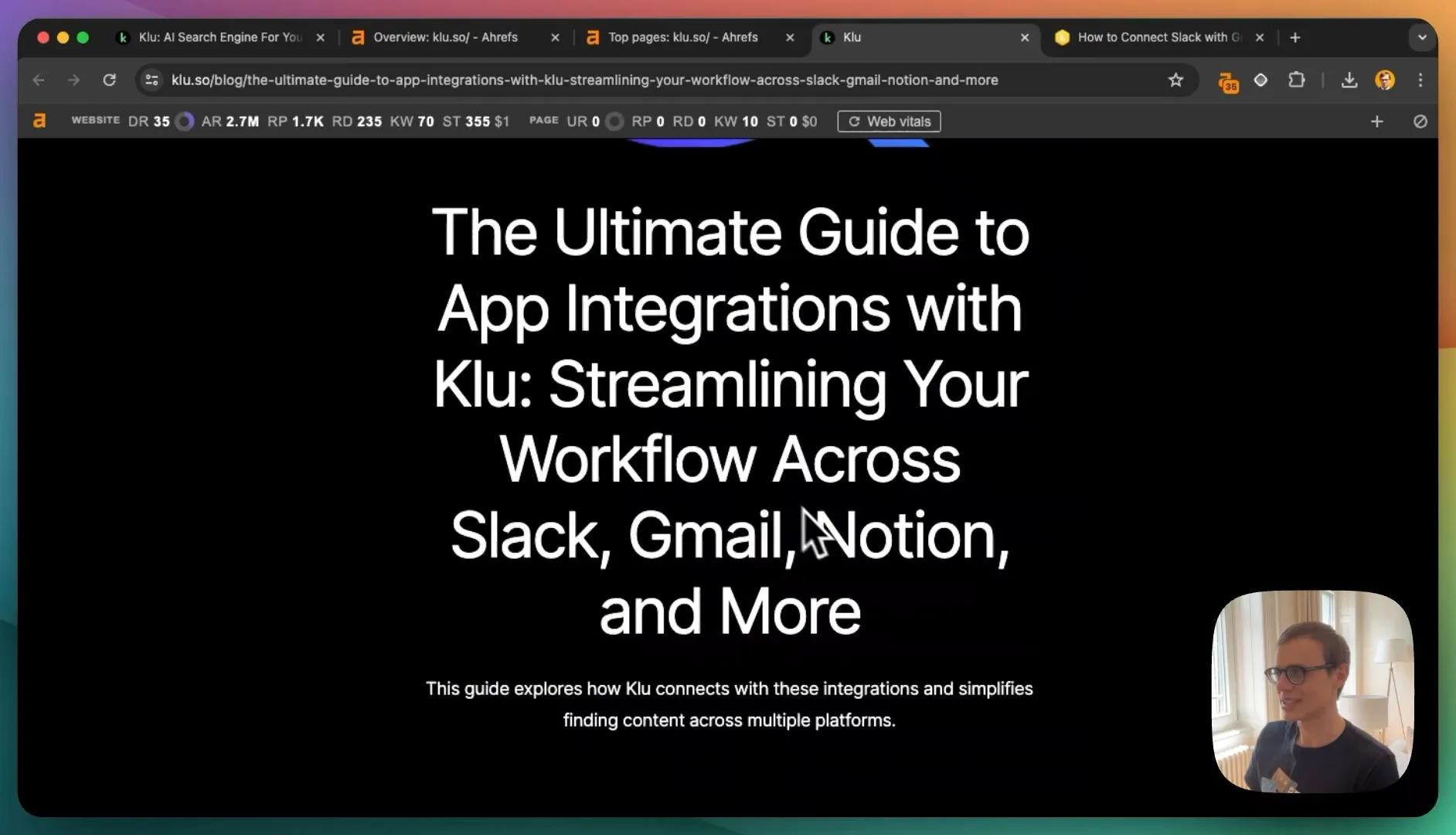
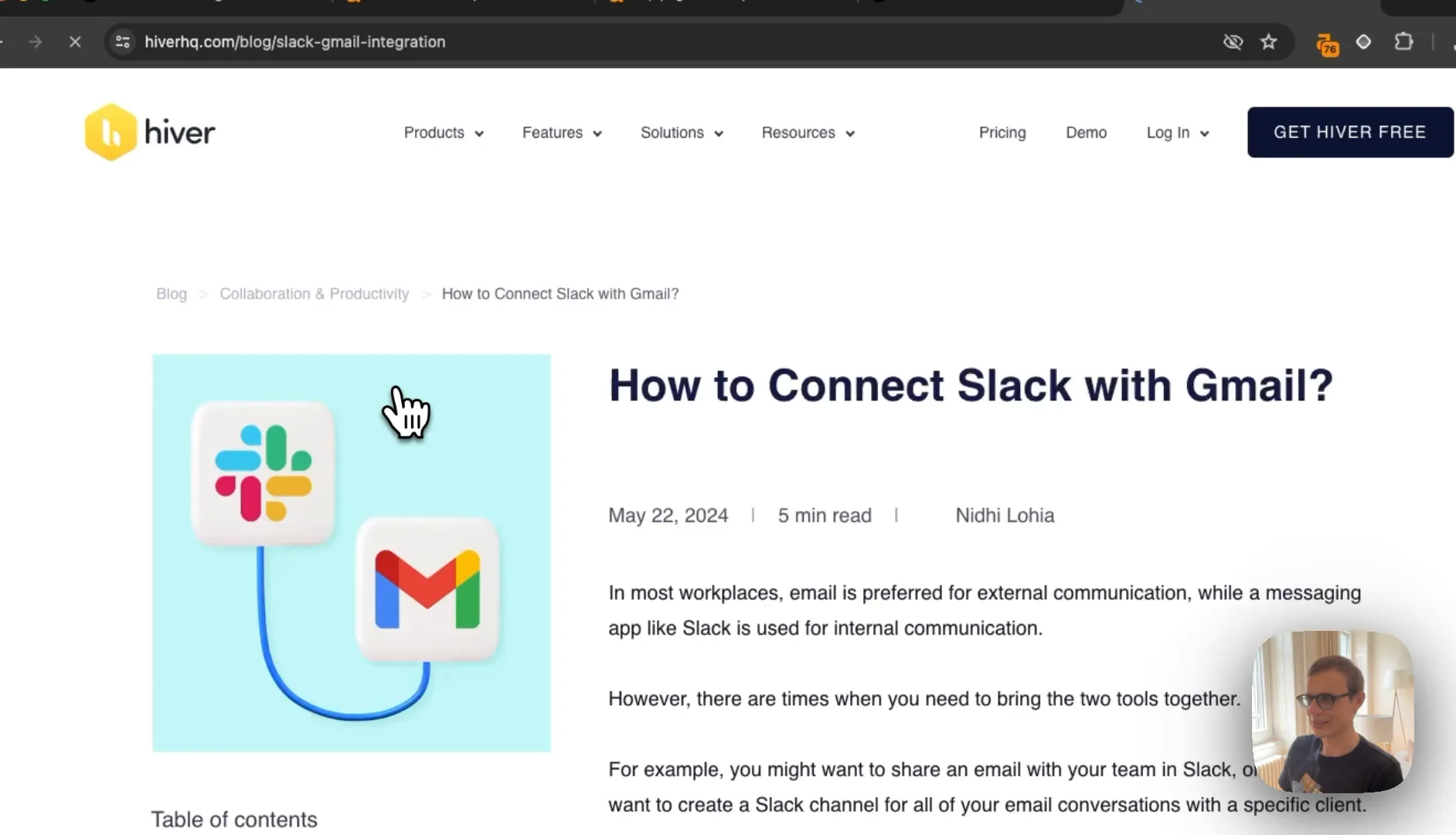
Many of Klu's blog headlines take up 50% or more of the visible page space. Compare this to better optimized sites where the title is short and impactful:
By shortening titles, visitors immediately see the page image and intro copy, which helps engagement.
Fix Blog Post Layout
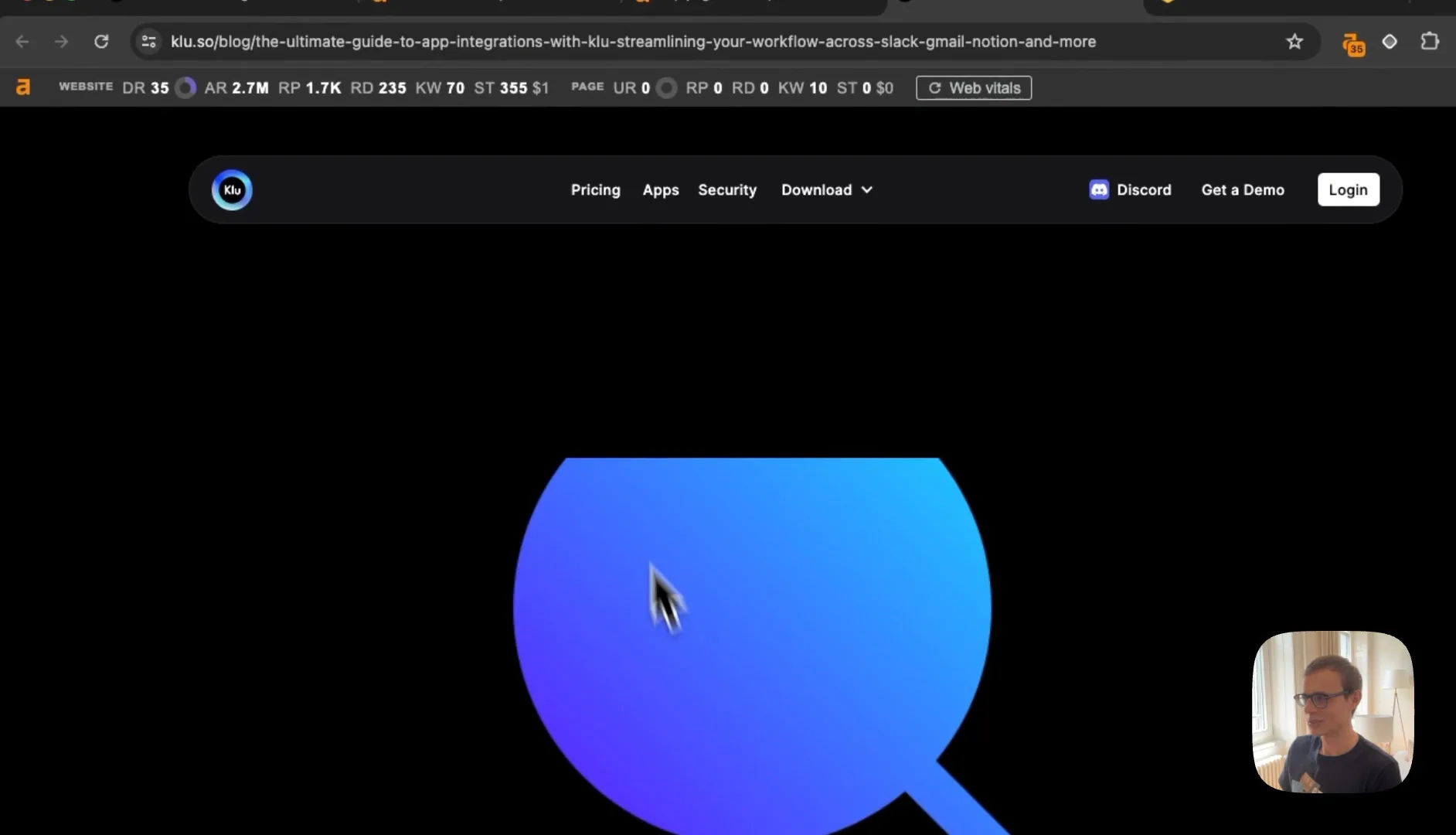
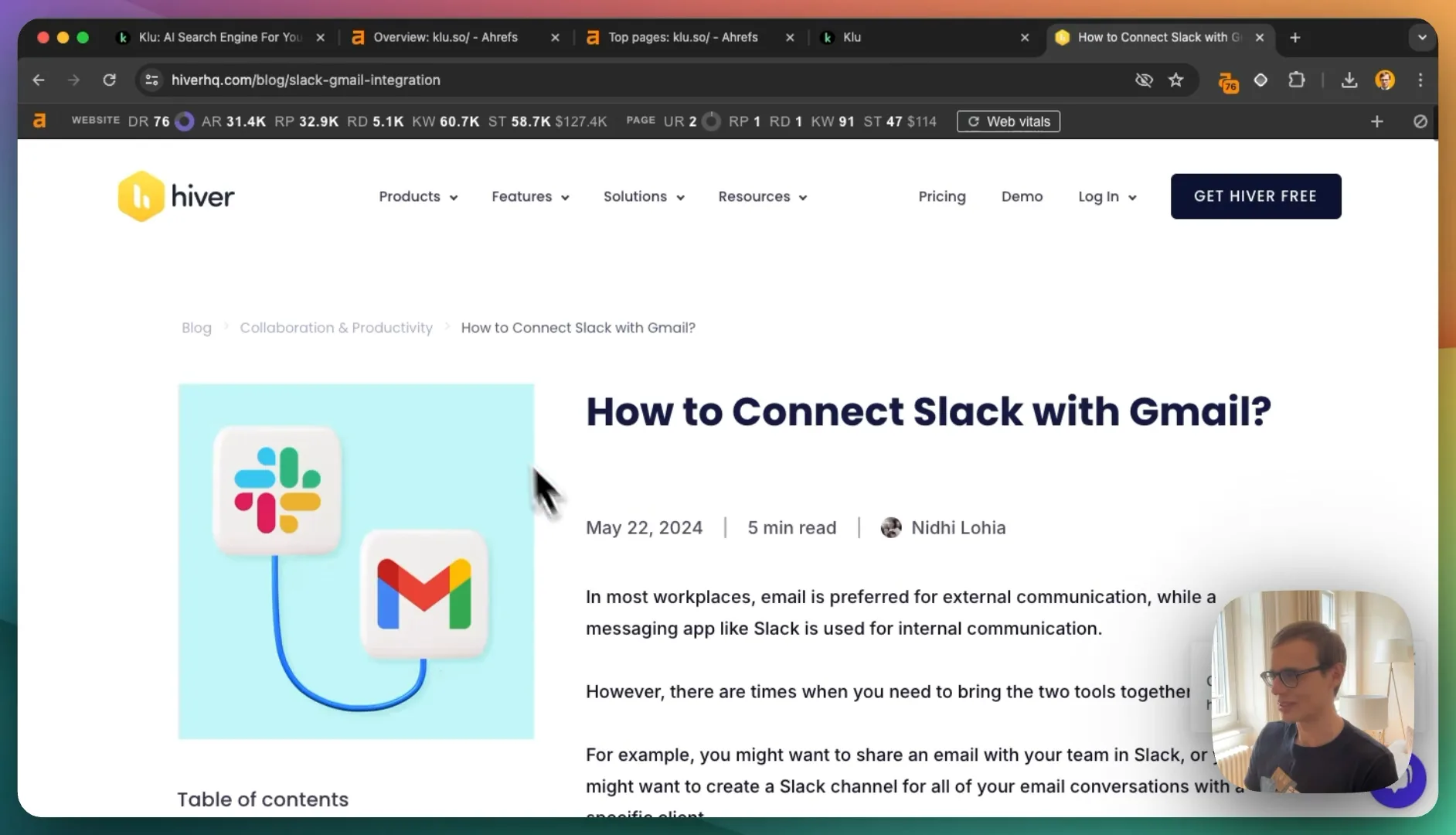
Scanning down Klu's posts, the massive title dominates the entire screen. This reduces readability and looks spammy.
A better template would include:
Short headline
Eye-catching intro image
Article preview / excerpt
Table of contents menu
Body content sections with graphics
Clear call to actions
Optimizing these elements helps search engines understand the content and keeps visitors reading.
Develop Targeted Blog Content Strategy
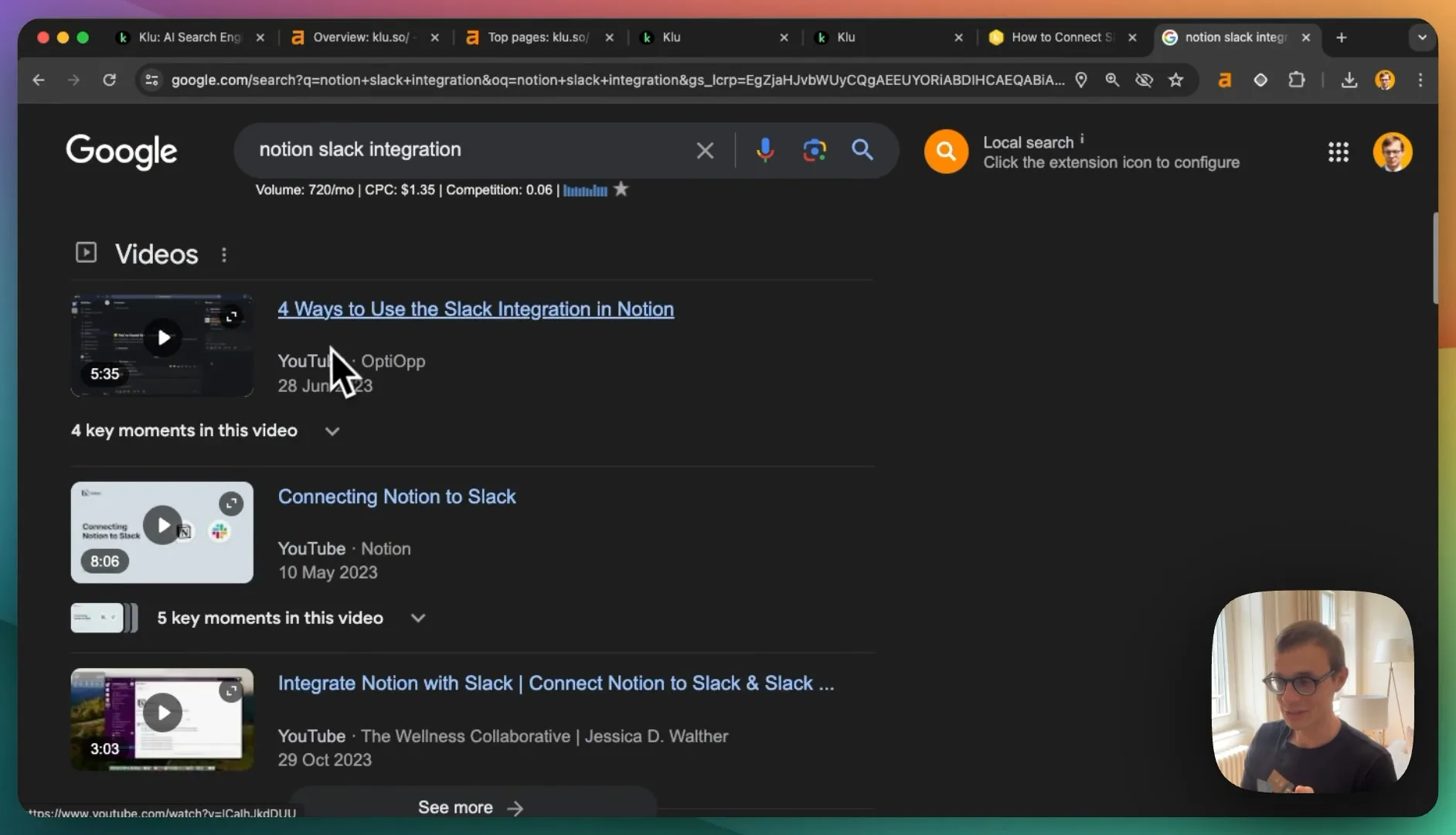
Currently Klu's blog covers a wide range of disconnected topics that aren't specific to keywords searchers are using.
I'd recommend:
Identify the integrations and apps Klu supports (Slack, Gmail, Notion etc.)
Analyze the search volume for keywords around integrating those tools (e.g. "slack gmail integration")
Create posts optimized and tailored to rank for each high-value keyword
For example, a blog post targeting "slack gmail integration" would focus specifically on connecting those tools and highlight Klu's value add.
Rather than a vague title like "Unifying Slack and Notion", it would be "Slack and Notion Integration Guide".
Get roasted
Want the uncomfortable version?
I’ll record a teardown of your site and tell you what I’d fix first. Not a 40-page PDF. Actual next moves.