The basics are fine. The posts are walls of text. Rebuild the definition post the way the AI Overview is laid out, win “ABM software” with a listicle you actually tested, and email everyone who already links to HubSpot, Demandbase, and LinkedIn.
In this audit
1Why the AI Overview is the outline for your “what is ABM” post
2The inverted-funnel image Atlassian ranks with, and Sqrl does not have
3How a DR 46 site beats the giants for ABM tools with real screenshots
4The free template HubSpot uses to turn a definition post into leads
5The 156 sites linking to HubSpot’s ABM guide that you should email
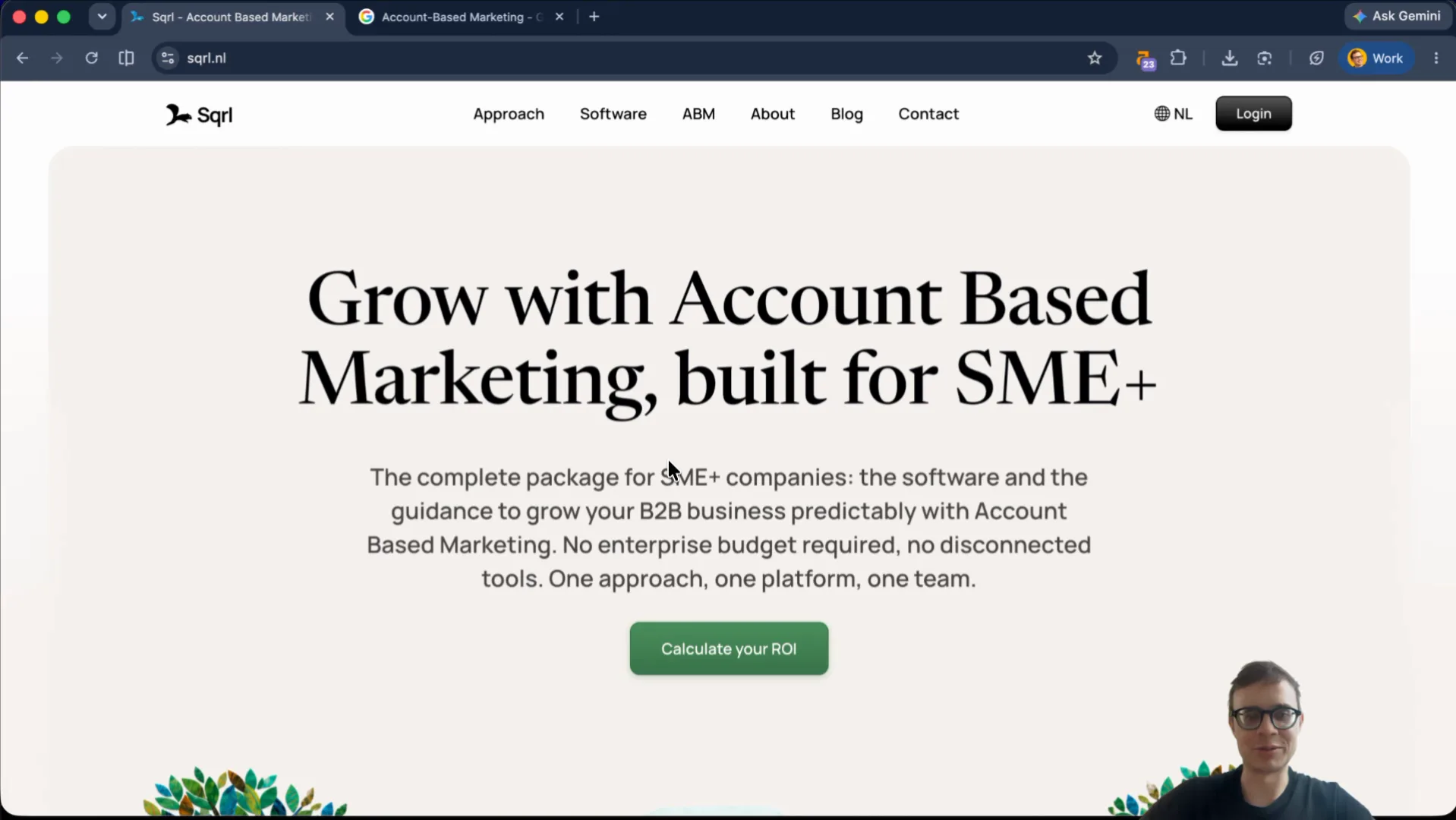
Sqrl sells account-based marketing to SME+ companies: the software plus the guidance to run it. The site is new, launches in the Netherlands first, and wants one keyword: account-based marketing.
The foundation is in order. The keyword is in the title and the H1. There is a sitemap, a robots.txt, and clean structured data. What is missing is everything Google rewards on this SERP: images, proof, a reason to stay, and links.
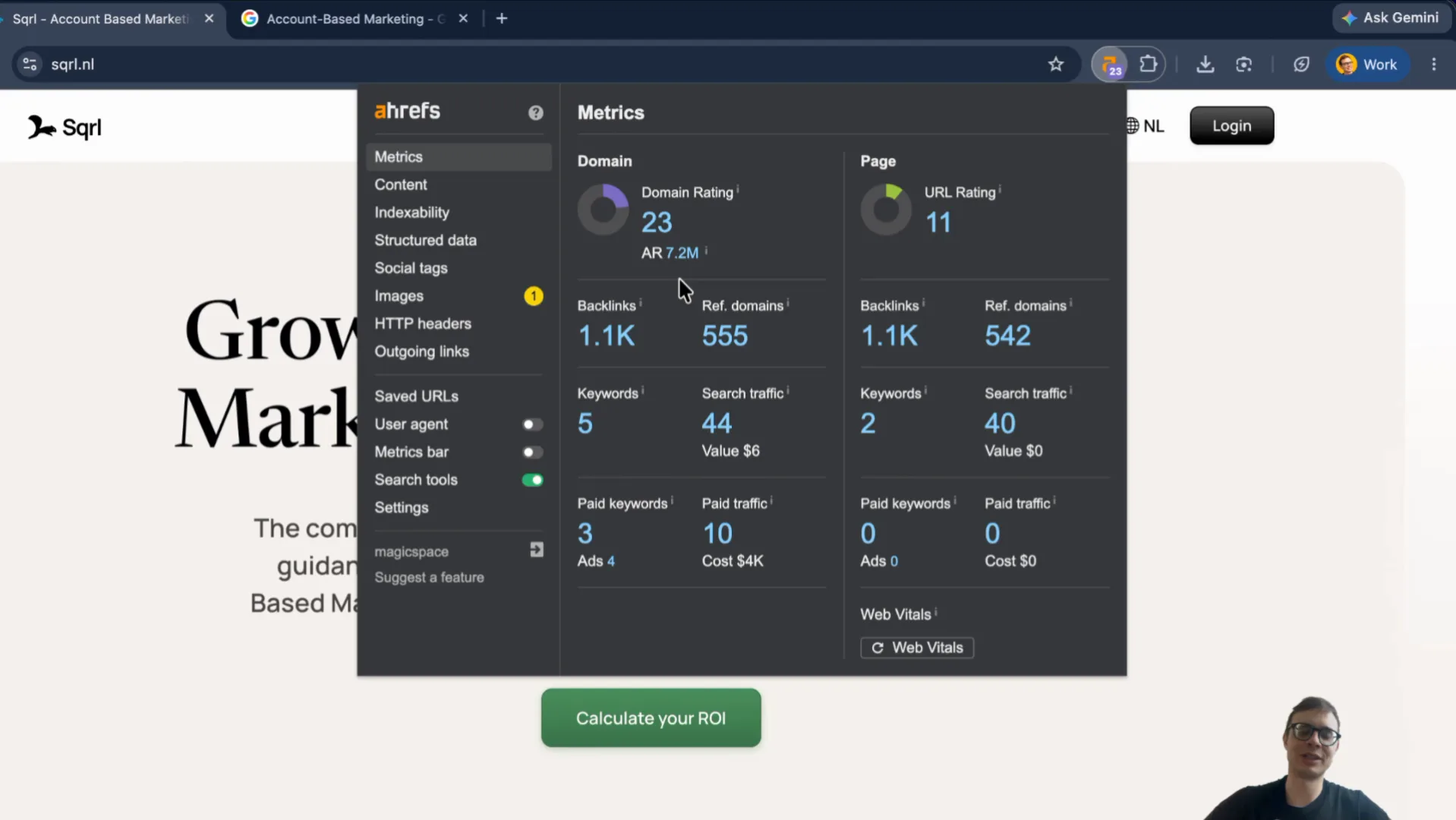
DR 23 against DR 92
Domain Rating 23. 1.1K backlinks from 555 domains. Five keywords and about 44 visits a month. The top keyword is the brand, “what is sqrl”.
The pages that rank for account-based marketing belong to Wikipedia, CXL (DR 85), Salesforce (DR 92), Demandbase, ZoomInfo, and HubSpot. You do not out-authority that list in year one. You out-work it on one page, then go get the links.
One structural note. The blog lives under /account-based-marketing/ instead of /blog. That is not needed to rank, and it boxes you in the day you want to write about campaign ideas or sales. I would not overthink it. A plain /blog with good internal links does the same job.
The posts are a wall of text
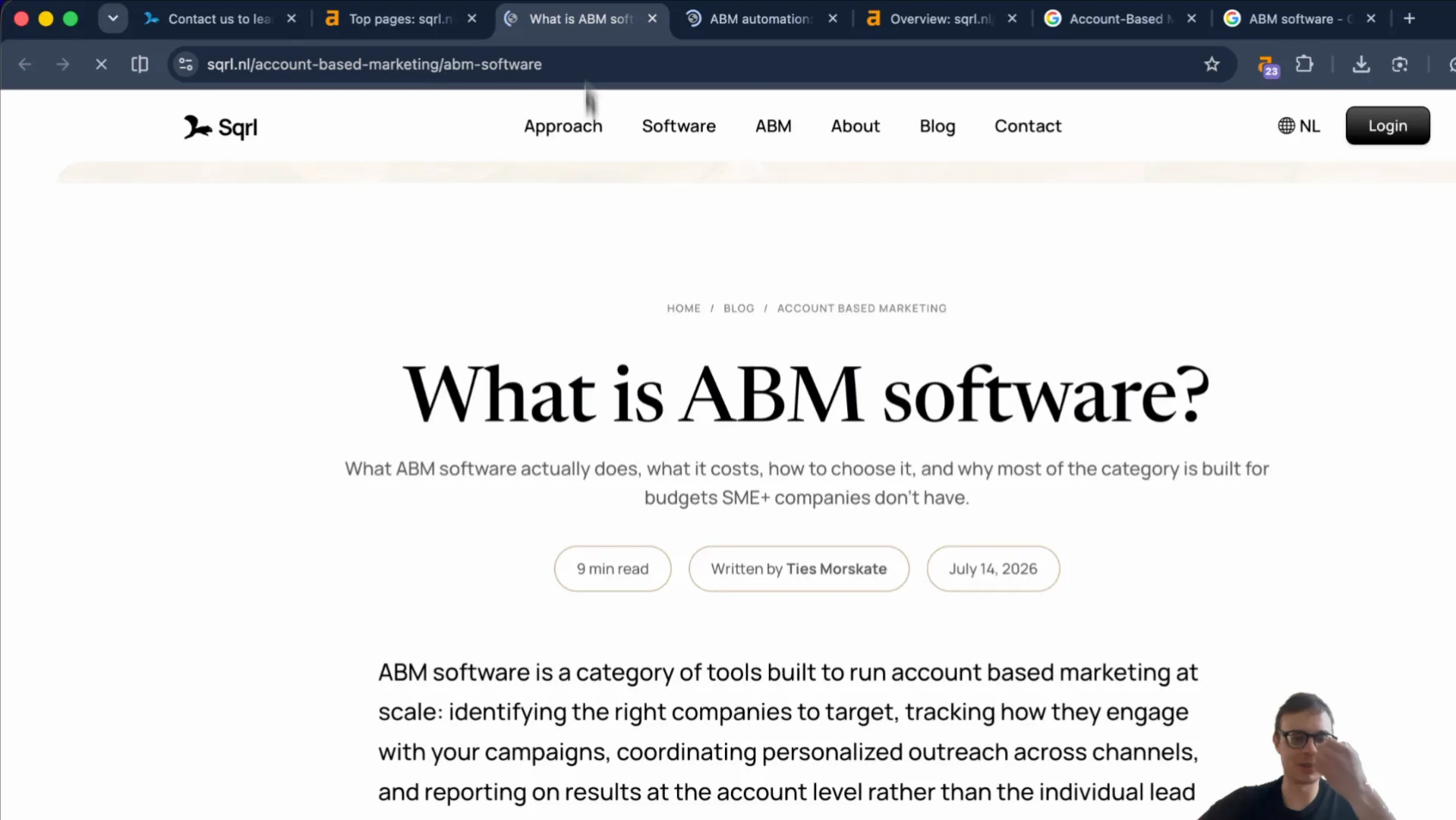
Open “What is ABM software?” or “Account based marketing automation”. The writing is fine. It is also one column of paragraphs. No images, no screenshots, no video, no table.
I do not know ABM well. Reading these, I still would not know why I should switch to it. That is the test for a definition post, and the page fails it.
Use the AI Overview as your outline
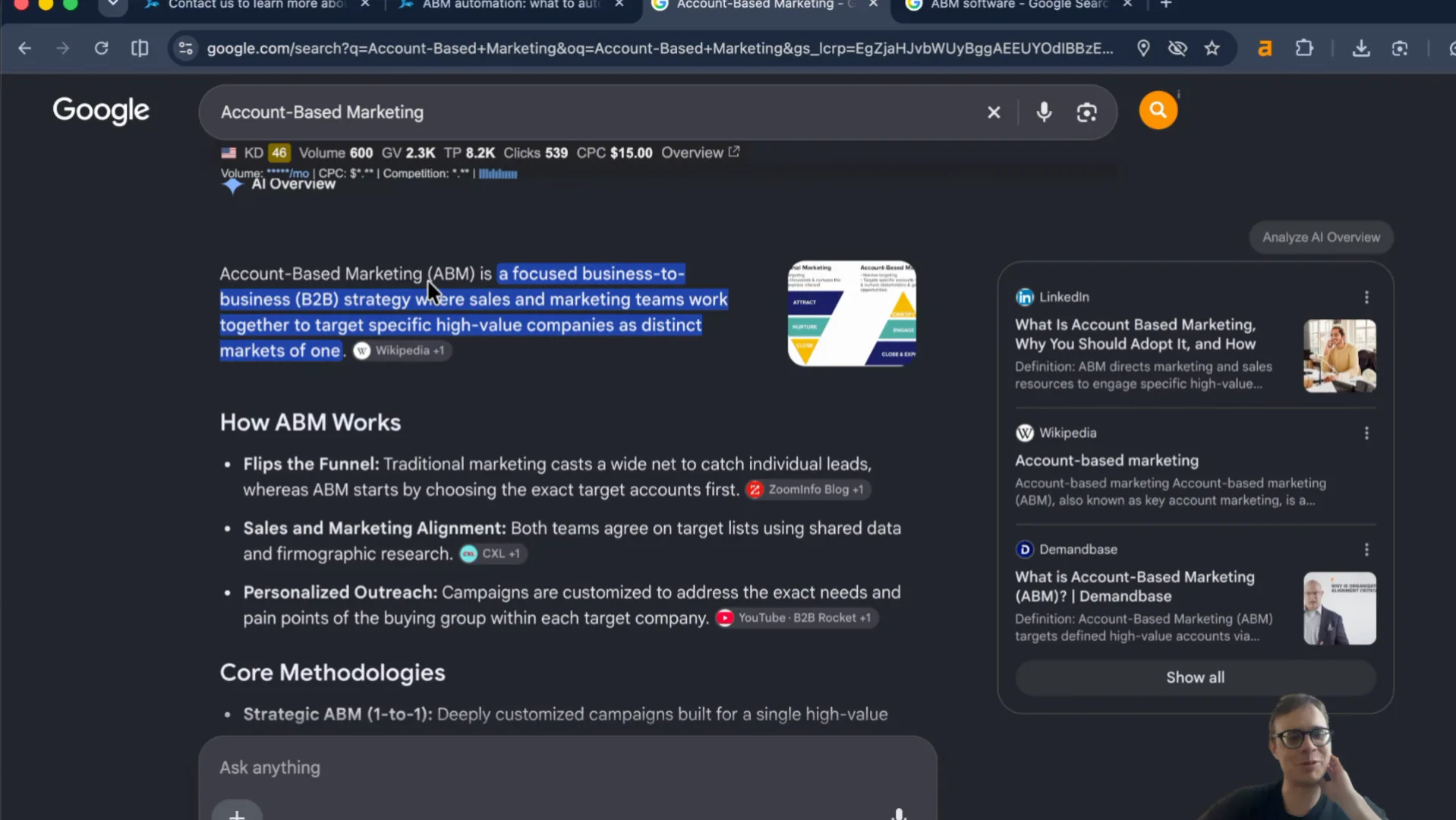
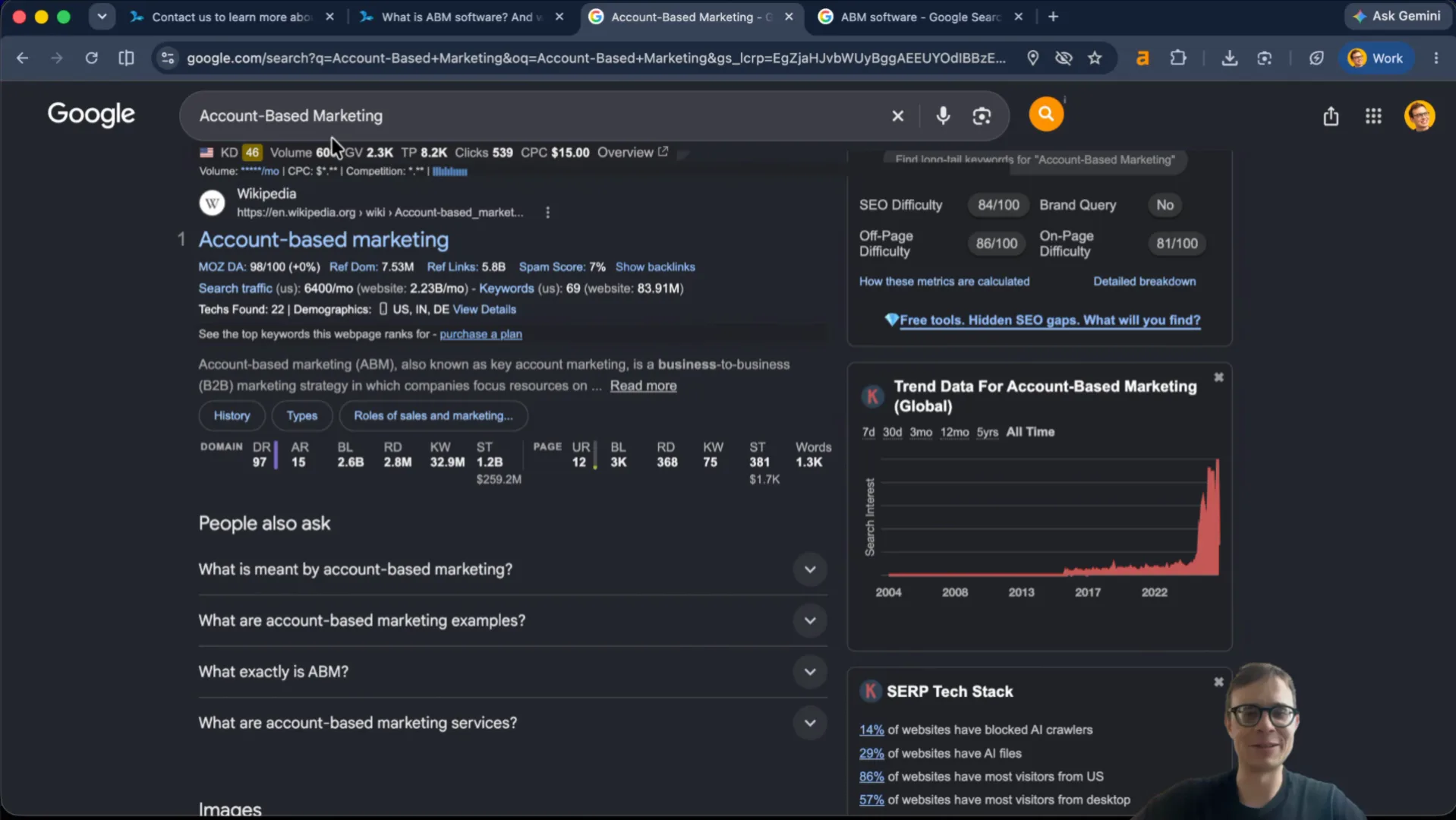
Google the keyword and read the AI Overview. Flips the funnel. How ABM works. Core methodologies. Key benefits. That is the shape Google expects from a definition page, so make it the shape of yours:
What it is, answered in the first two lines
Why it matters and who it is for
How it works
The benefits, with numbers
How to set it up in your own company
Which tools exist and how they compare
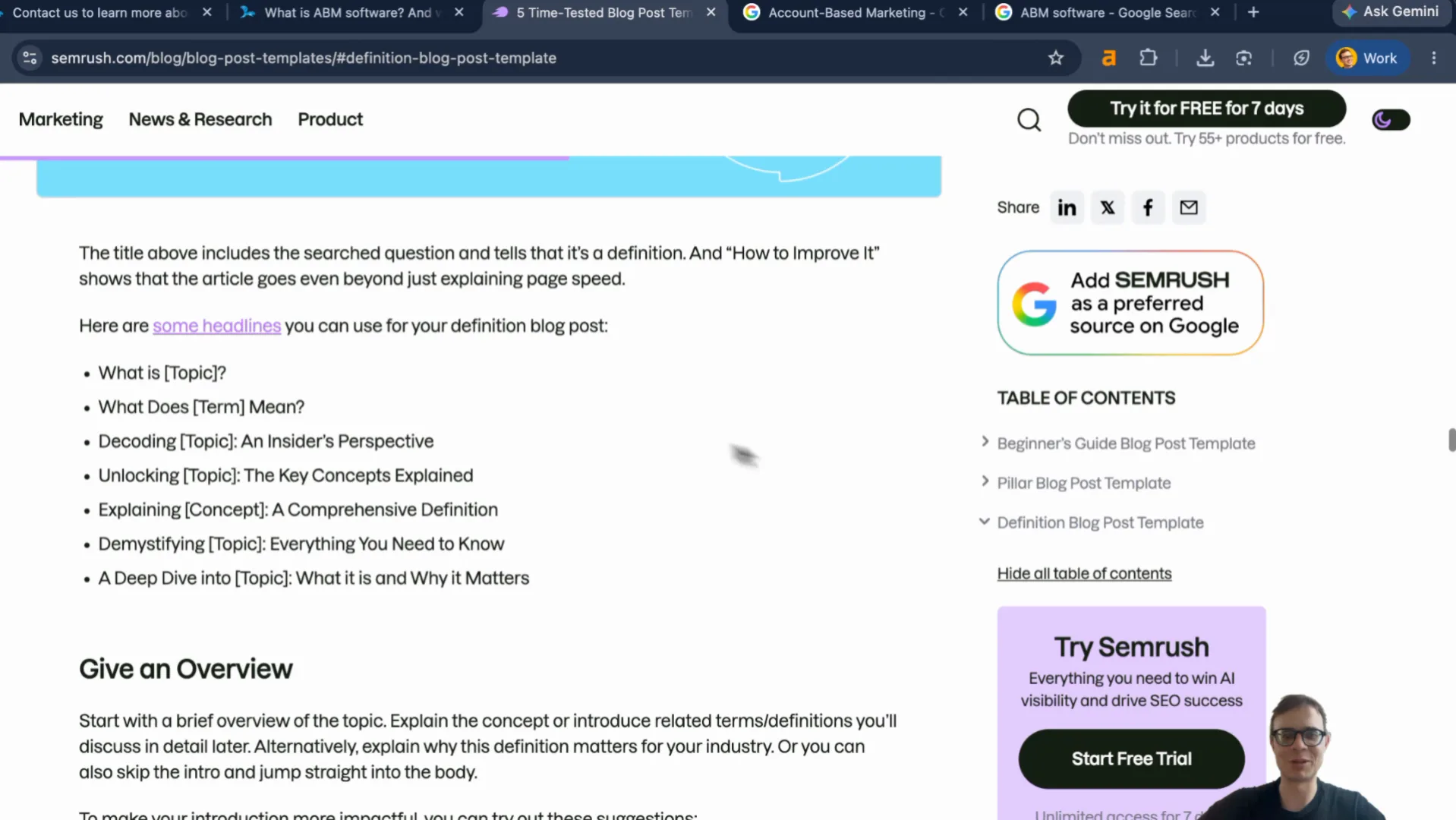
Semrush publishes a definition blog post template that spells this out. Follow it. The “why it matters” section goes first or second, right after the short answer. Posts that skip it do not rank well.
The goal is authority. People learning SEO go back to the HubSpot and Semrush blogs until they type the brand name into Google with the query. You want that for ABM.
The image that ranks
Account-based marketing gets 600 searches a month in the US and 2.3K globally, at a $15 CPC. The trend line is going up. Wikipedia ranks first because people are looking up a definition.
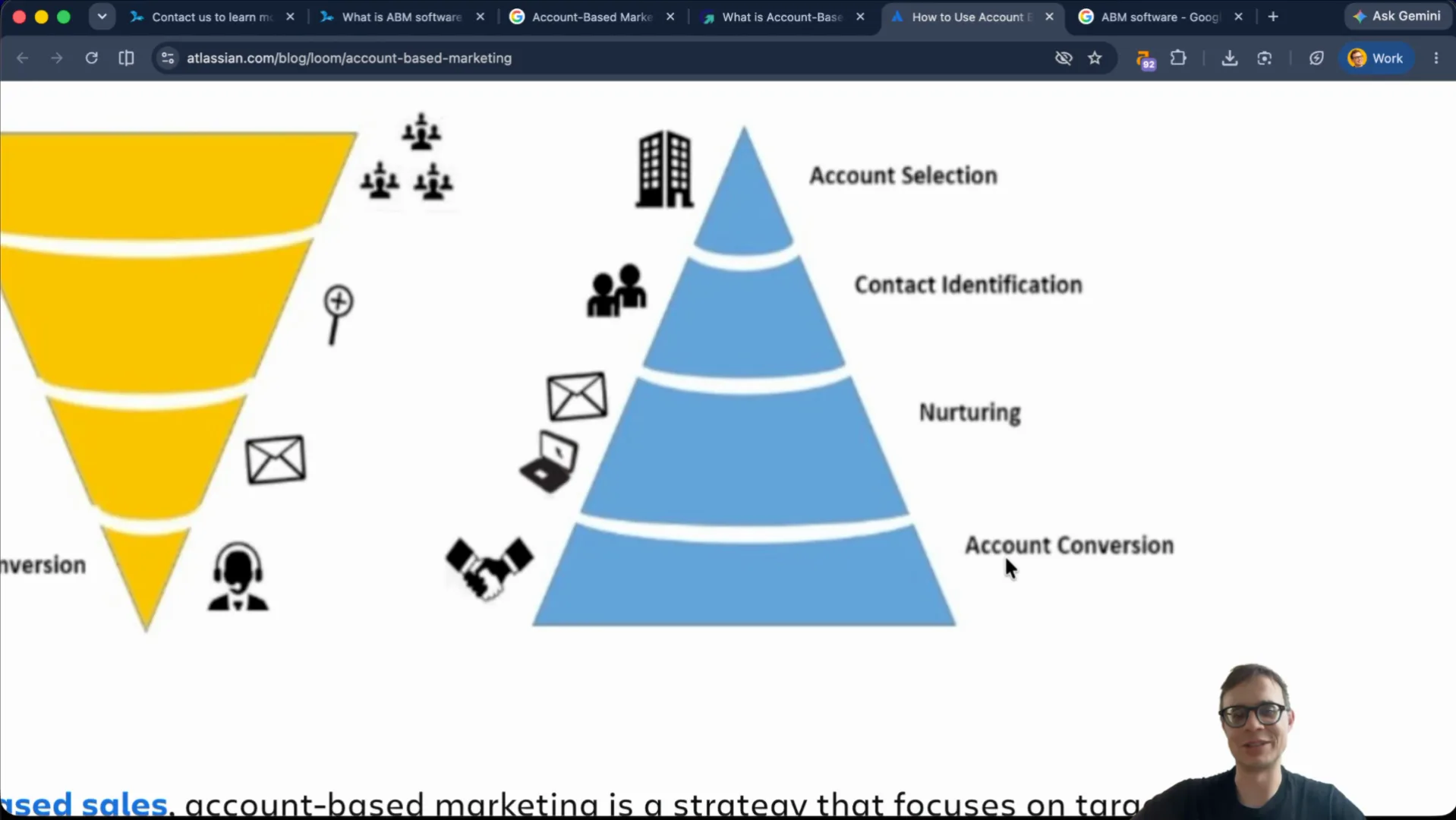
Atlassian ranks with a Loom blog post about winning high-value deals. Look at the image pack: their inverted funnel is in it. Account selection, contact identification, nurturing, conversion. That one diagram explained ABM to me faster than any paragraph on Sqrl.
Their post also has five benefits near the top, a Loom video, result dashboards, and statistics. Draw your own funnel. Put it on the definition page. It can rank in images on its own.
Proof of work
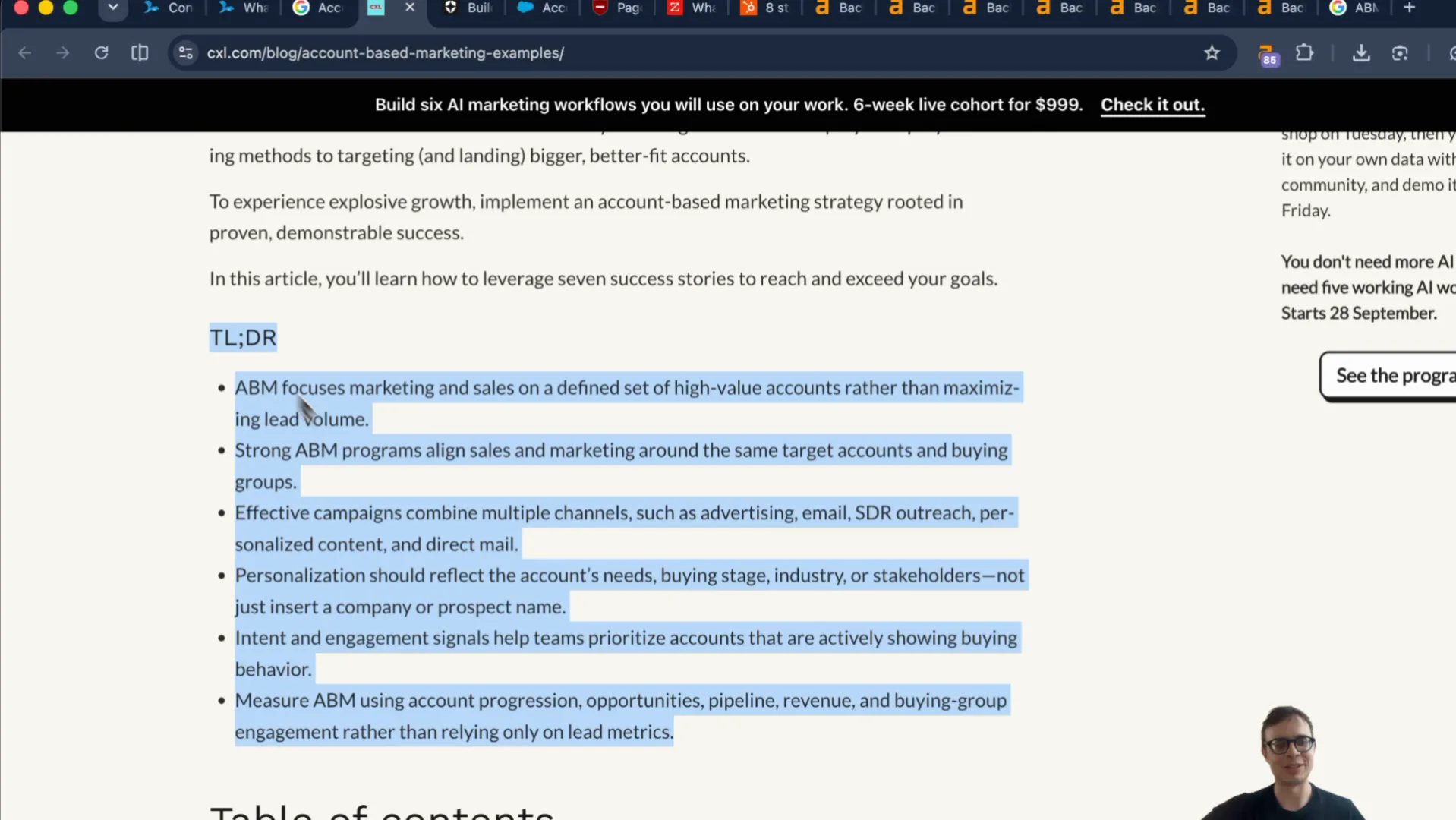
CXL ranks third with seven ABM examples. It opens with a TL;DR and a table of contents. Then screenshots, quotes, embedded LinkedIn posts, real emails. It reads like a cookbook. It is the page someone sends their boss to argue for ABM.
Add the TL;DR to every post. It tells the reader why to keep going, and it is often the part AI answers quote when they cut the rest.
Salesforce ranks too, with a boring page. DR 92 lets you be boring. DR 23 does not.
Make the blog convert
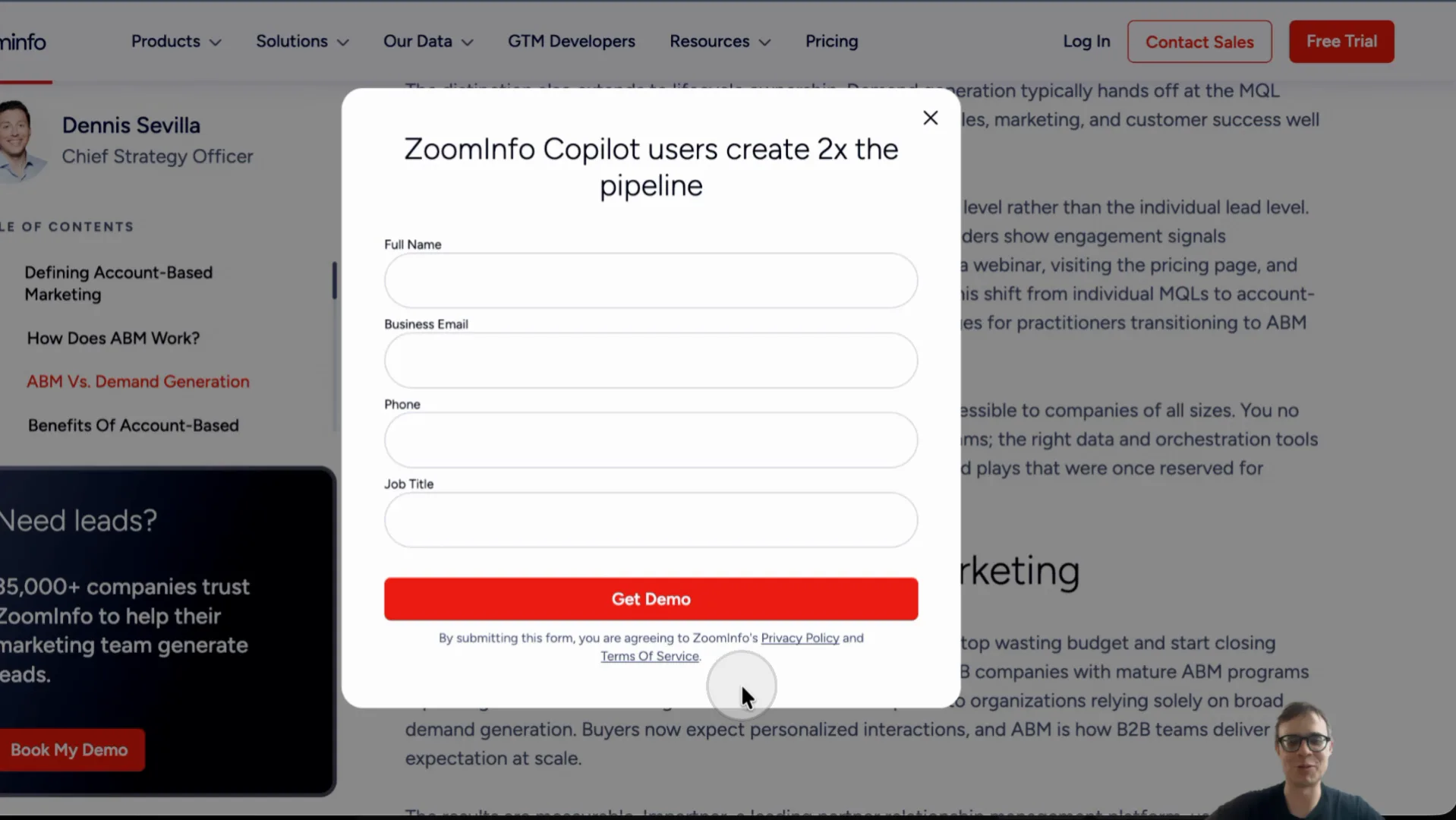
ZoomInfo’s guide has a sticky header, a table of contents, the author at the top, a scroll progress bar, a sticky “Book my demo” box in the sidebar, and a demo pop-up.
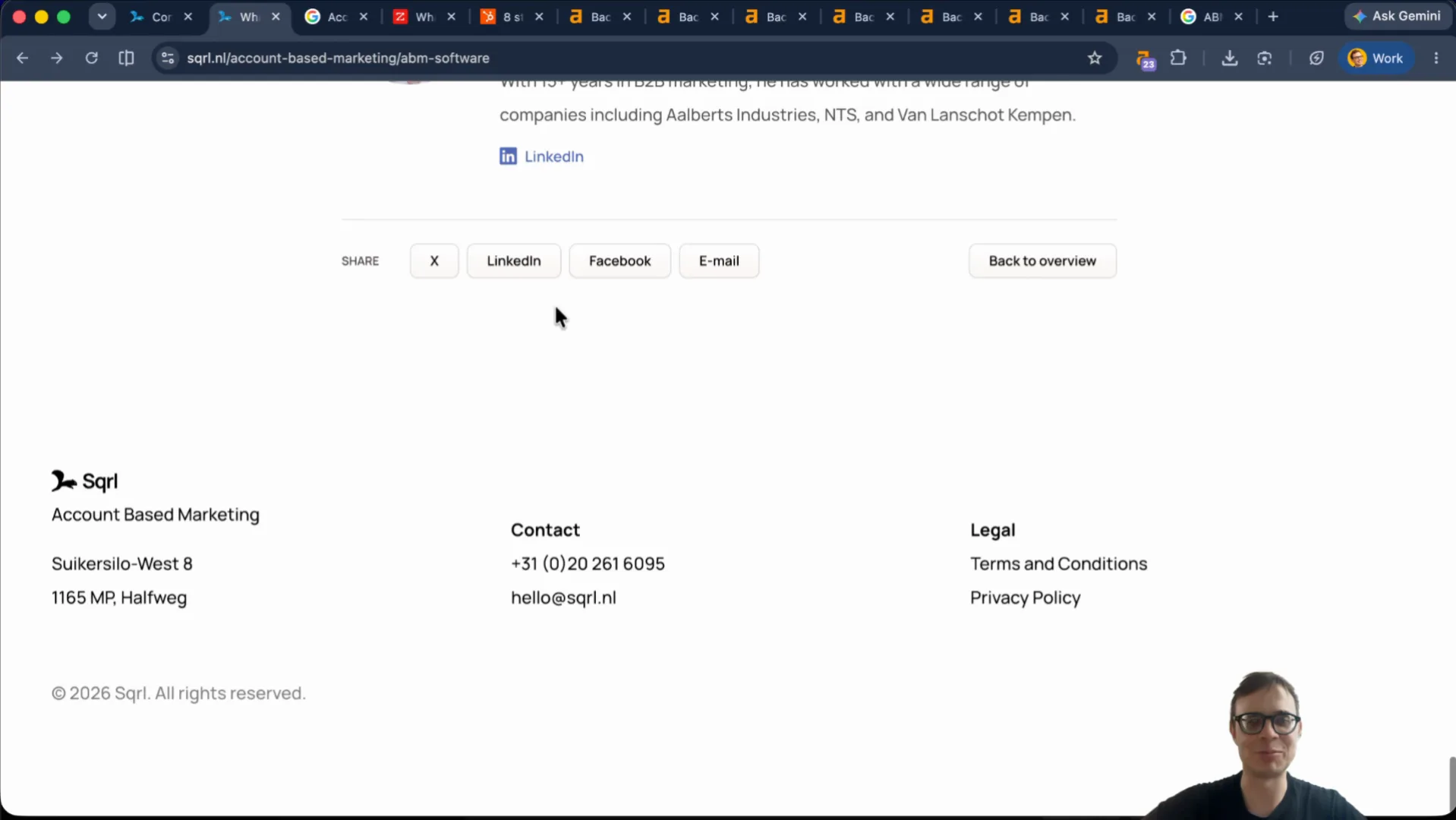
Sqrl has the text in the middle and the author at the bottom. No sidebar, no call to action, no related posts. Someone who reads to the end has nowhere to go.
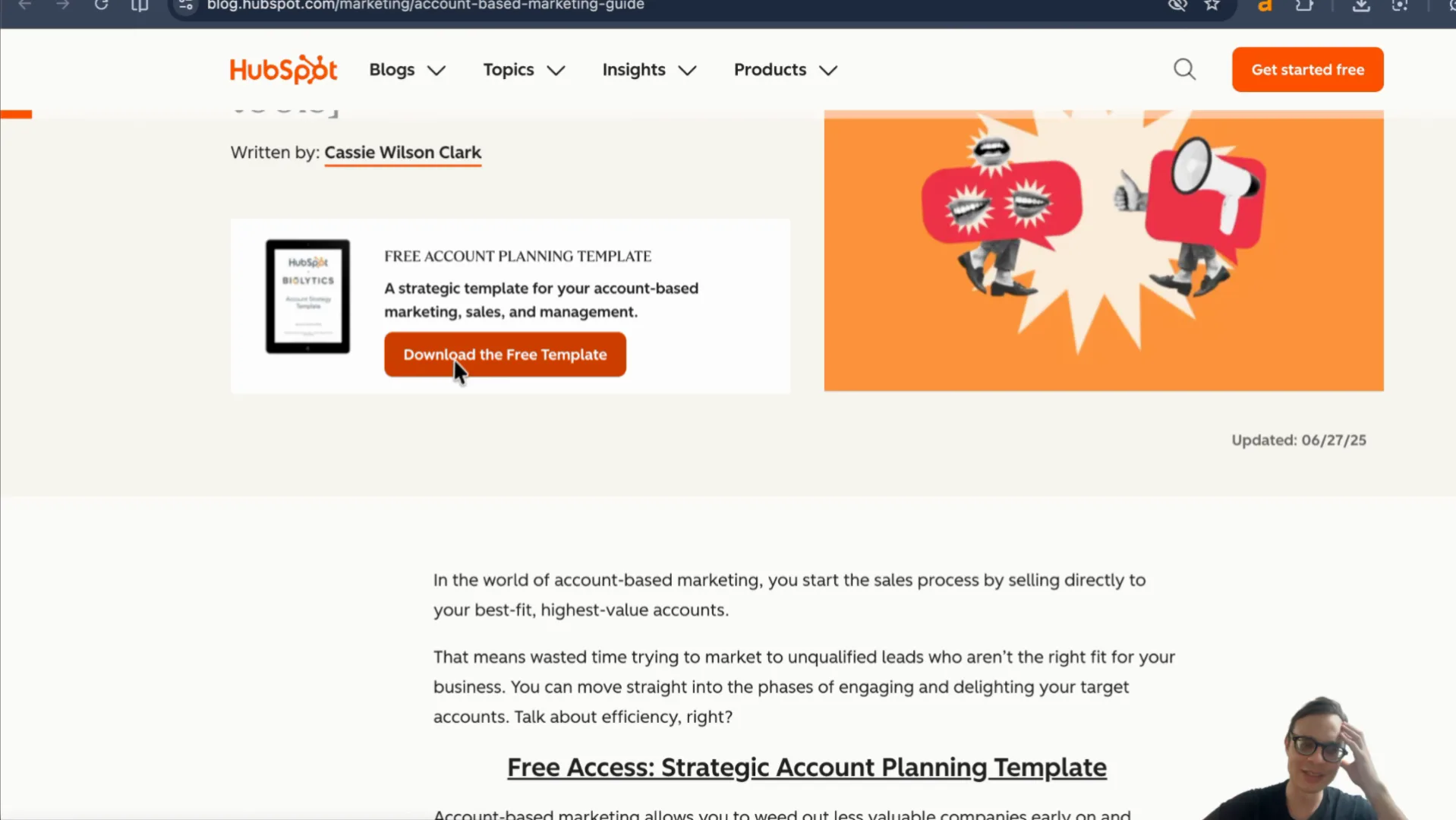
HubSpot does this best. Their ABM guide leads with a free account planning template and an orange button, then repeats the offer inside the post. You read, you download, you leave an email, the campaign starts. For Sqrl that could be an ABM planner, a checklist, a target-account template, or a prompt. People love free stuff.
“ABM software” is the keyword you can win
Everything on the head term is hard. ABM software, ABM tools, and ABM platforms are closer. They share one SERP, and that SERP is listicles.
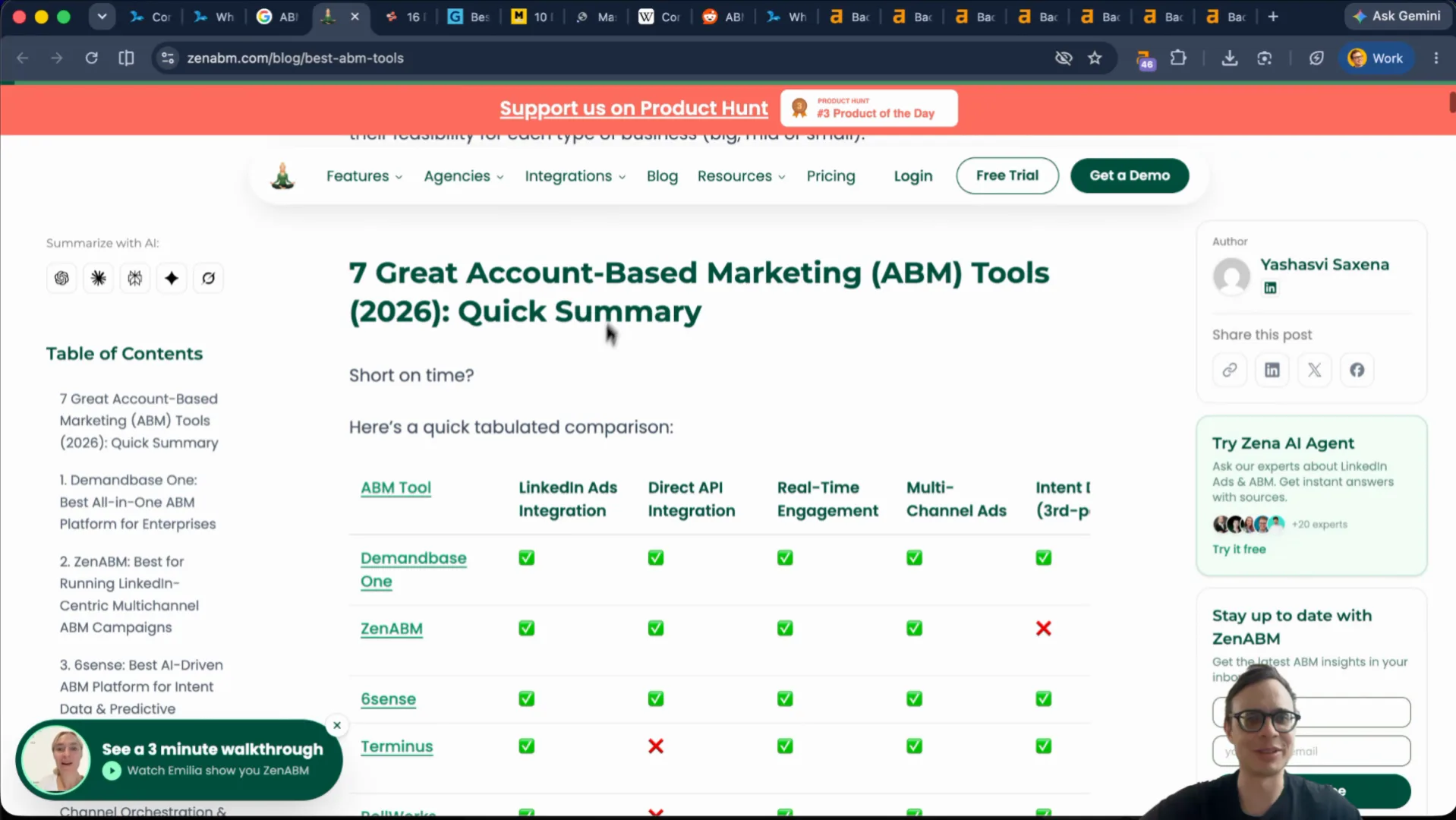
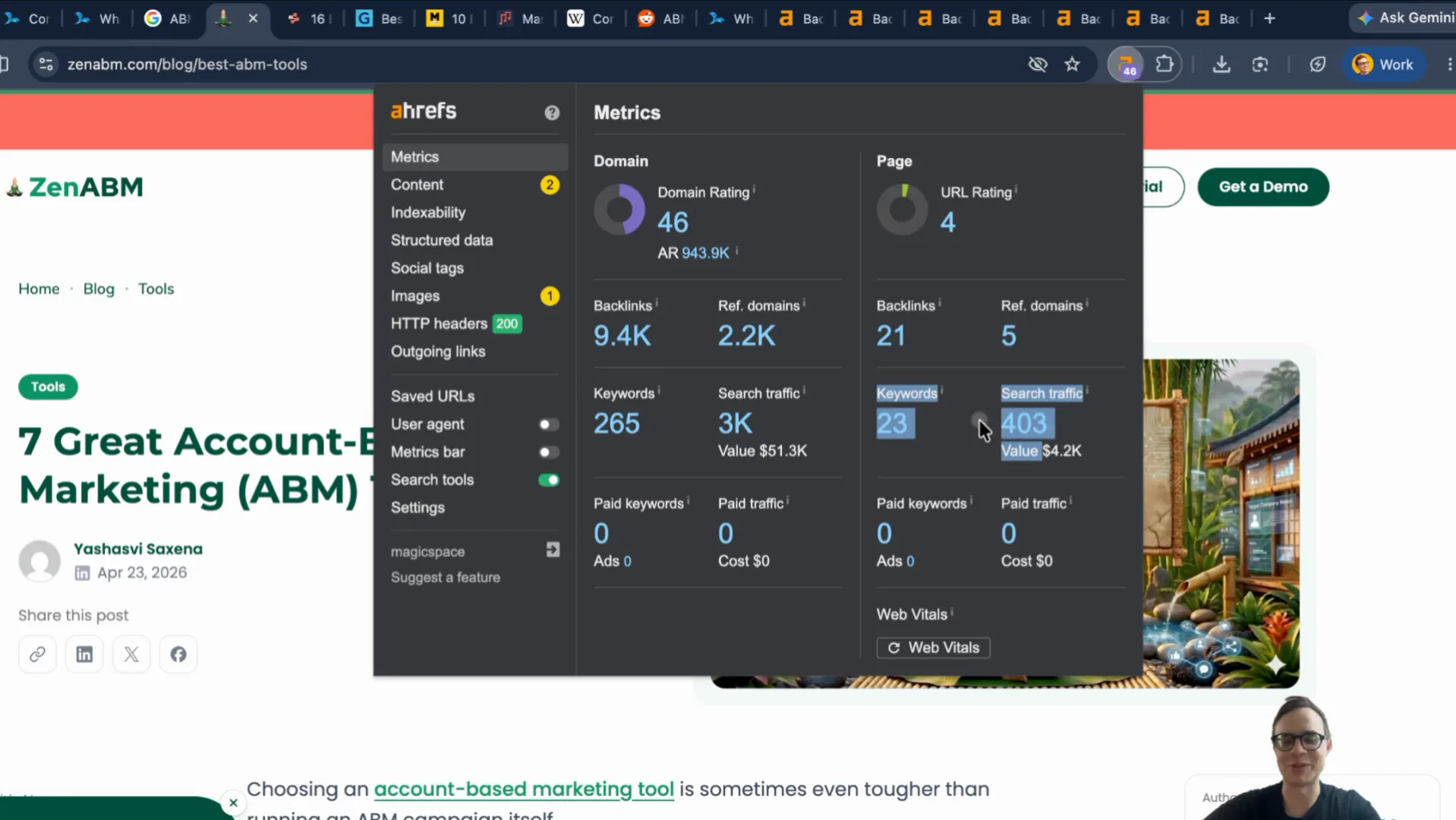
ZenABM is a small competitor that just launched on Product Hunt. Their “best ABM tools” post ranks high anyway.
DR 46. That one page pulls 403 visits a month, worth about $4.2K in ads. People pay for these clicks.
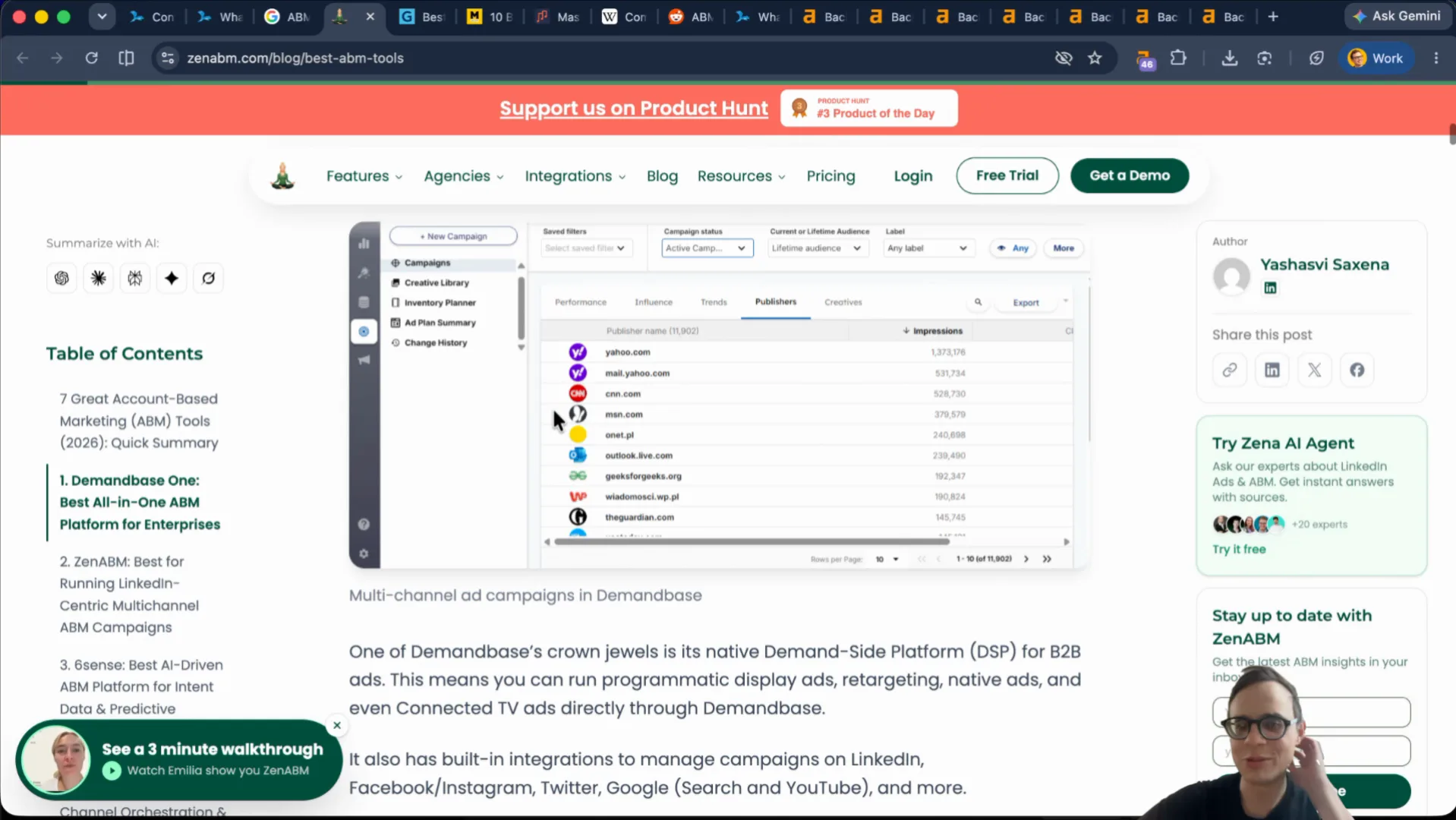
It ranks because they did the work. Most listicles on this SERP repeat one block: homepage screenshot, description, features, pros, cons, pricing. Nothing proves anyone logged in. ZenABM opened each tool and took screenshots inside the product. I trust that page, so does Google.
Write your own:
Sign up for every tool and screenshot the app, not the homepage
Put a comparison table at the top
Name the author and add a short walkthrough video
Include yourself, and include the small competitors so they have a reason to return the favor
You learn their onboarding, funnel, and emails while you do it. That is worth the week even without the rankings.
Get on the lists that already rank
Every listicle on page one is a page you can be on. Find the author on LinkedIn and ask. For ZoomInfo’s post that is one email.
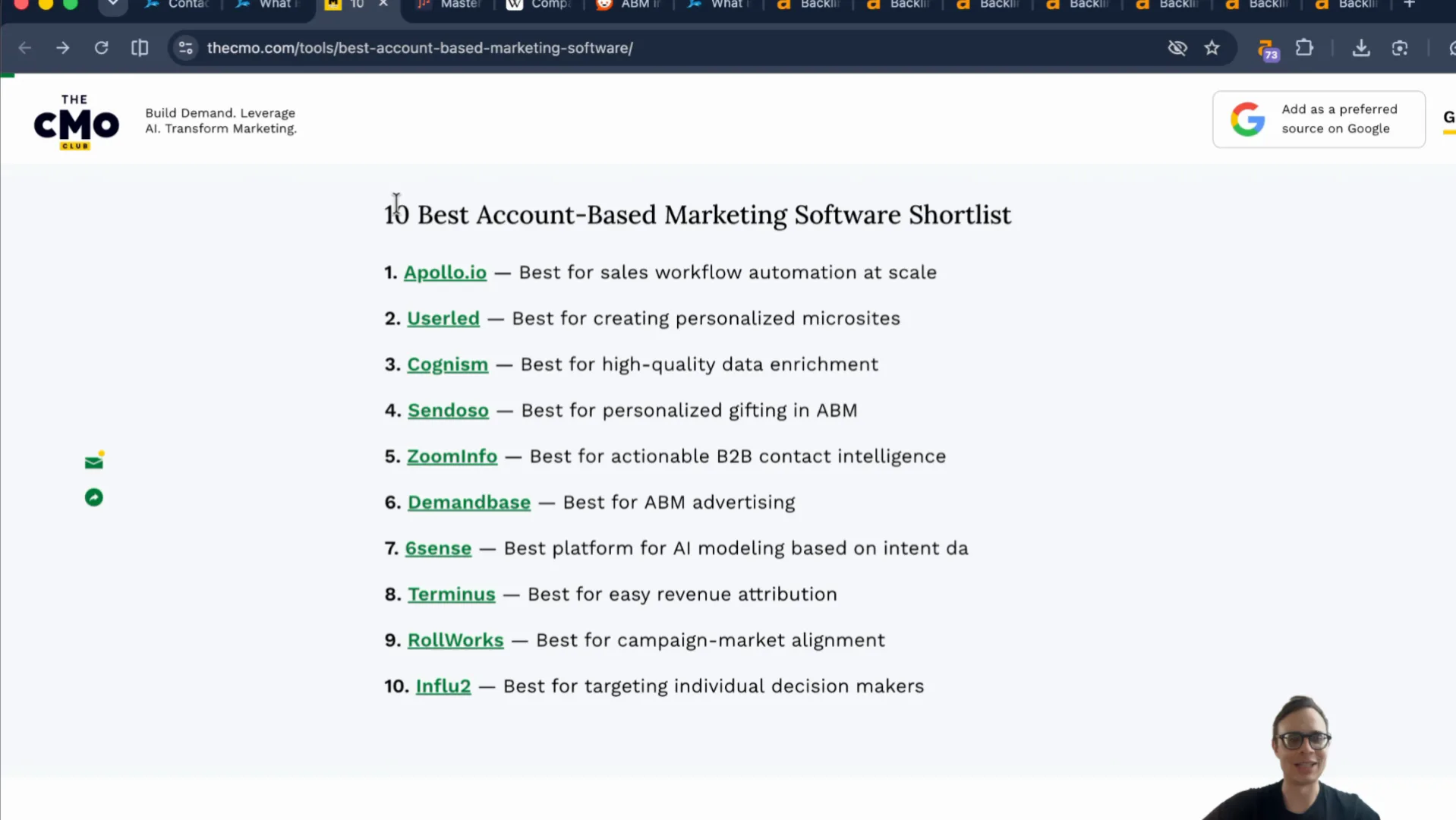
The CMO is the fast one. They have a “Write for us” page and they sell placements on a cost-per-click budget. I have advertised with them. You pay, you are in a top-10 result for the keyword, and you start showing up in AI answers that cite it.
G2 and Gartner are slower. Get listed anyway.
The video pack is the same play. Three YouTube videos sit on the main SERP. Work with those creators so Sqrl gets named as a tool for running ABM.
The link list is already written
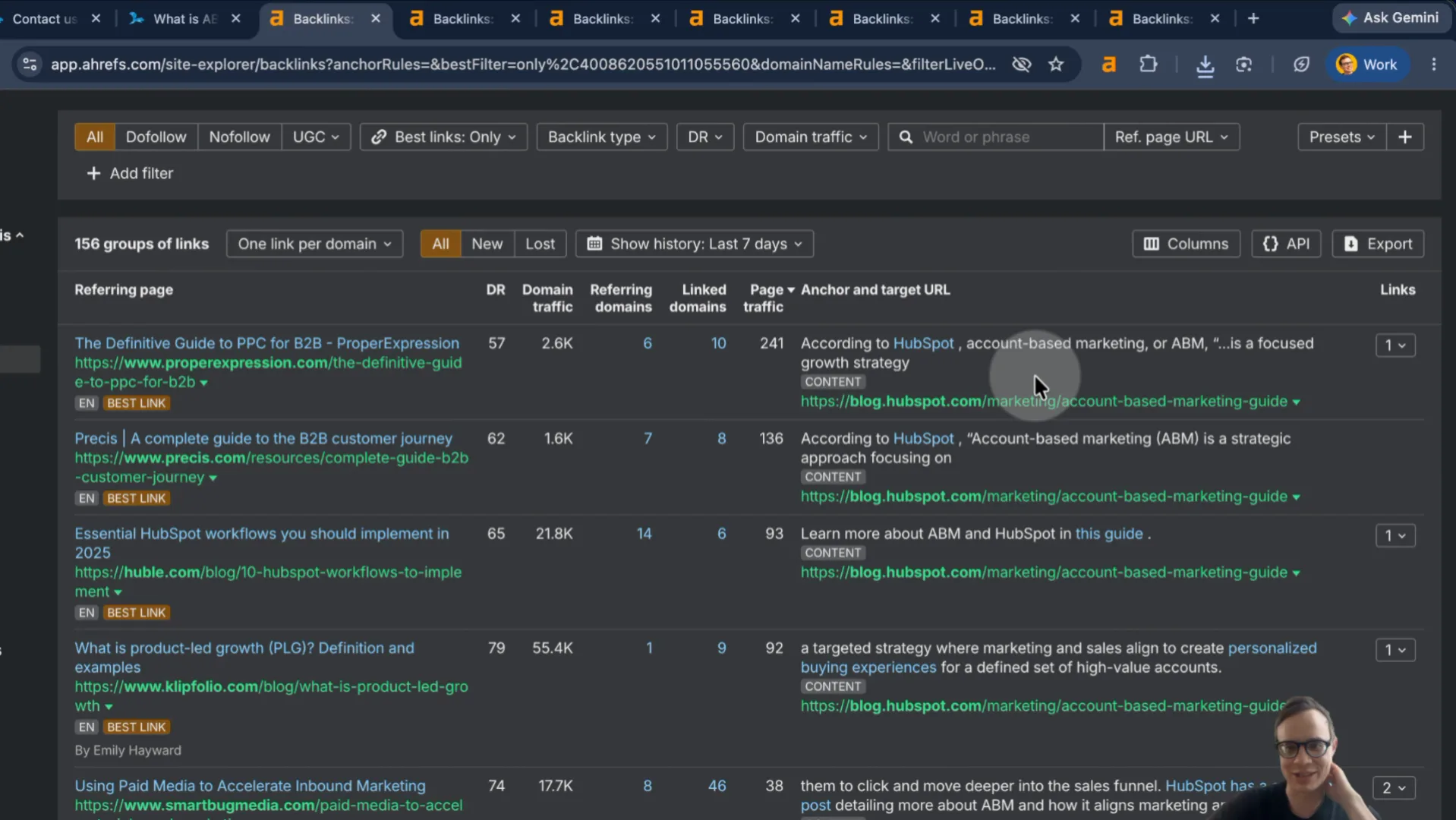
Open the backlinks report for each page that ranks for the definition. 156 sites link to HubSpot’s ABM guide, most with a line like “According to HubSpot, account-based marketing is…”. CXL’s examples post, LinkedIn’s article, Demandbase’s FAQ, and the Wikipedia page each have their own list.
Every one of those writers covers ABM and cites a definition. Once your definition page and your listicle are better than what they link to, email them. This is the skyscraper technique. It is no guarantee, and it beats cold outreach to people who have never written about the topic.
I exported five of these lists as CSVs, 321 pages in total, and sent them with the roast.
TLDR
The technical side is fine, so leave it. Rebuild the definition post on the AI Overview outline, with an inverted funnel, a TL;DR, and a free template. Give every post a sidebar offer, the author at the top, and related posts. Write the ABM software listicle with screenshots from inside each tool. Then email the listicle authors and the 321 pages already linking to HubSpot, CXL, LinkedIn, Demandbase, and Wikipedia. In B2B the blog is the growth channel. Make it the best one in ABM.