High-Converting SaaS Trial Strategy: Freemium vs Free Trial vs No Trial
A practical SaaS trial strategy guide for choosing between freemium, free trial, credit card trial, money-back guarantee, or no trial at all.


Most SaaS founders do the same thing when pricing gets scary:
"Let's add a free plan."
It feels safe. More signups, more users, more logos in the dashboard. The graph goes up. Everyone relaxes for about 9 days.
Then the real problem shows up.
Free users do not behave like buyers. They poke around, use the expensive parts, ask support questions, invite nobody, and disappear when you finally ask for a card. Not because they are bad people. Because you taught them the product was optional.
That is why more SaaS companies are moving toward tighter trial flows:
- No freemium tier.
- No forever-free access to core features.
- A trial that starts with real intent.
- Sometimes even no trial at all, just payment first with a money-back guarantee.
This article is the founder version of the trial vs no trial decision. Not a clean MBA matrix. The useful version: which model gets you more serious users, more revenue, and fewer "we have 40,000 users but nobody pays" meetings.

The freemium trap
Freemium is not bad. It is just overprescribed.
It works beautifully when the free users make the product stronger. Think Slack, Zoom, Dropbox, Calendly. Every free user can invite more users, create network effects, spread files, schedule links, or make the product part of someone else's workflow.
For most B2B SaaS? Freemium is often just a generous demo with server costs.
The usual problems:
- Low conversion: Many freemium products convert in the low single digits. Some benchmarks put freemium around 2% to 7%, while free trials often land closer to 10% to 25%.
- Delayed monetization: Users can hang around forever before making a buying decision. That makes revenue harder to forecast.
- Free rider support load: Your team ends up supporting people who were never likely to pay.
- Weak urgency: If access never expires, the evaluation never really starts.
- Muddy product feedback: Free users ask for different things than buyers. If you listen too closely, you can build a product your best customers do not want.
That last one is the quiet killer.
A freemium user says, "Can you add this nice-to-have?"
A buyer says, "Can this help me close more deals by Friday?"
Those are not the same product roadmap.
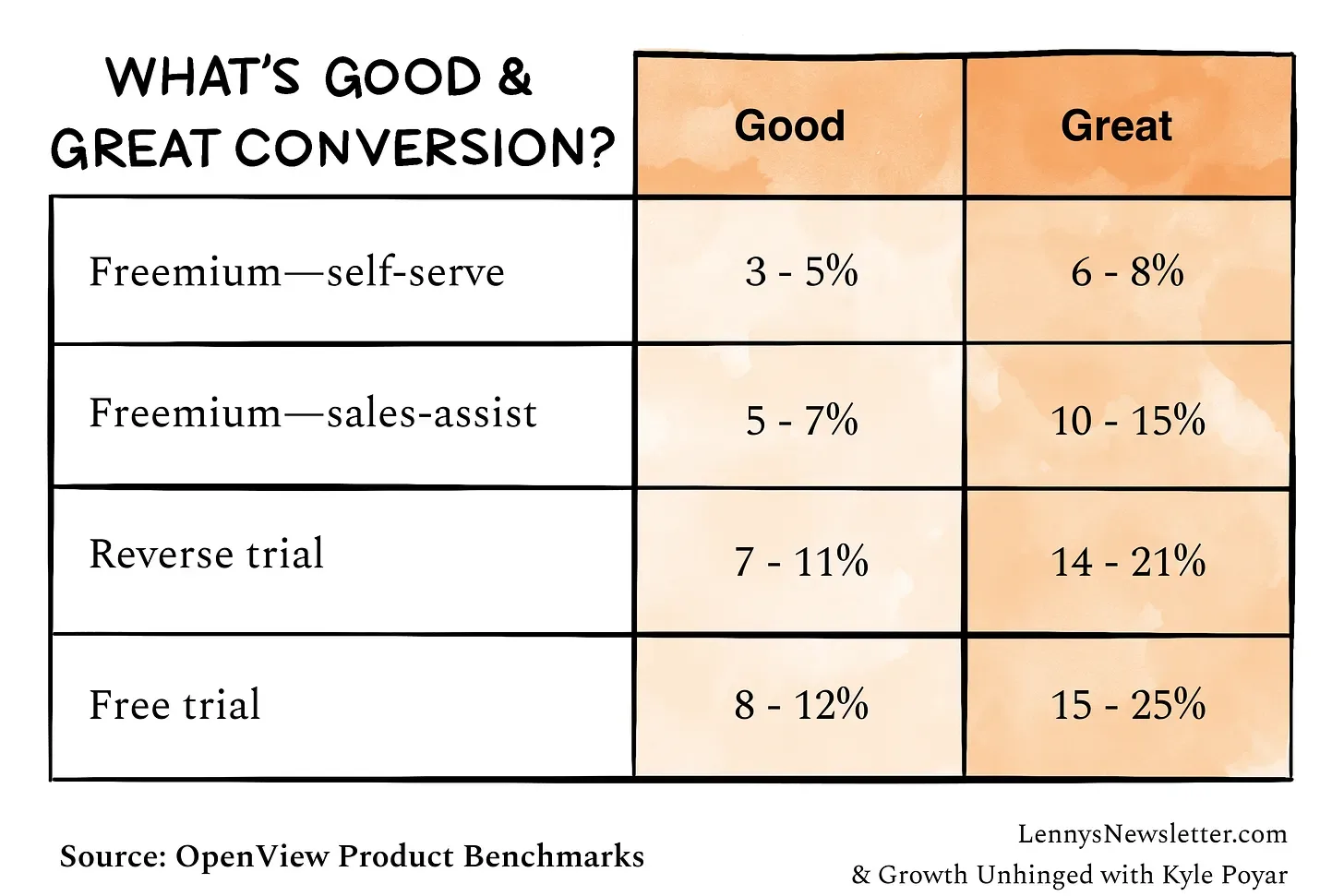
Benchmarks are directional, not laws of physics. PayProGlobal puts many freemium products around 2% to 5% conversion, while Userpilot notes free trials often land closer to 10% to 25%. The exact number depends on category, price, onboarding, and whether the product already has demand.
But the pattern is boringly consistent: more intent usually means fewer signups and better conversion.
Why a limited trial usually converts better
A trial creates a decision.
That is the whole point.
Freemium says, "Use this whenever."
A trial says, "You have 14 days to figure out if this helps."
That little deadline changes user behavior. People click around with more intent. They connect the integrations. They invite teammates. They test the thing they actually came for.
And if the trial requires a credit card, the intent gets even sharper.
Credit-card trials reduce top-of-funnel signups, yes. But they usually increase the percentage of users who become customers because the user has already crossed the tiny psychological bridge from "curious" to "I might buy this."
That does not mean every SaaS should require a card. It means you should be honest about what you are optimizing for:
| Model | Best for | Main problem |
|---|---|---|
| Freemium | Network effects, viral loops, broad adoption | Lots of users, weaker intent |
| Free trial, no card | More product exploration, easier signup | Lower purchase intent |
| Free trial, card required | Serious buyers, faster conversion | Fewer signups |
| Locked app with trial | Products with clear, fast value | Higher barrier to entry |
| No trial, money-back guarantee | Strong brands or obvious value | Highest friction |
| Demo | Enterprise, complex workflows | Expensive to scale |
For most B2B SaaS, the strongest default is a locked app with a 7 to 14-day trial.
Not because it is cute. Because it forces the product to prove value fast.
The locked app model
The locked app model is simple:
- User lands on the site.
- User signs up.
- Core features are locked until they start a trial or pick a plan.
- The product uses onboarding to get them to one valuable outcome quickly.
This is not the same as a reverse trial.
A reverse trial gives users premium access for a limited time, then drops them into a free plan if they do not pay. A locked app with trial has no soft landing. If the user wants the real product, they need to start the trial.
That sounds aggressive until you realize most paid products already work this way offline.
You do not get a free month of a consultant. You do not get unlimited free agency work. You do not get a designer to make five logos and then decide if you feel like paying.
SaaS trained buyers to expect free labor from the software.
Sometimes that is smart. Sometimes it is just fear with a pricing page.
Case study: Surfer SEO
Surfer is a good example of a product that sells a clear outcome: create and optimize content that can rank.
Their homepage does not waste much time. It makes the promise, shows social proof, and pushes you toward signup.
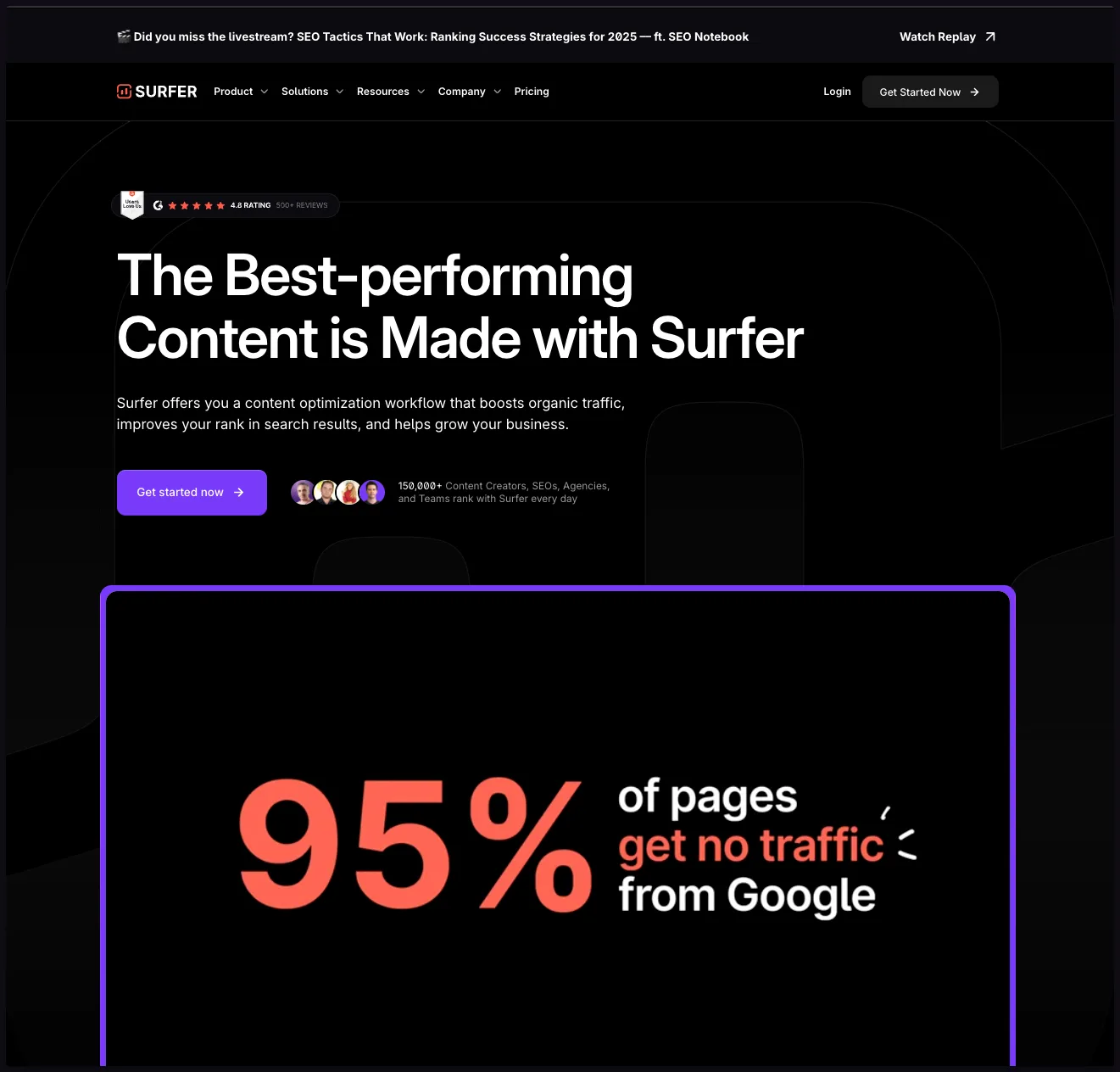
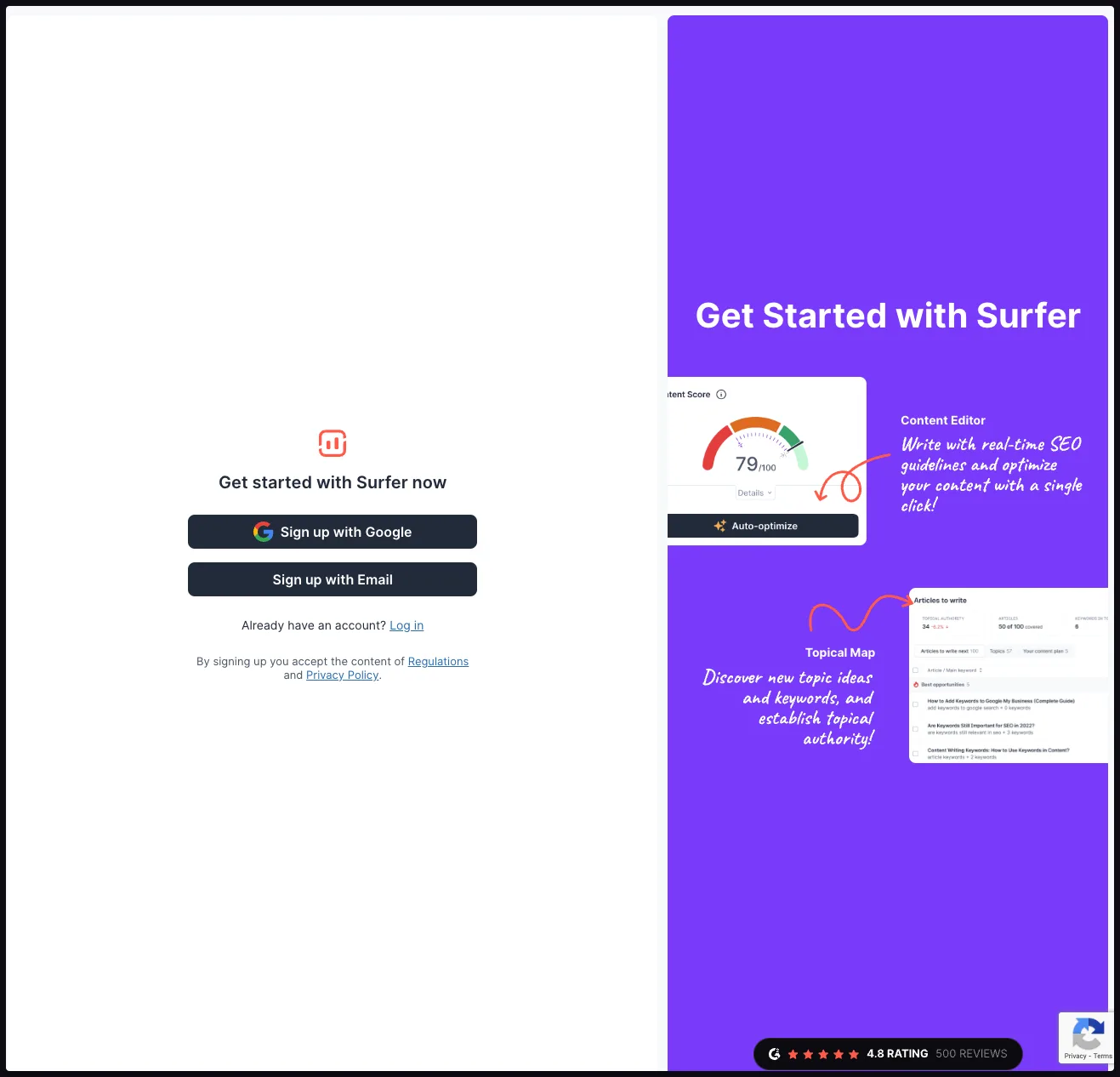
The signup page is equally blunt. Google signup, email signup, login link. No "explore the sandbox for free forever" energy.
Then you hit the pricing decision.
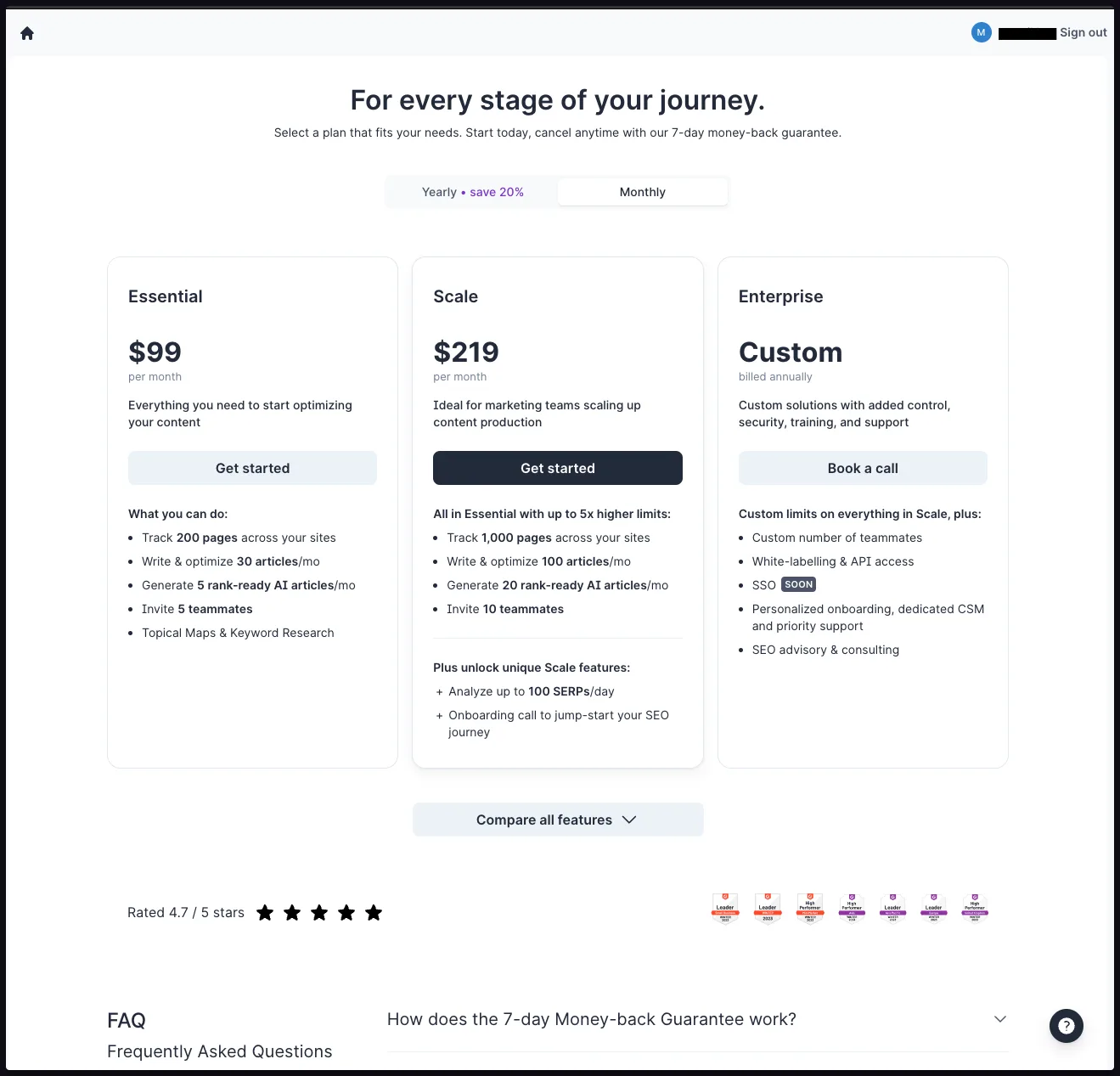
At the time I checked this flow, Surfer was not leading with a traditional free trial. The offer was closer to:
Pay now, try it, and you have a 7-day money-back guarantee.
That is not a trial in the usual SaaS sense. It is an upfront purchase with a refund safety net.
Why can they get away with that?
Because the category has obvious value. If you are buying Surfer, you probably already care about SEO content, rankings, traffic, and briefs. The buyer is not wondering what "content optimization" means. They are wondering whether this tool is better than the alternatives.
Surfer's bet is simple:
If the buyer has enough pain, the refund guarantee is enough risk reversal.
That is a bolder move than a credit-card trial. It will reduce casual signups. It will also filter for people who are much more serious.
I would not copy this blindly. But I would study it if your SaaS has:
- A painful, obvious problem.
- A buyer who already knows the category.
- Fast time-to-value.
- Strong proof, screenshots, reviews, or case studies.
- A refund process you can afford to honor without drama.
No trial works when the product promise is so clear that the user does not need 14 days to understand the category.
Case study: Close
Close takes a more classic B2B SaaS route: full product access through a free trial.
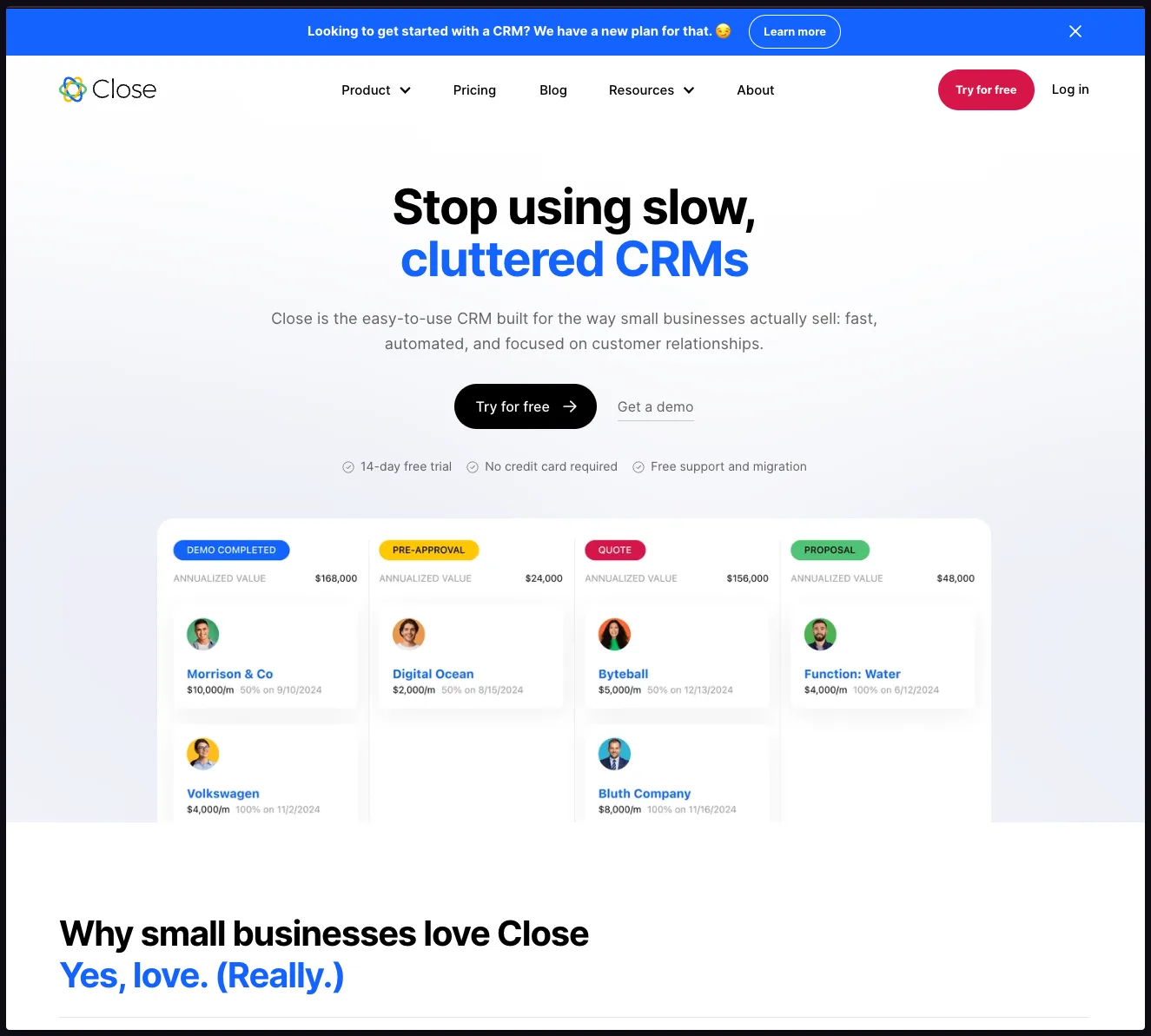
Their homepage is built around one very specific pain: CRMs are slow and cluttered.
Then the signup page does the thing many B2B products should do more often:
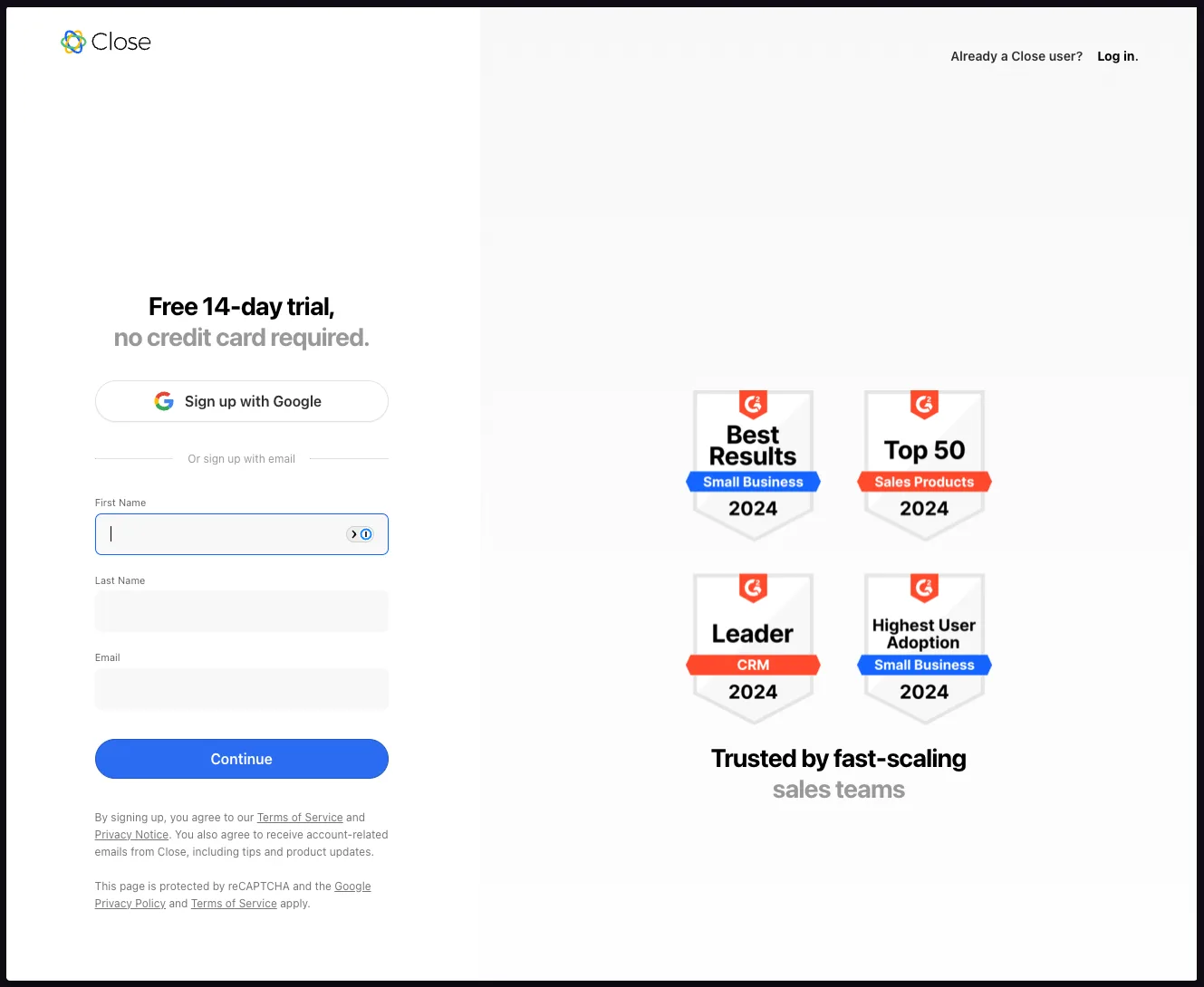
It tells you the trial terms clearly.
Free 14-day trial. No credit card required.
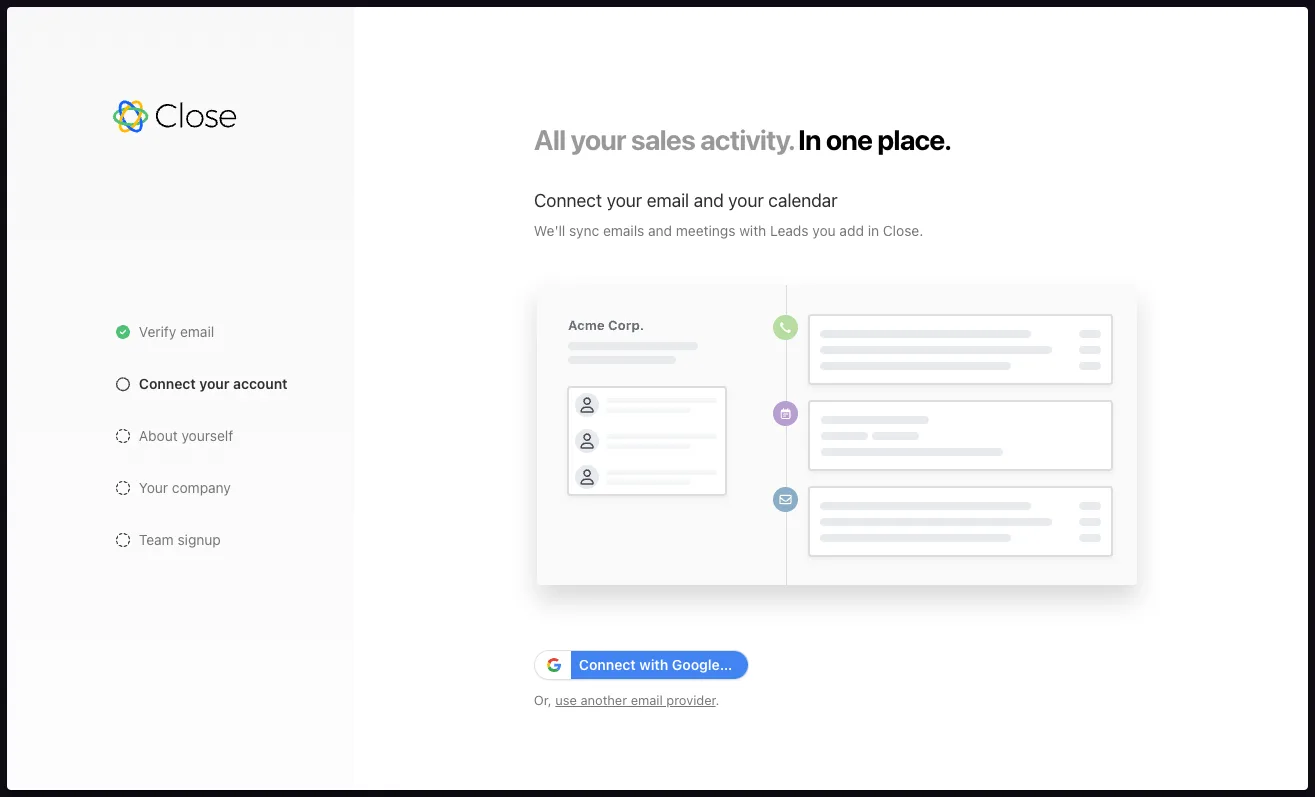
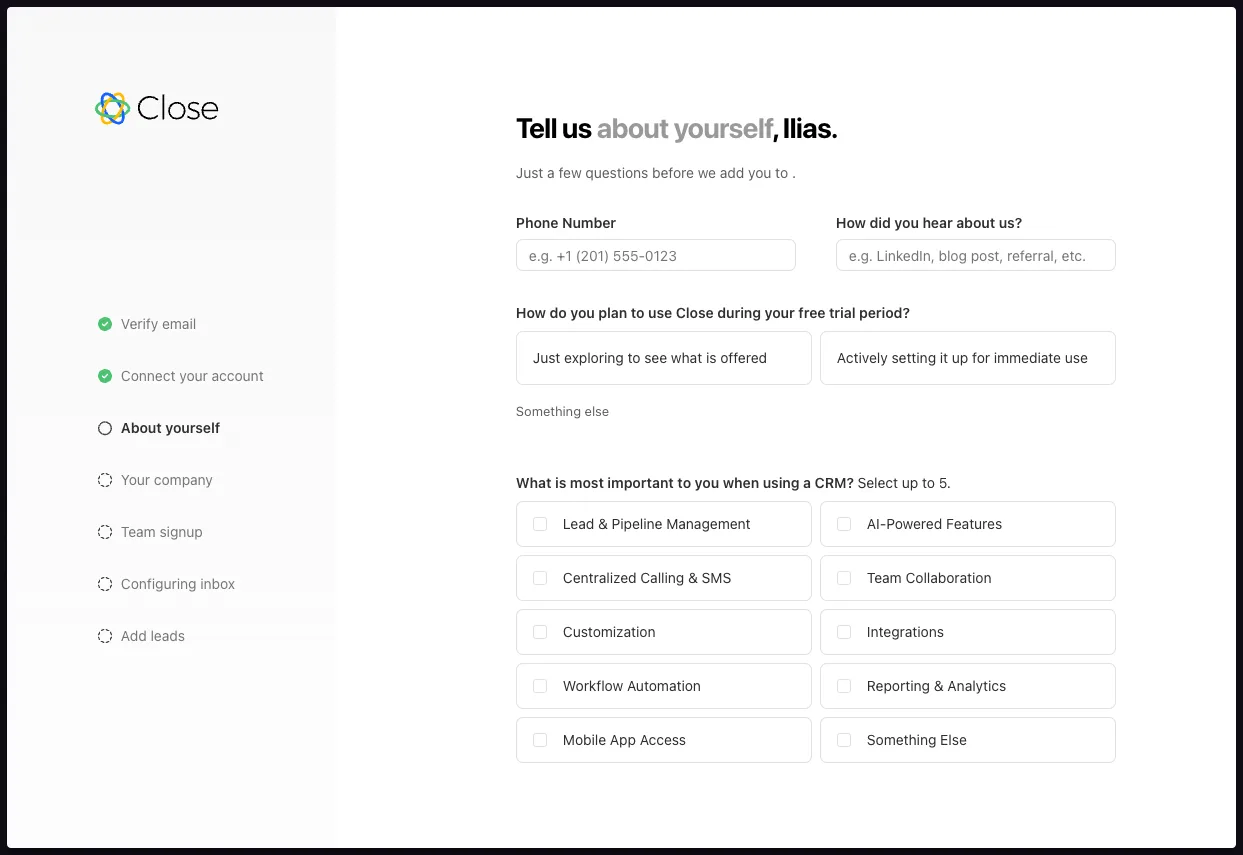
After signup, Close moves straight into activation. Connect your email and calendar. Set up the account. Answer questions. Build the workspace.
This is the part a lot of founders miss.
The trial is not the strategy. The onboarding is the strategy.
If your trial starts with an empty dashboard, you are asking the user to do product management for you. They need to know what to click, what to import, what to test, and what "success" looks like inside the next 10 minutes.
Close does a smart thing by turning onboarding into setup momentum:
- Verify email.
- Connect account.
- Tell us about yourself.
- Tell us about your company.
- Bring in team and inbox data.
Each step makes the product stickier before the trial clock runs out.
That is what a good free trial should do. Not "here is access, good luck."
Case study: Ahrefs
Ahrefs is even more direct.
The homepage pushes signup hard. No educational maze. No soft product tour required.
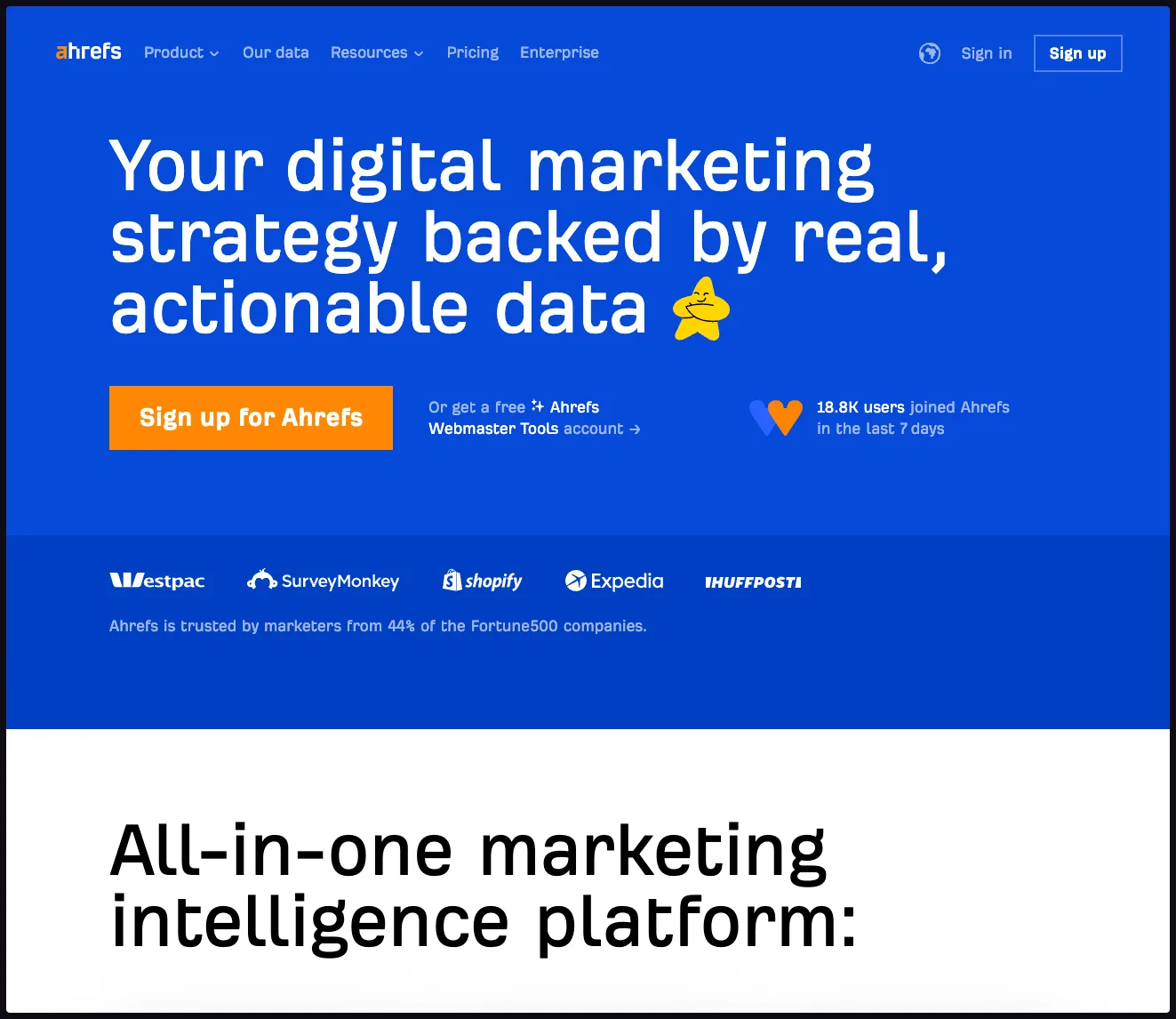
The pricing page comes next, with paid plans front and center.
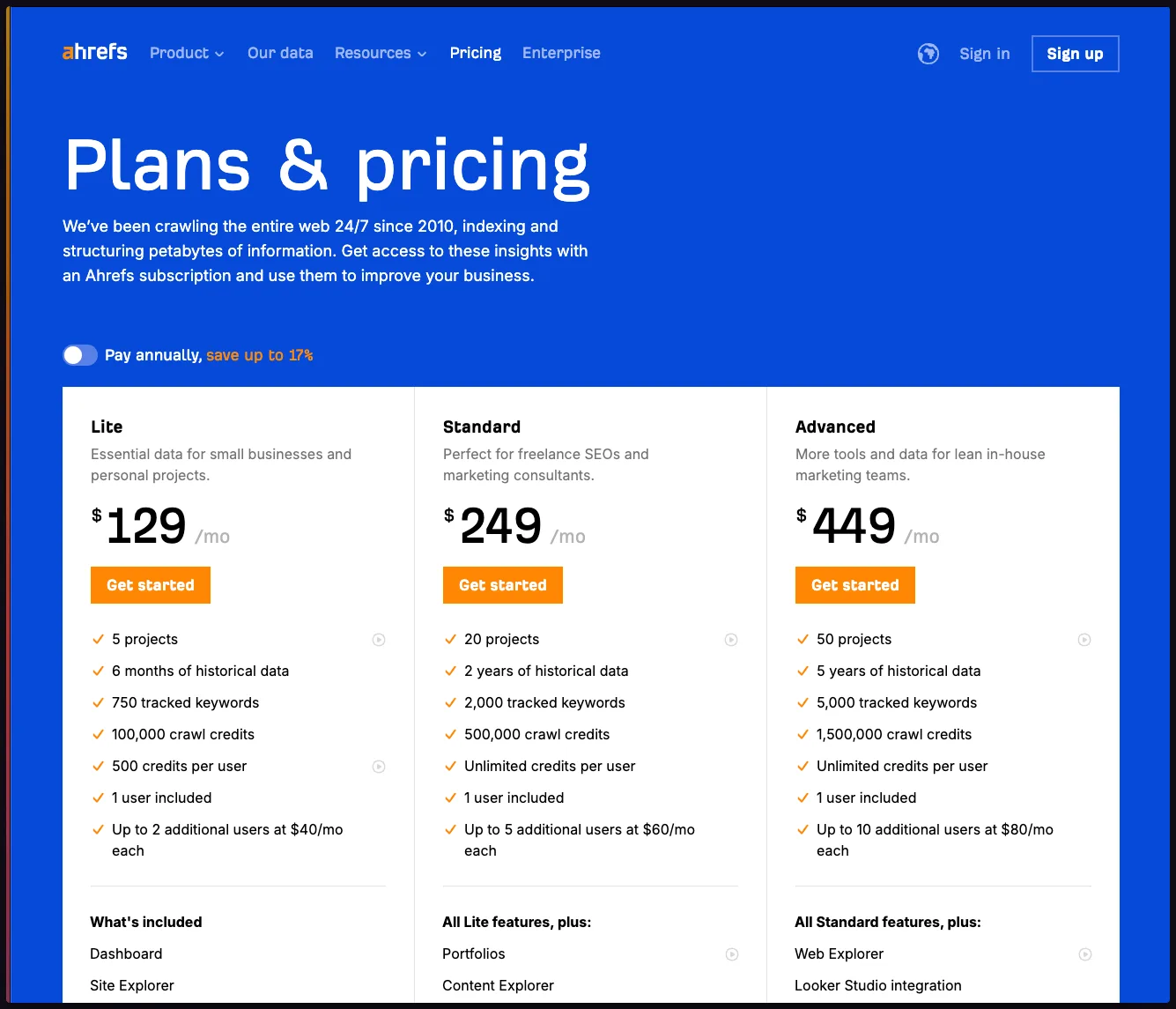
Then signup keeps the selected plan visible.
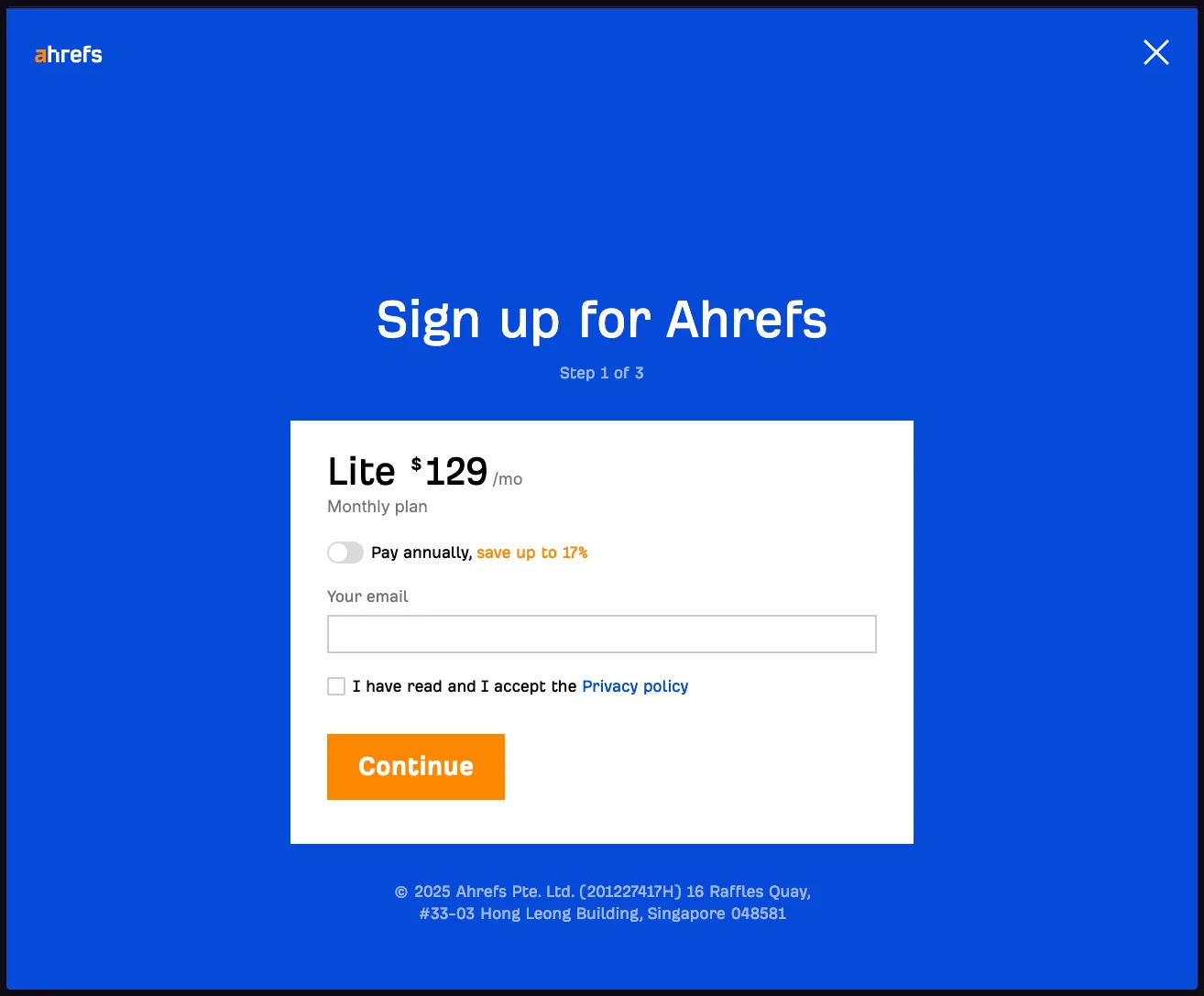
After that, terms.
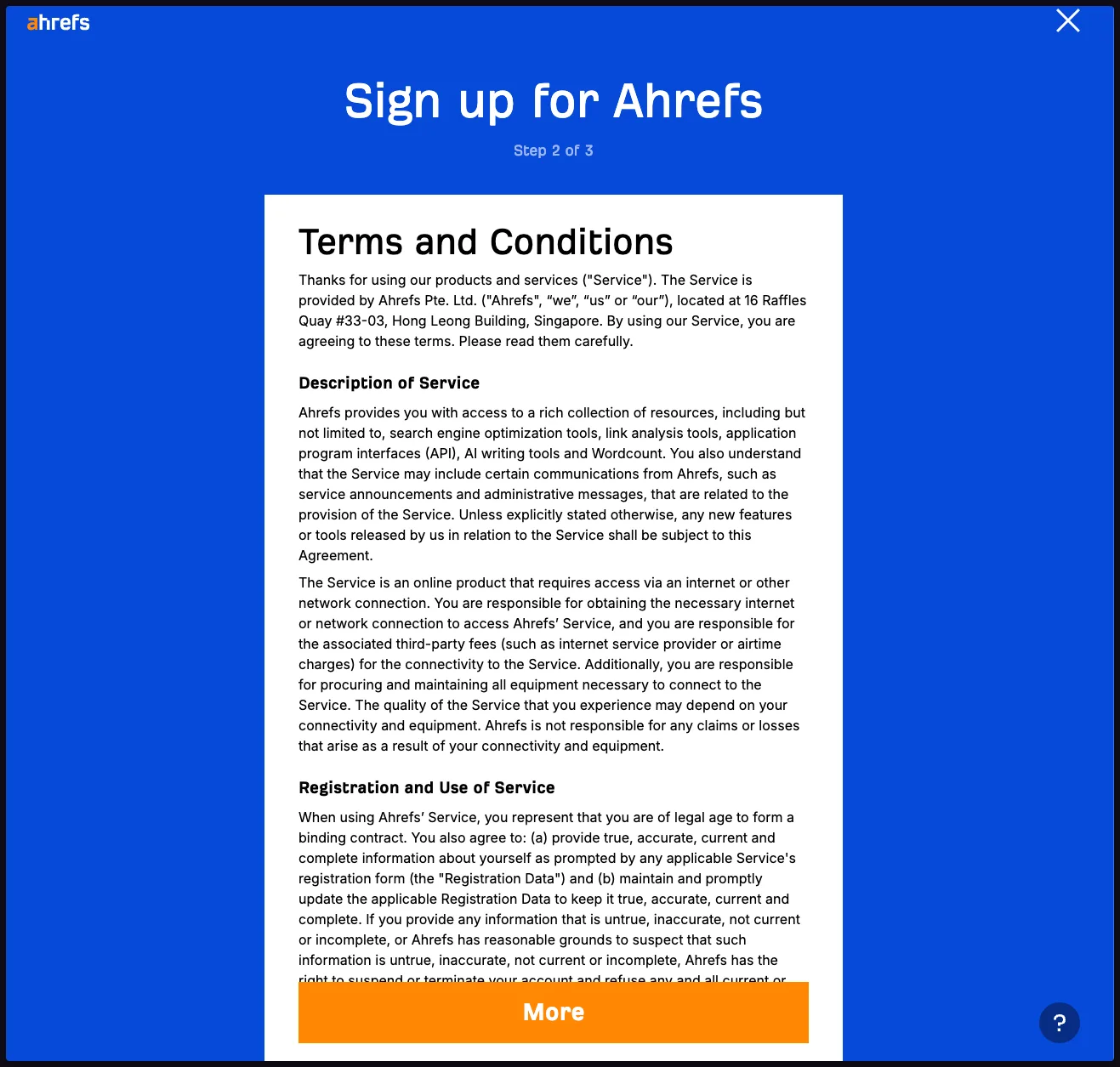
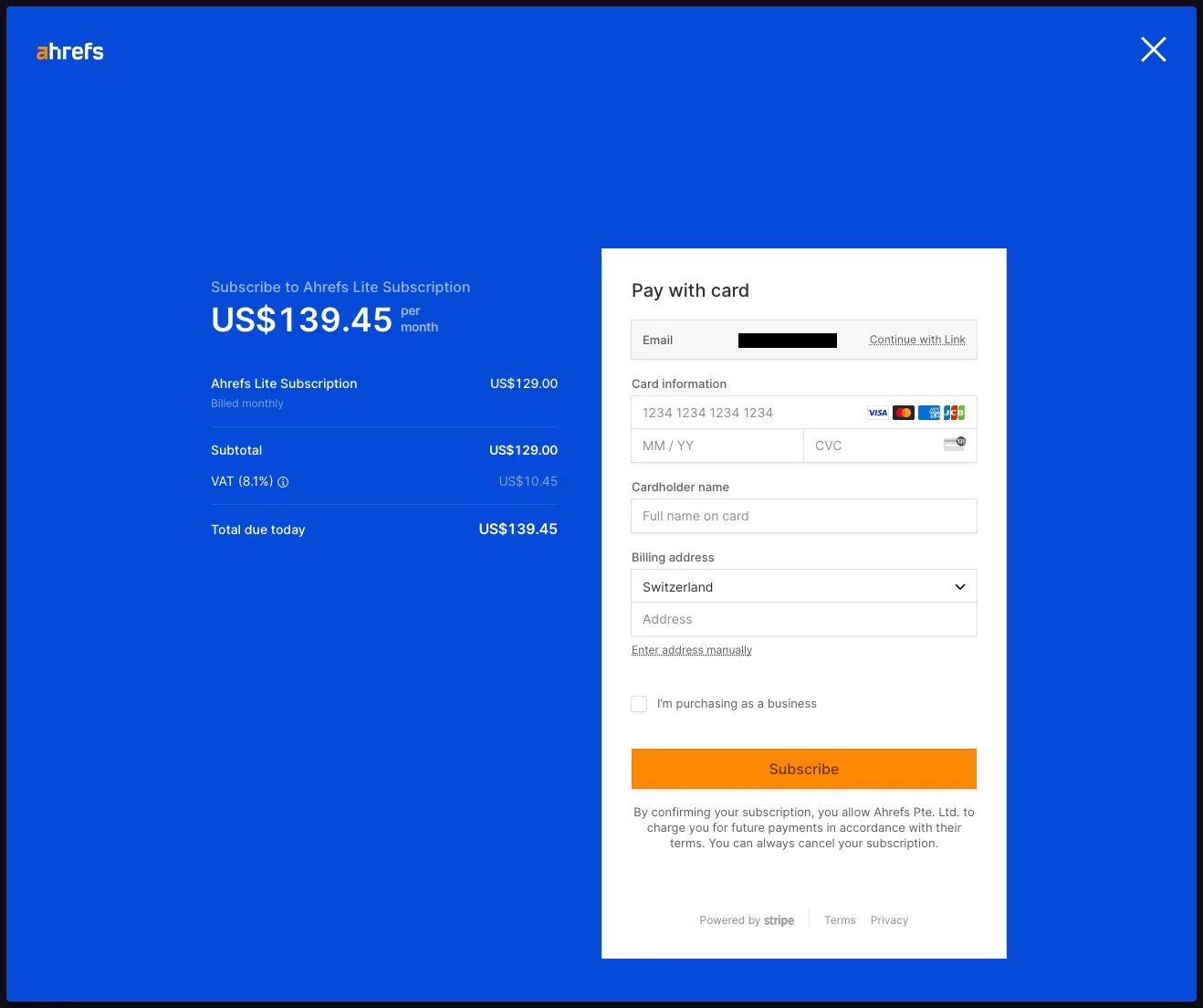
Then payment.
What is interesting is the little exception hiding lower on the pricing page: Ahrefs Webmaster Tools.
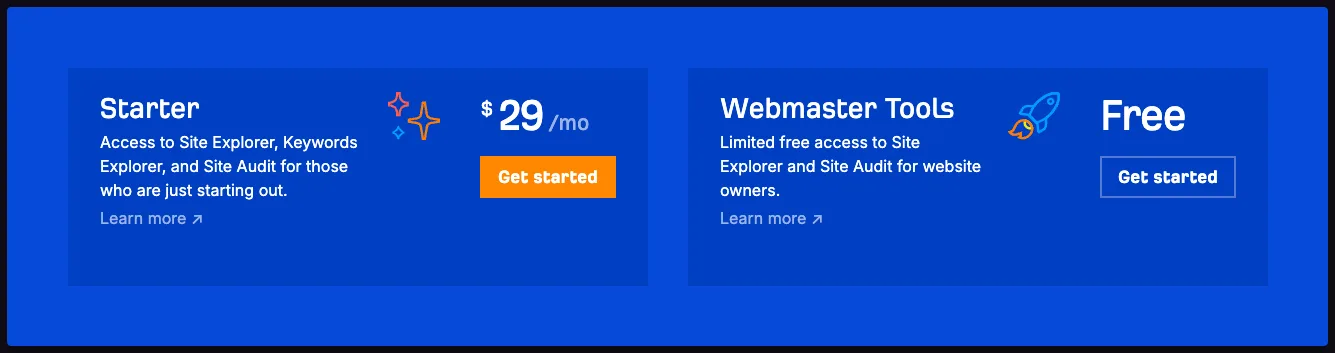
There is a free product, but it is not the main path.
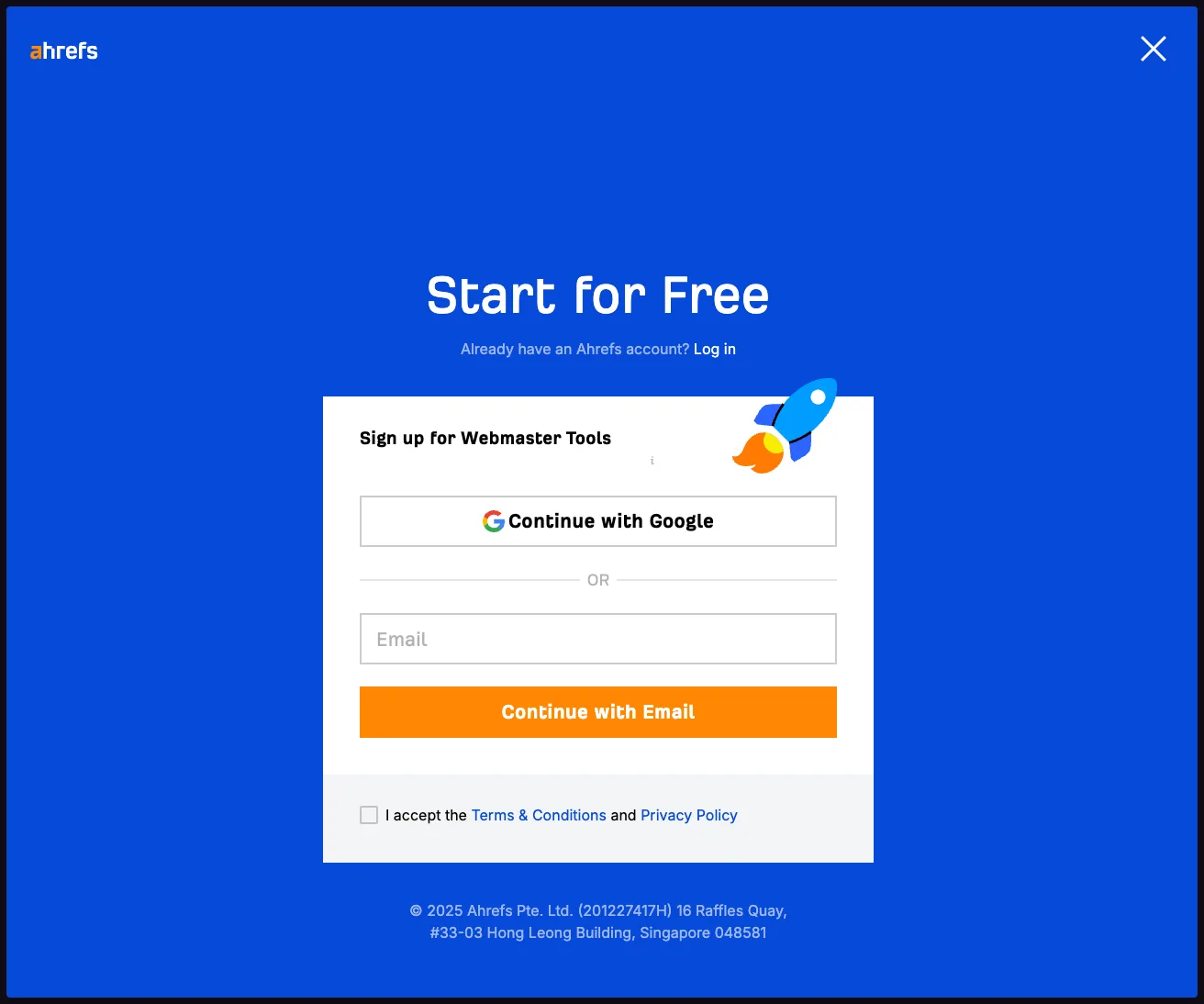
That is a useful hybrid:
- Paid plans are the default buying path.
- A free tool exists for a narrower use case.
- The free product can capture users who are not ready for the paid suite.
- The main product still feels premium.
This is different from freemium. Ahrefs is not saying, "Here is a permanently limited version of the whole product." It is saying, "Here is a specific free product for website owners. If you want the full suite, pay."
That distinction matters.
A free tool can be a great acquisition channel. A free tier can become a basement where non-buyers live forever.
Trial vs no trial: which one should you choose?
Here is the practical version.
Choose freemium when distribution is the product
Freemium makes sense when every free user helps you acquire more users.
Good fits:
- Collaboration tools.
- Communication tools.
- File sharing.
- Scheduling.
- Community or network products.
- Products where one user's free usage exposes the product to other people.
Examples: Slack, Zoom, Calendly, Dropbox.
If your product gets more valuable as more people use it, freemium can be a growth engine.
If not, it might just be a cost center with a nice signup graph.
Choose a no-card trial when product education matters
A no-card trial is good when people need to touch the product before they understand it.
Good fits:
- New categories.
- Products with broad use cases.
- Tools where setup friction is low.
- Products where activation can happen without billing commitment.
The downside is intent. Some users will sign up because it is free, not because they have a problem.
That is fine if your lifecycle emails, onboarding, and sales motion can separate serious users from tourists.
Choose a credit-card trial when buyer intent matters
This is usually the best fit for B2B SaaS with a clear ROI story.
Good fits:
- Sales tools.
- SEO tools.
- Recruiting tools.
- Analytics tools.
- Operations software.
- Anything where the buyer is solving an expensive business problem.
The credit card creates friction, but it is productive friction. It asks the user, "Are you actually evaluating this?"
If your landing page cannot get someone over that hump, the answer is not always "remove the card." Sometimes the answer is "make the value more obvious."
Choose no trial when the value is obvious and trust is high
No trial, usually paired with a money-back guarantee, works when the user already understands the problem and the product can deliver value quickly.
Good fits:
- Strong brands.
- Products with clear screenshots and proof.
- Low to mid-priced tools with immediate use.
- Tools bought by practitioners who already know the category.
- One-time or project-based products.
Bad fits:
- New categories.
- High ACV B2B software.
- Products with long setup time.
- Products where value depends on team adoption.
- Anything that needs data import, training, or stakeholder approval.
No trial is not "confident" if the user cannot evaluate the product before paying. It is just a wall.
The forgotten cancellation problem
Founders love credit-card trials until the angry emails arrive.
"I forgot to cancel."
"I never used it."
"You charged me without warning."
This is where a lot of SaaS companies get slimy. They hide cancellation, bury reminder emails, and pretend chargebacks are a retention strategy.
Do not do that.
If you run a credit-card trial, overcommunicate:
- Say the trial length on the signup page.
- Say the billing date before the user enters a card.
- Send a trial-start email with the exact charge date.
- Send reminders 3 days and 1 day before billing.
- Put cancellation in the account settings where humans expect it.
- Make cancellation work in two clicks, not eight.
The goal is not to trap people. The goal is to convert users who saw enough value that paying feels obvious.
Forgotten cancellations are usually a symptom of weak onboarding and vague communication.
If a user forgets they had your product, the trial did not work.
The first 10 minutes matter more than the trial length
A 14-day trial does not mean you have 14 days.
You have about 10 minutes.
That is when the user decides whether this thing is worth attention.
The best trial flows get the user to one useful outcome immediately:
- A domain audit.
- A CRM pipeline imported.
- A report generated.
- A design preview created.
- A competitor analysis.
- A first campaign draft.
- A dashboard with real data.
Your onboarding should not start with "complete your profile."
It should start with "here is the thing you came for."
Profile enrichment can wait. The dopamine cannot.
Two product examples
For LinkDR
For a B2B SEO product like LinkDR, I would use a locked app with a 14-day credit-card trial.
The landing page should sell the outcome in SEO terms:
- Find link opportunities faster.
- Build authority without living in spreadsheets.
- Turn competitor backlinks into an outreach list.
- Get link targets that can actually move rankings.
The first in-app step should not be a blank dashboard. It should ask for the user's domain, then generate something useful immediately:
- A quick domain analysis.
- Competitor backlink gaps.
- A shortlist of link opportunities.
- A few "do this first" recommendations.
That gives the trial a reason to exist.
The email sequence should be SEO-specific too. Not "check out feature X." More like:
- Day 1: "Your first 10 link targets are ready."
- Day 3: "Steal this competitor link angle."
- Day 7: "What to do before your trial ends."
- Day 13: "Your trial ends tomorrow, here is what you found."
The product has to make the buyer feel behind if they leave.
Not manipulated. Just aware that the opportunity is real.
For an AI headshot app
For an AI headshot generator, I would not use a traditional SaaS trial.
The better model is:
Free preview, pay to download.
Why?
Because the product is visual. The user does not need 14 days. They need to see whether the headshot looks good.
The flow should be:
- User uploads selfies.
- Product generates a low-res or watermarked preview.
- User sees the result.
- User pays to unlock the full set.
- Optional money-back guarantee reduces purchase anxiety.
That is cleaner than freemium, cleaner than a subscription trial, and much easier for the user to understand.
For visual one-time products, the preview is the trial.
My default recommendation
For most B2B SaaS, I would start here:
Locked app with a 14-day trial. Require a credit card if your product has clear ROI and fast time-to-value. Skip the card if the category needs education.
Then obsess over onboarding.
Not the pricing toggle. Not the modal color. Not whether the button says "Start trial" or "Get started."
The boring stuff that actually moves money:
- Can users understand the value before signup?
- Can they reach one meaningful outcome in the first session?
- Do they know when the trial ends?
- Do reminder emails make the next step obvious?
- Is cancellation easy enough that people trust you?
- Are you measuring activation, not just signups?
The best trial strategy is not the one with the least friction.
It is the one with the right friction.
Enough friction to filter serious buyers. Enough value to make the friction feel worth it.
That is the game.