
10 Best Link Building Strategies for Startups in 2025
Discover the 10 best link building strategies to grow your startup's traffic. Actionable tips and real examples to earn high-quality backlinks.

You've built a great product that solves a real problem. Your first users love it. But your growth is slow. Why? Because a great product alone is rarely enough. Without a smart way to reach people, even the best ideas stay hidden. This is where getting other websites to link to you—a process called link building—becomes your most powerful tool for growth.
Backlinks are like votes of confidence on the internet. When a respected website links to yours, search engines like Google see it as a sign that your content is trustworthy and helpful. This digital trust is a key part of any good SEO plan. If you're new to this, a complete guide to Search Engine Optimization can give you a solid start. Earning good backlinks leads to higher search rankings, which brings the right kind of visitors to your site long after a paid ad has stopped running.
This article gives you a clear playbook of the best link building strategies for startups. We'll skip the jargon and show you ten proven methods. For each one, you'll get simple steps and real examples so you can start right away. This is a practical guide to help you build a strong engine for attracting new customers.
1. Guest Blogging
Guest blogging means writing an article for another website in your field. In return for your content, the site usually lets you include a link back to your own website. This is one of the best link building strategies because it earns you a quality backlink and introduces your brand to a new, relevant audience.

This method helps you build trust and authority by having your name on respected websites. For example, Buffer famously used guest blogging to get its first 100,000 users. It's a proven way to get traffic, find new customers, and build good relationships in your industry.
How to Implement This Strategy
To succeed with guest blogging, focus on quality, not quantity. A few posts on great sites are better than dozens on weak ones.
- Find the Right Opportunities: Use Google searches like
"your keyword" + "write for us"or"your keyword" + "guest post"to find sites looking for writers. Focus on websites that have real traffic and an engaged audience. - Craft a Personalized Pitch: Don't use a generic template. Use the editor's name, mention an article you liked on their site, and suggest 2-3 unique topic ideas that their readers would enjoy.
- Write Exceptional Content: Once they say yes, deliver an article that's better than they expect. Follow their rules, offer fresh ideas, and make your content useful. This makes it more likely they'll publish your work and want to work with you again. For more details on what makes a backlink valuable, see our guide on profile backlinks.
Pro Tip: Try to build a relationship before you pitch. Follow the editor on social media and comment on their articles. A friendly email to someone who recognizes your name is always more effective than a cold one.
2. Broken Link Building
Broken link building is a smart trick where you find dead links (links that go to a "404 error" page) on other websites. You then create a new piece of content to replace the old, missing one. Finally, you email the site owner, point out the dead link, and suggest they replace it with a link to your new content. This is one of the best link building strategies because it's a win-win: you help them fix their site, and you get a quality backlink.
This method works well because you're offering help, not just asking for a favor. Instead of just asking for a link, you are providing a solution to a problem. This technique is respected by SEO experts because it is effective and helpful.
How to Implement This Strategy
Success here depends on finding good opportunities and creating great replacement content. Your goal is to make it easy for the website owner to add your link.
- Find Broken Link Opportunities: Use tools like Ahrefs or SEMrush to find websites linking to your competitors' old or deleted pages. You can also use a browser extension like Check My Links to scan resource pages for dead links.
- Create a Superior Replacement: Look at what the old, dead content was about. Your job is to create something much better: more current, more detailed, or better designed. This makes your content an easy choice for the site owner.
- Craft a Helpful Outreach Email: Your email should be short and friendly. Introduce yourself and mention you found a broken link on their site. Politely point it out and then suggest your content as a replacement, explaining why it would be a good fit for their audience.
Pro Tip: To be more efficient, look for pages with several broken links. If you can help a site owner fix multiple problems at once, they will be much more likely to reply and give you the backlink.
3. The Skyscraper Technique
Made famous by Brian Dean of Backlinko, the Skyscraper Technique is a smart way to create content and get links. Instead of creating content and hoping people link to it, you find content that already has a lot of links, create something much better, and then ask the people who linked to the original to link to your new version instead. This is one of the best link building strategies because it's based on a topic that is already proven to be popular.
This strategy works because it takes the guesswork out of content creation. You're not betting on a new idea; you're improving a proven winner. For instance, a fitness site could take a popular "10 Best Exercises" article and turn it into a "52 Best Exercises" guide with video demos. By making your content longer, more up-to-date, or better designed, you give people a good reason to update their link to yours.
The infographic below shows the simple, three-step process for this strategy.
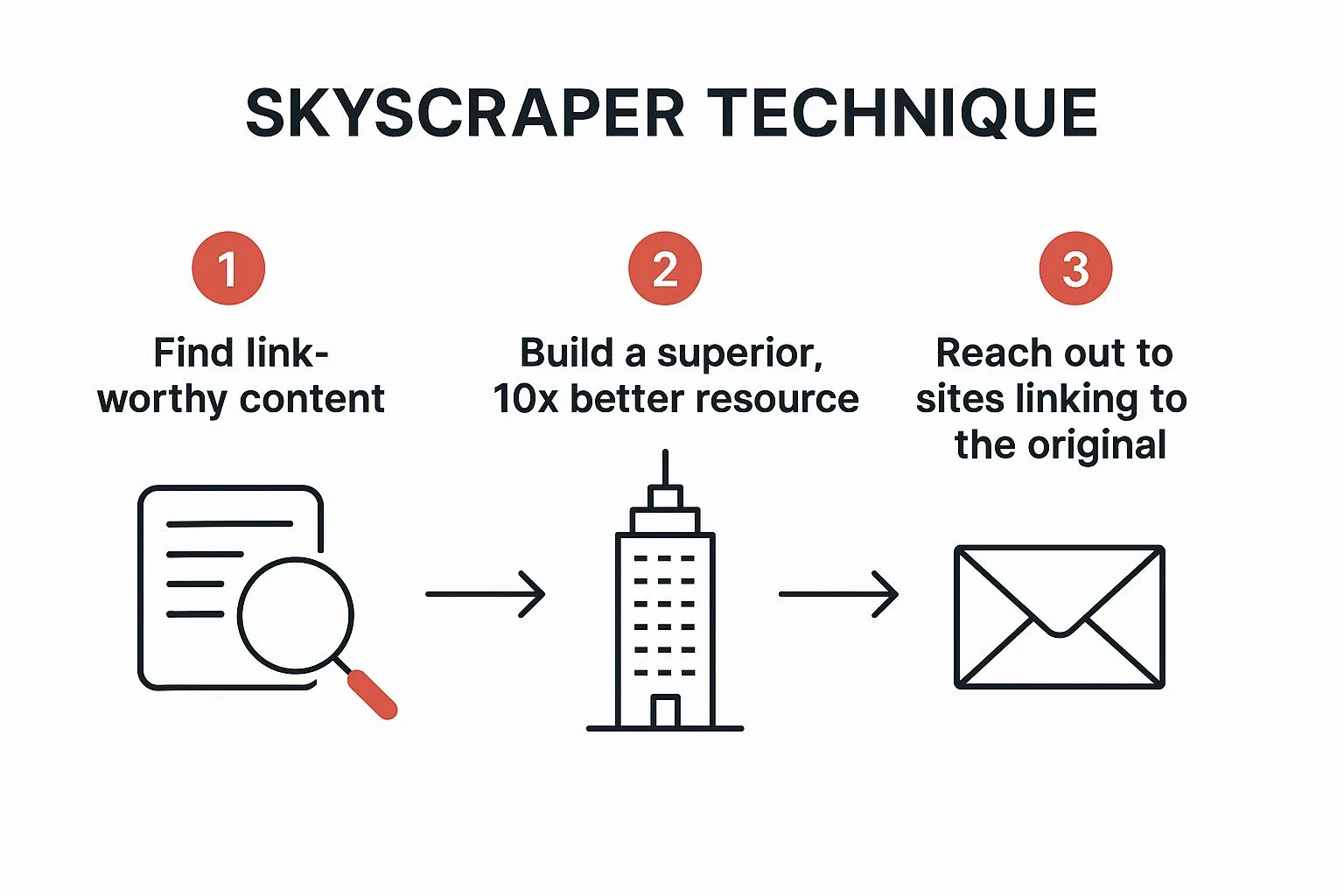
This shows the clear steps of the technique, from finding an opportunity to creating your content and then reaching out for links.
How to Implement This Strategy
The Skyscraper Technique only works if your content is clearly better, not just a little different. Your goal is to create the best resource on that topic.
- Find Link-Worthy Content: Use tools like Ahrefs or BuzzSumo to find articles in your field that have a lot of links. Look for content that is old, not very detailed, or has poor images.
- Create Something 10x Better: Your job is to make a superior piece of content. This could mean making it longer, more up-to-date, better designed (with professional graphics or videos), or more complete.
- Conduct Smart Outreach: Find all the sites that link to the original article. Send them a personal email explaining that you saw they linked to the old resource and that you've created a more complete version that would be more helpful for their audience.
Pro Tip: When you pitch your new content, be specific. Don't just say it's "better." Tell them why it's better. For example: "I noticed the guide you linked to is from 2019; our new version has updated stats for 2024 and covers three new tools that have come out since."
4. Digital PR and Newsjacking
Digital PR means creating stories or data that are interesting enough to get attention from the news media. This helps you earn backlinks from news sites and other major publications. A part of this is "newsjacking," where you jump on a trending news story by offering your expert opinion or a unique angle. This is one of the best link building strategies for getting high-authority links.
This approach makes your brand look like an expert. For example, a finance startup could analyze how celebrities spend money, getting stories in dozens of news outlets. Or a software company could do a survey on workplace trends and get links from major business sites. These links are powerful and bring a lot of trust and visitors.
How to Implement This Strategy
To succeed with Digital PR, you need to create stories that are truly interesting, timely, and newsworthy. It's about joining the conversation, not just asking for a link.
- Create Citable Assets: Develop unique, data-based content, like original surveys or studies. For instance, a travel company created a 'Remote Work Index' ranking cities and earned over 450 links because it was a valuable resource for journalists.
- Build Targeted Media Lists: Use tools like Hunter.io or BuzzStream to find journalists who cover your industry. Focus on reporters who have written about similar topics recently.
- Craft a Compelling Pitch: Your outreach email should be short and valuable. To get a journalist's attention, learn about writing a compelling press release that clearly explains your story's main point and gives them easy access to your data.
Pro Tip: Time your campaigns to match current events or seasons. For quick newsjacking, use services like HARO (Help a Reporter Out) to give quotes to journalists who are actively looking for expert sources for their stories.
5. Resource Page Link Building
Resource page link building is the strategy of getting your website listed on pages that collect helpful links for their readers. These pages are often created by universities, government agencies, and industry groups, and they are designed to point to high-quality information. This makes them a great target for earning powerful backlinks.
This method is one of the best link building strategies because links from these pages, especially from .edu or .org sites, are highly valued by search engines. For example, a nonprofit that created a detailed educational guide got links from 23 university resource pages.
How to Implement This Strategy
Success here comes from having a genuinely helpful piece of content and sending targeted, friendly emails. Your goal is to make it an easy "yes" for the person who manages the page.
- Find Relevant Resource Pages: Use advanced Google searches to find opportunities. Try searches like
"your keyword" + inurl:resourcesor"your keyword" + "helpful links". Look for pages on high-authority.eduand.orgsites first. - Create Link-Worthy Content: Your content must be an excellent resource. This could be a complete guide, a free tool, or an original study. It needs to provide clear value to the audience of the resource page you are targeting.
- Conduct Personalized Outreach: Write a short, helpful email. Explain why your resource is a great fit for their page and even suggest where they could add it. Don't use a generic template; show that you've actually looked at their page.
Pro Tip: Add extra value when you reach out. In your email, offer to check their resource page for any broken links. This shows you're being helpful, not just selfish, and greatly increases your chance of getting a positive response.
6. Unlinked Brand Mentions
Unlinked brand mentions are one of the easiest ways to build links. This technique involves finding places online where your company or product is mentioned without a link. Then, you simply reach out to the site owner and ask them to add a link. These are like warm leads for backlinks, making it a great low-effort, high-reward method.
This strategy is effective because the writer already knows and values your brand enough to mention it. You're not asking for a new endorsement; you're just asking for a proper credit with a link. It's a prime example of one of the best link building strategies because it's so simple and successful.
How to Implement This Strategy
Success with unlinked mentions is all about regular monitoring and friendly outreach. The goal is to make it as easy as possible for the site owner to add your link.
- Find Unlinked Mentions: Use tools like Ahrefs, Brand24, or Mention to find places where your brand is mentioned without a link. You can also set up free Google Alerts for your brand name and products to catch new mentions as they happen.
- Prioritize Your Targets: Not all mentions are equal. Focus on mentions from high-authority, relevant websites first. It's also easier to get a link added to a recent article than a very old one.
- Craft a Simple Outreach Email: Keep your email short and friendly. Thank the author for mentioning you, point out that it wasn't linked, and politely ask if they would add a link to your site. Providing the exact URL makes it easier for them.
Pro Tip: Make the editor's job super easy by giving them the HTML code for the link. For example, you could say: "If you're open to it, here’s a quick snippet you can use:
<a href="https://yourwebsite.com">Your Brand Name</a>." This removes any work for them and can boost your success rate.
7. Original Research and Data Studies
Creating original research is a top-tier link building strategy. It involves running surveys, analyzing data, or collecting industry stats to create new information. This content becomes a primary source that journalists and bloggers will link to when they cite your findings. This is one of the best link building strategies because it automatically makes your brand an authority and creates a "link magnet" that works for you over time.
This method makes you a thought leader, earning you quality backlinks from news sites and industry blogs naturally. Think of HubSpot's annual 'State of Marketing' report, which earns thousands of links each year. It's a high-effort, high-reward strategy that builds incredible trust and brings in traffic.
How to Implement This Strategy
Success with original research comes from finding and sharing truly new and interesting data. One good study can earn more quality links than hundreds of guest posts.
- Identify an Information Gap: Find questions in your industry that no one has answered with data. Look at forums like Reddit or Quora to find common questions that people are asking.
- Conduct and Analyze the Research: Whether you run a survey or analyze data, make sure your method is solid. Be open about how you collected and analyzed the information to build trust.
- Create Compelling Content Assets: Share your findings in different formats. Write a detailed blog post, design shareable charts and infographics, and offer a full report as a PDF download. Making the data easy to use is key. You can learn more about how this fits your go-to-market motion in our SaaS SEO strategy guide.
Pro Tip: Don't just publish your research and wait. Actively promote it. Reach out to journalists and bloggers who have covered similar topics. Give them the key findings and graphics to make it easy for them to feature your work.
8. Link Reclamation
Link reclamation is the process of finding and fixing "lost" backlinks that used to point to your website. Links can break for many reasons, like when you change a URL or someone linking to you makes a typo. Instead of building new links, this strategy focuses on getting back the value from links you already earned, making it one of the most efficient link building strategies.
This method is about protecting the link value you've already built. It's a low-effort, high-reward task because the other website already decided to link to you; you just need to help them fix the broken connection. For example, a company can recover dozens of backlinks after updating their website just by finding the broken links and providing the new URLs.
How to Implement This Strategy
A good link reclamation plan relies on finding the broken links and doing organized outreach. Your goal is to make it as easy as possible for site owners to update the link.
- Find Broken Backlinks: Use tools like Ahrefs or Semrush to find all broken backlinks pointing to your site. Filter their reports to show you links pointing to "404 not found" pages. Google Search Console's reports are another great free source.
- Prioritize and Analyze: Once you have a list, sort it by the authority of the linking site. A broken link from a major industry website is more valuable to fix than one from a small blog.
- Conduct Polite Outreach: Reach out to the site owner. In your email, thank them for linking to you, gently point out that the link is broken, and provide the correct, updated URL. A friendly, helpful tone is key.
Pro Tip: When you redesign your website, create a "redirect map" in a spreadsheet. This should list every old URL and its matching new URL. This lets you set up 301 redirects to prevent losing valuable backlinks in the first place.
9. Content Partnerships and Co-Marketing
Content partnerships are when you work with another brand to create and promote content together. By sharing resources and audiences, both companies can earn natural backlinks and get in front of new customers. This could be anything from a joint research report to a co-hosted webinar.
This team approach is one of the best link building strategies because it uses trust and authority. When you partner with a respected brand, you borrow some of their credibility. For example, Canva and HubSpot worked together to create marketing templates, a project that got great links and customers for both.
How to Implement This Strategy
The key is to find the right partner—a non-competing brand that serves a similar audience. Your goal is to create something together that neither of you could have made as well on your own.
- Identify Potential Partners: Look for companies in your niche with a similar audience size and a good reputation. Tools like SparkToro can help you find brands your target customers already trust.
- Propose a Win-Win Idea: Reach out with a specific, valuable idea. Suggest a co-branded tool, a joint study, or a webinar. Clearly explain how the project will help both of you with content, links, and audience growth.
- Define Roles and Promotion: Before you start, set clear expectations. Decide who will do what, and agree on a plan to promote the content. Make sure you agree on where and how backlinks will be placed so both partners benefit.
Pro Tip: Focus on creating a truly valuable asset. An in-depth research report or a useful free tool is much more likely to attract links from other websites, increasing the SEO impact far beyond the initial partnership.
10. Interactive Tools and Free Resources
Creating free tools, calculators, or other interactive resources is one of the most powerful and lasting link building strategies. Instead of asking for links, you build something so useful that other websites naturally want to link to it. These resources act as link magnets, passively attracting high-quality backlinks over time.
This strategy helps you earn authoritative links without outreach, as the resource provides ongoing value. Think of HubSpot's Website Grader, which has earned over 41,000 backlinks, or CoSchedule's Headline Analyzer tool. By solving a common problem for your audience, you create an asset that builds your site's authority for years.
How to Implement This Strategy
The key is to find a real pain point in your industry and offer a simple, free solution. A good tool can provide a huge return on your investment for years.
- Identify a Need: Look for common tasks or complex questions in your industry. Could you create a simple calculator or a checklist generator to make things easier? Find a problem and solve it with a tool.
- Build a High-Quality, Free Tool: Your tool must be easy to use, fast, and completely free without asking for a sign-up right away. The goal is to provide value first. Make sure it works well on mobile devices.
- Promote Your Resource Strategically: When you launch your tool, promote it. Share it in online communities, with industry influencers, and with websites that would find it useful. Make it easy for others to share by including social sharing buttons.
Pro Tip: Don't just launch your tool and forget it. Get feedback from users and make regular improvements. A tool that gets better over time will stay relevant and continue to attract links long after its launch.
Top 10 Link Building Strategies Comparison
| Strategy | Implementation Complexity 🔄 | Resource Requirements ⚡ | Expected Outcomes 📊 | Ideal Use Cases 💡 | Key Advantages ⭐ |
|---|---|---|---|---|---|
| Guest Blogging | Medium 🔄 | Moderate (content creation) ⚡ | Quality backlinks, brand exposure 📊 | Building authority, expanding audience | High-quality contextual links, authority build ⭐ |
| Broken Link Building | Medium to High 🔄 | Moderate to High (tools+content) ⚡ | Quality backlinks, goodwill 📊 | Fixing broken links, outreach with value | Higher acceptance rates, builds relationships ⭐ |
| The Skyscraper Technique | High 🔄 | High (extensive content creation) ⚡ | Large volume of backlinks, improved content 📊 | Leveraging proven topics for link gain | Systematic, scalable, high-quality backlinks ⭐ |
| Digital PR and Newsjacking | High 🔄 | High (creativity, campaigns, tools) ⚡ | High-authority editorial links, brand awareness 📊 | Media attention, timely trending coverage | Earns top-tier links, viral potential ⭐ |
| Resource Page Link Building | Medium 🔄 | Low to Moderate (content + outreach) ⚡ | Stable, authoritative backlinks 📊 | Targeting niche .edu/.org resource pages | High acceptance, long-term stable links ⭐ |
| Unlinked Brand Mentions | Low to Medium 🔄 | Low (monitoring + outreach) ⚡ | Quick backlink gains, scalable 📊 | Existing brand mentions conversion | Very high conversion, low effort ⭐ |
| Original Research & Data | High 🔄 | High (research, tools, promotion) ⚡ | Evergreen, authoritative links 📊 | Industry authority, unique insights | Generates continual link magnetism ⭐ |
| Link Reclamation | Medium 🔄 | Moderate (audit + outreach + tech) ⚡ | Recover lost link equity fast 📊 | Site migrations, URL changes recovery | Cost-effective, quick restoration ⭐ |
| Content Partnerships & Co-Marketing | Medium 🔄 | Moderate (collaboration effort) ⚡ | Natural backlinks from partners 📊 | Partner networks, joint content promotion | Shared effort, access to partner audiences ⭐ |
| Interactive Tools & Free Resources | High 🔄 | High (development + maintenance) ⚡ | Passive, evergreen backlinks 📊 | Utility-based link magnets | Highly shareable, long-term value ⭐ |
Final Thoughts
We've covered ten of the most effective and best link building strategies available today. From guest blogging to creating original research, it's clear that modern link building is more than a numbers game. It's a mix of creativity, strategy, and creating real value.
The old days of spammy tactics are over. Today, success means earning high-quality, relevant backlinks that Google sees as real endorsements. This requires a shift in thinking from "how can I get a link?" to "how can I create something so valuable that people will want to link to it?"
Putting Together Your Link Building Plan
As you think about these strategies, it's important to know that they can work together. The most successful plans often mix several methods. For instance, an original data study can be the perfect fuel for a Digital PR campaign, which might then lead to you finding unlinked brand mentions to claim.
The common theme in all these methods is value. Whether you're fixing a broken link, giving an expert quote, or creating a free tool, you are solving a problem for someone else. This value-first mindset turns link building from a chore into a powerful way to grow your brand, authority, and website traffic.
Actionable Next Steps: From Reading to Doing
Reading about the best link building strategies is the first step, but taking action is what gets results. Here’s a simple plan to get you started:
- Review Your Content: Before you build new links, look at what you already have. Which pages get the most links? This will help you decide which strategies are the best fit for you.
- Pick Two Strategies to Master: Don't try to do everything at once. Choose two methods that fit your resources and goals. For a new company, Broken Link Building and Unlinked Brand Mentions could deliver quick wins.
- Create a Process: Use a simple spreadsheet to track your outreach. Note who you contacted, when, and the result. A system is key to scaling your efforts and learning what works.
- Measure and Adjust: Link building requires ongoing attention. Track your new links, monitor your keyword rankings, and see where your traffic is coming from. Use this data to improve your approach and focus on the strategies that work best.
Ultimately, mastering these link building strategies is about more than just climbing search rankings. It’s about building a strong online presence that drives real business growth. Each link you earn is a vote of confidence and a new way for customers to find you. Start small, be consistent, and focus on creating value. The results will follow.
Feeling overwhelmed and not sure where to start with your link building or overall SEO strategy? Our team at SEO Roast specializes in providing actionable, no-fluff SEO audits that pinpoint exactly what you need to do to improve your rankings. Let us give you a clear, prioritized roadmap to success, so you can focus on executing the best link building strategies with confidence. Get your personalized SEO Roast today.